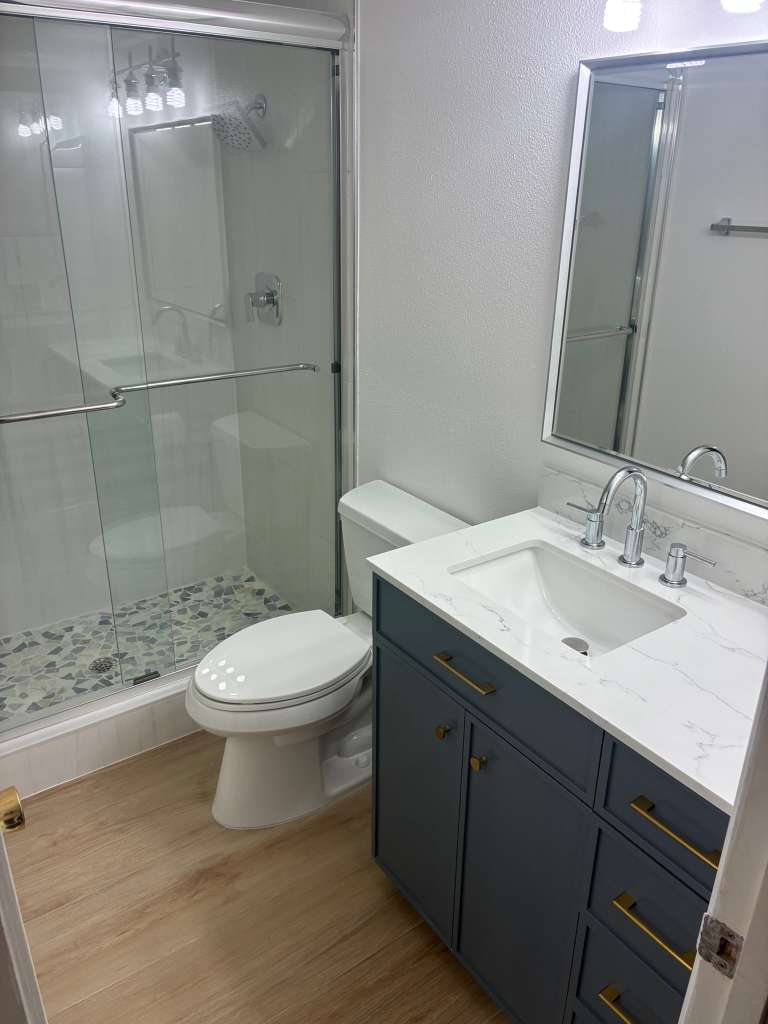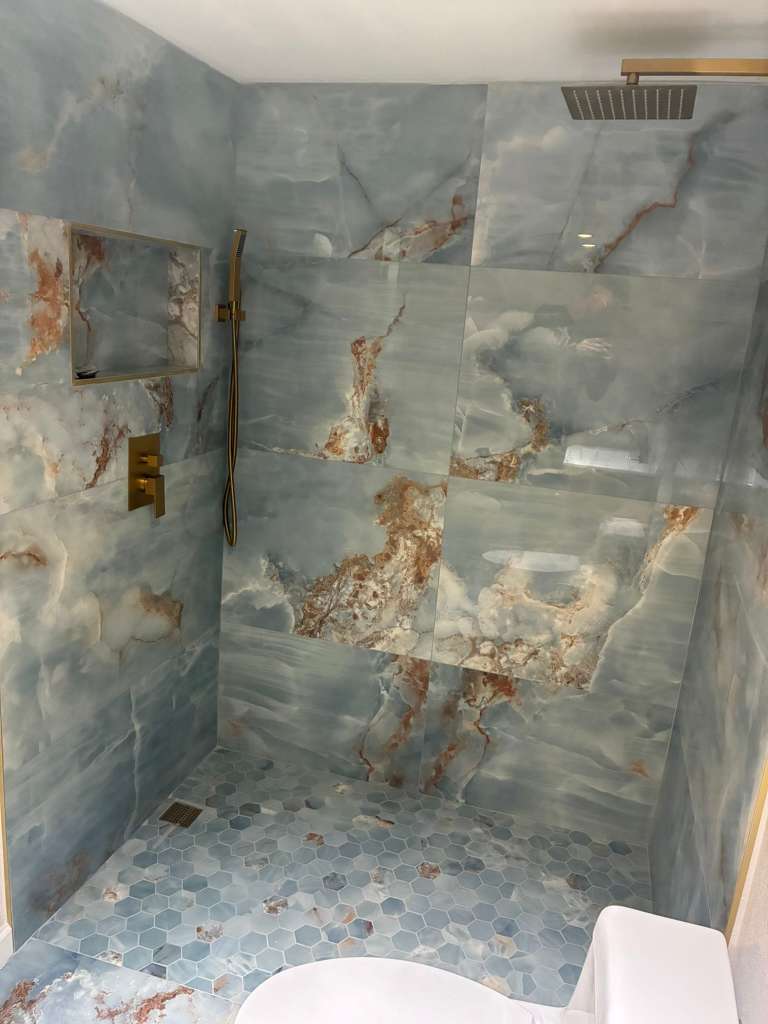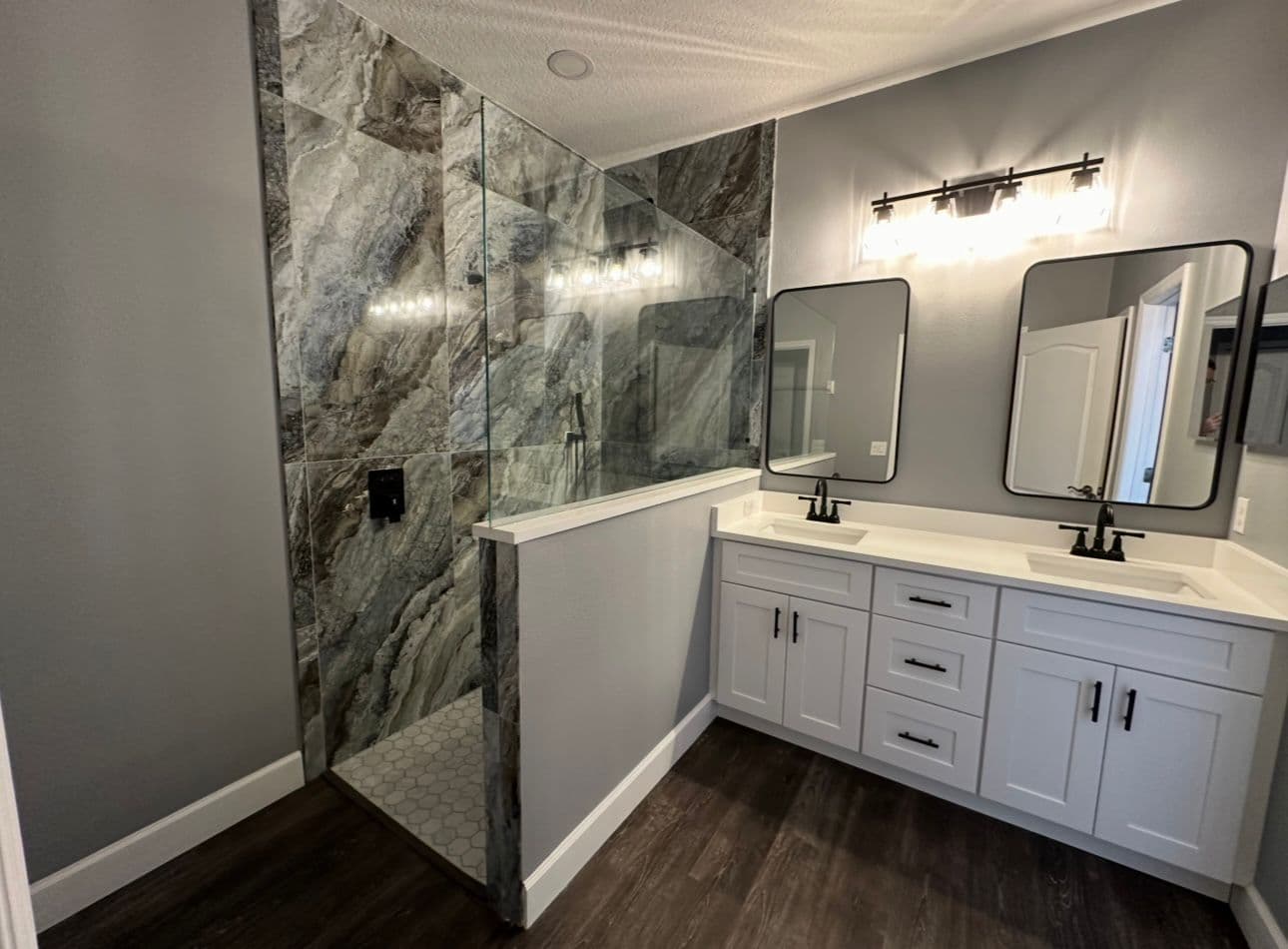
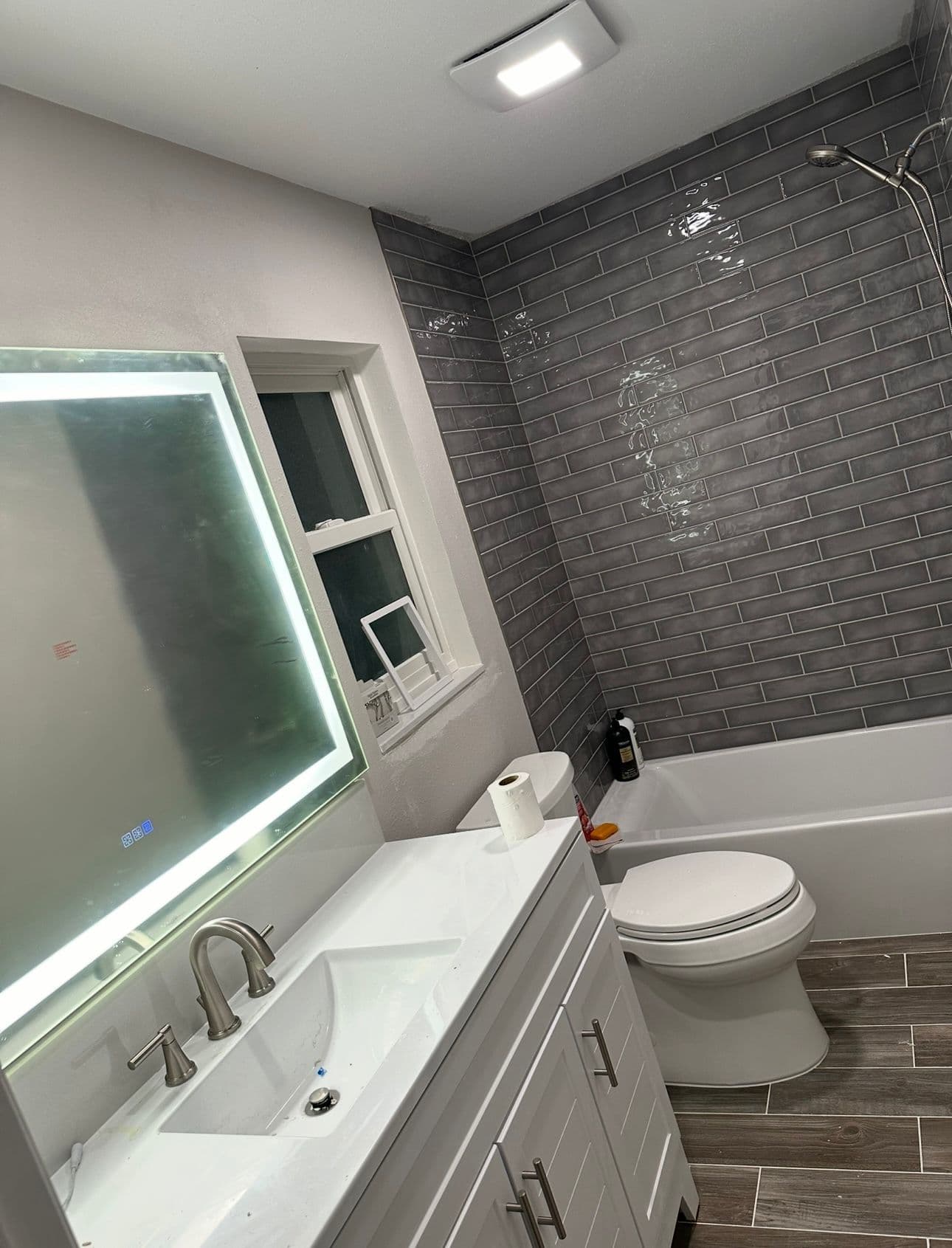
For regional remodeling support, homeowners can review services from remodeling contractors sarasota fl when moisture damage calls for more than surface cleaning.
Recurring moisture can also damage finishes, so it helps to understand why shower grout keeps cracking in Florida.
Bathroom mold is common in Florida, but it should not keep returning after every cleaning. If mold comes back in the same spots again and again, the problem is usually not the cleaner. It is moisture, ventilation, failed caulk, hidden leaks, or a shower assembly that was not built to manage water properly.
North Port homes deal with humidity, long cooling seasons, and bathrooms that often do not dry quickly. That makes the details behind the tile, paint, fan, and plumbing more important than most homeowners realize.
The Bathroom Is Staying Wet Too Long
Mold needs moisture. If the bathroom stays damp for hours after every shower, mold will keep finding places to grow. Poor ventilation is one of the most common causes. An undersized fan, a fan that vents into the attic, a blocked duct, or a fan that is not used long enough can all leave moisture trapped in the room.
A bathroom fan should move humid air outside the home, not into the attic or above the ceiling. It should also run long enough after showers to clear the room. In many homes, adding a timer switch is a simple improvement.
Caulk and Grout Are Failing
Cracked caulk at the tub, shower corners, niche, or glass enclosure allows water to move into joints. Grout is not waterproof by itself. If the surface cracks or the waterproofing behind the tile is weak, water can reach areas that never fully dry.
Cleaning the surface may remove visible mold for a week or two, but it will return if moisture is still trapped behind the joint.
There May Be a Hidden Leak
A slow leak behind a wall, under a vanity, near a toilet flange, or inside a shower valve wall can feed mold without creating an obvious puddle. Watch for soft drywall, swelling baseboards, musty smells, loose flooring, bubbling paint, or discoloration near plumbing fixtures.
If mold is concentrated around one wall, cabinet, or fixture, a leak should be ruled out before the bathroom is repainted or re-caulked.
The Shower Was Not Waterproofed Correctly
Tile is a finish, not the waterproofing system. A shower needs a proper waterproofing layer behind or beneath the tile. If the shower pan, wall board, curb, niche, or corners were installed incorrectly, water can enter the assembly and stay there.
This is why some bathrooms look fine at first and then develop recurring mold, loose tile, cracked grout, or odors later. The visible surface is only part of the system.
Paint and Drywall Matter
Regular interior paint does not perform well in a damp bathroom. Bathrooms need moisture-resistant surfaces, proper primer, and good preparation. If old mold was painted over without cleaning, drying, and priming correctly, staining and growth can return.
In areas with repeated moisture exposure, damaged drywall may need to be replaced instead of coated again.
How to Stop Bathroom Mold From Coming Back
The long-term fix starts with finding the moisture source. That may mean improving ventilation, repairing a leak, replacing failed caulk, rebuilding a shower detail, or correcting drainage and waterproofing. Cleaning is only the final step after the moisture problem is controlled.
A practical plan may include:
- Checking that the fan vents outdoors
- Running the fan longer after showers
- Replacing failed caulk at wet-area joints
- Inspecting plumbing fixtures and shutoffs
- Checking for soft walls, flooring, or trim
- Rebuilding shower areas with proper waterproofing when needed
- Using bathroom-rated paint and materials
When a Remodel Is the Better Fix
If the bathroom has recurring mold, failing tile, soft drywall, outdated plumbing, and poor ventilation, small repairs may not be enough. A bathroom remodel can correct the hidden problems while updating the finished space.
Your Local GC helps North Port and Southwest Florida homeowners repair and remodel bathrooms with ventilation, waterproofing, and long-term durability in mind. If mold keeps coming back, the next step is to find the source instead of cleaning the same spot again.