
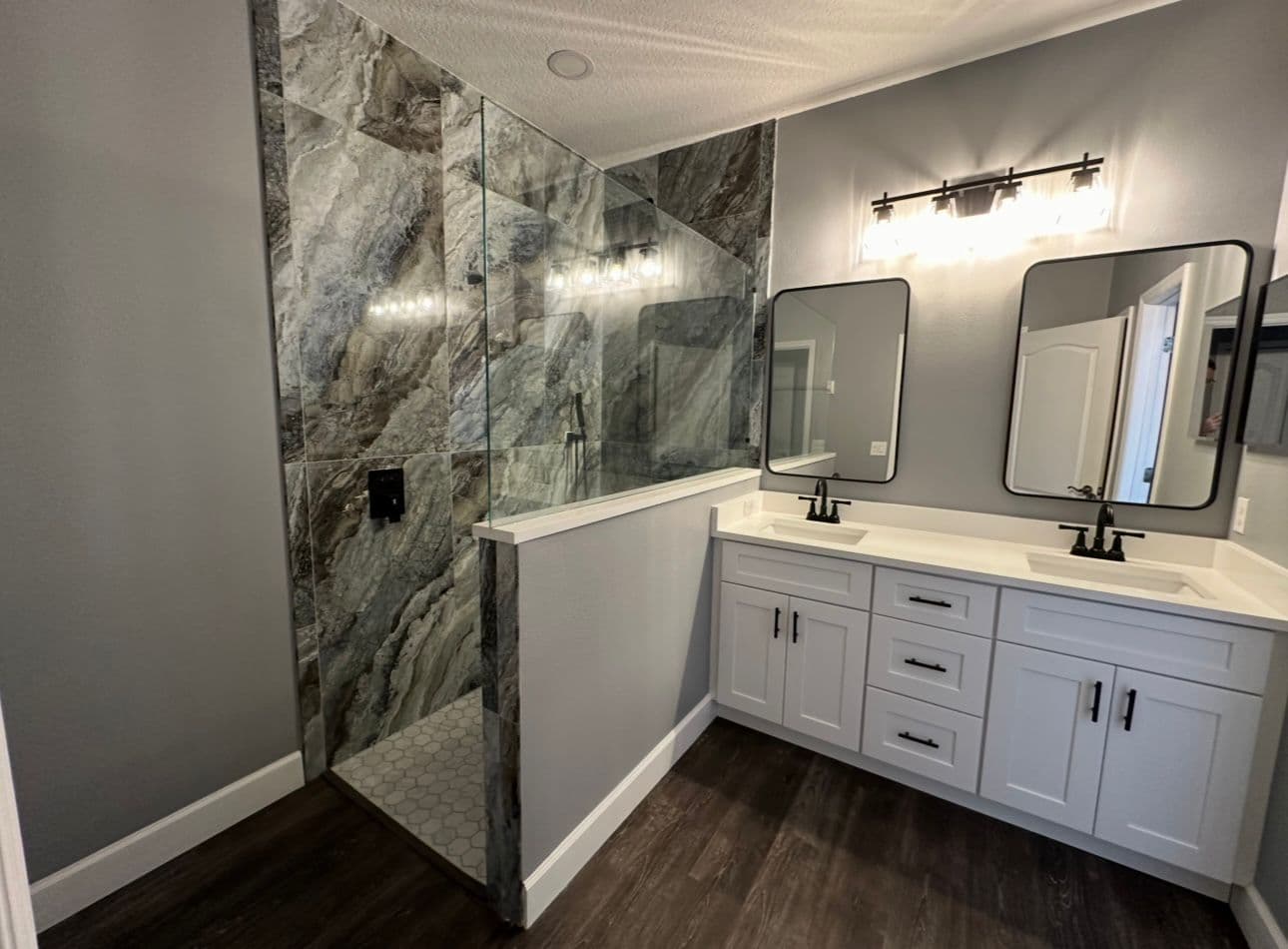
For most homeowners, the best solid surface for shower walls is a high-quality solid surface wall panel system installed over a fully waterproof shower assembly. That answer matters because the decorative surface is only part of the job: in a wet room, long-term performance depends on the substrate, seams, waterproofing, and detailing behind the finish. In Southwest Florida, where heat and humidity put extra stress on bathrooms, choosing a shower wall system that is easy to clean, resistant to moisture, and installed correctly is more important than chasing a material label alone.
What people mean by “solid surface” in a shower
The phrase solid surface can mean a few different things, so it helps to define it before comparing options. In bathroom remodeling, homeowners usually use it to describe a seamless, grout-free wall material that has a smooth, stone-like look and can be used in shower enclosures.
Common solid surface shower wall options
- Solid surface wall panels made for showers and tub surrounds
- Engineered stone-look panels designed for wet areas
- Waterproof board systems finished with a compatible surface material
- Cast or fabricated panels that create a continuous, low-joint appearance
The important point is that not every panel product is appropriate for a shower. Some surfaces are decorative wall coverings, while others are part of a system specifically designed for wet environments. When homeowners ask for the best solid surface for shower walls, they usually want the combination of easy cleaning, fewer joints, and better moisture performance.
The best choice depends on the whole shower system
If the goal is lasting performance, the “best” solid surface is not just the top layer. It is a solid surface finish installed as part of a complete waterproof shower assembly. That distinction is especially important in humid climates like Southwest Florida.
Why the assembly matters more than the finish alone
A shower wall faces constant splashing, steam, soap residue, and temperature changes. If water reaches the wall cavity, the problems are often hidden until they become expensive.
A well-built shower system should include:
- A properly prepared substrate
- Waterproof backing or membrane where required
- Sealed seams and transitions
- Correct slope and drain detailing where applicable
- A compatible solid surface panel or finish
That is why many manufacturers stress that shower walls must be waterproofed as part of the assembly, not treated as decoration only. A good surface can still fail if the wall behind it is not built correctly.
Best solid surface for most homeowners: shower wall panels made for wet areas
For many households, the best balance of appearance, cleanability, and practicality comes from manufacturer-specific solid surface shower wall panels. These are made for showers, not adapted from another room type.
Why these panels are a strong choice
- Grout-free or grout-minimized look: fewer lines to scrub
- Clean, contemporary appearance: works well in modern bathrooms
- Low daily maintenance: soap film and mildew are easier to manage on smooth surfaces
- Custom finish options: many systems offer stone, matte, or neutral looks
- Better shower-specific design: products intended for wet environments are usually better suited to the job than general wall materials
These benefits make solid surface panels attractive for busy homes, guest baths, and primary bathrooms where homeowners want a low-fuss shower.
What to watch for
Not all solid surface panels are equal. Before selecting one, check whether the product is explicitly designed for showers, how seams are handled, and what waterproofing is required behind it. A panel that looks premium on the showroom floor may still require strict installation details to perform well in a daily-use shower.
Best long-term performance: waterproofing behind the wall finish
If your top priority is durability, the best answer is a shower built as a complete waterproof system with the solid surface chosen as the finish layer. That approach is often more dependable than focusing only on the panel material.
What a good waterproof shower assembly does
A waterproof system helps protect the wall structure from moisture intrusion. It supports:
- Reduced risk of hidden damage
- Better resistance to mold-friendly moisture buildup
- More reliable performance around corners, niches, benches, and plumbing penetrations
- Longer service life when installed correctly
This is especially relevant in Southwest Florida, where humidity is high for much of the year and bathrooms often work harder than people realize. Even small installation mistakes can become bigger problems when warm, moist air is present daily.
Solid surface is not the same as waterproof
It is easy to assume that a dense, nonporous-looking panel means the wall is protected. That is not always true. Some solid surface products resist moisture on the face of the wall, but the underlying structure still needs proper waterproofing and careful installation.
That is why the best-performing showers typically combine:
- A waterproof shower system
- A compatible solid surface wall product
- Proper sealing at joints and penetrations
If you are comparing options, ask whether the product is meant to be the visible finish, the waterproof substrate, or both.
How solid surface compares with other common shower wall materials
Homeowners often compare solid surface walls with tile, acrylic, fiberglass, or cultured marble. Each option has tradeoffs, and the right one depends on priorities.
Solid surface vs. tile
Solid surface advantages:
- Less grout to maintain
- Easier routine cleaning
- More seamless appearance
Tile advantages:
- Wider range of styles and patterns
- Can suit traditional or high-detail designs
Tile can be beautiful, but grout is a maintenance factor many homeowners want to avoid. In Florida homes, especially, grout upkeep can become tedious when moisture and soap residue build up over time.
Solid surface vs. acrylic panels
Solid surface advantages:
- Often feels more substantial
- Can offer a more custom look
- May provide a more refined finish in premium bathrooms
Acrylic advantages:
- Often simpler and less expensive
- Lightweight and practical for many remodels
Acrylic can be a good value choice, but homeowners seeking a more tailored appearance may prefer solid surface.
Solid surface vs. cultured marble or stone-look panels
Some stone-look products are attractive, but homeowners should verify whether they are intended for shower use, how they handle seams, and what maintenance is required. Solid surface panels made for wet areas often provide a better balance of looks and day-to-day practicality.
What matters most in Southwest Florida homes
In Southwest Florida, bathrooms have to handle humidity, frequent use, and the realities of coastal living. That makes moisture management a bigger issue than many homeowners expect.
Why local conditions matter
Even with good ventilation, bathrooms in this climate can stay damp longer than expected. That can affect:
- Caulk longevity
- Surface cleaning frequency
- The risk of hidden moisture problems
- The overall lifespan of the shower assembly
A solid surface shower wall can be a smart choice here because it reduces grout lines and makes routine cleaning easier. But the system still needs proper ventilation, sealing, and installation.
When solid surface is especially worth considering
Solid surface wall panels are often a strong option if you:
- Want a low-maintenance primary shower
- Are replacing a shower with failing grout or aging wall surfaces
- Prefer a modern, uncluttered look
- Want easier cleanup for a guest bath or family bath
- Need a shower wall finish that supports a cleaner visual design
For homeowners in remodeling contractors Sarasota FL and nearby areas, the combination of humidity and daily use makes moisture-smart remodeling decisions especially valuable.
How to choose the right solid surface shower wall system
The best product is the one that fits your bathroom, budget, and maintenance preferences without compromising the waterproof assembly.
Questions to ask before you choose
- Is the product specifically rated or intended for shower walls?
- What waterproofing is required behind or beneath it?
- How are seams, corners, and penetrations sealed?
- Is the finish matte, polished, textured, or stone-like?
- How easy is it to clean with routine bathroom-safe products?
- What does the manufacturer require for installation and maintenance?
Practical homeowner checklist
- Choose a shower-specific panel or system
- Confirm the waterproofing plan before installation starts
- Avoid assuming a surface alone can protect the wall cavity
- Match the finish to your cleaning habits and design style
- Make sure the installer understands the product’s requirements
If the shower already has hidden moisture issues, the best result may require more than a surface replacement. In that case, a broader shower rebuild may be the smarter path. Homeowners who have dealt with recurring moisture problems may also find it helpful to read about why shower grout keeps cracking Florida conditions and how those issues often point to deeper assembly problems.
Best choice by homeowner priority
There is no single material that wins every category, so the best answer depends on what matters most to you.
If you want the easiest daily maintenance
Choose a solid surface shower wall panel system with minimal seams and a smooth, nonporous finish.
If you want the best chance of long-term durability
Choose a shower built as a fully waterproof assembly, then select a solid surface finish that is approved for that system.
If you want a premium custom look
Choose a higher-end solid surface panel with the color and texture that suits the rest of the bathroom.
If you want the best value
Consider a waterproof shower board system paired with a durable, low-maintenance finish, while keeping the product and installation requirements realistic.
Installation quality can make or break the result
Even the best material can disappoint if the installation is careless. Shower walls are one place where shortcuts tend to show up later.
Details that deserve attention
- Corner treatment and seam finishing
- Around-valve and fixture sealing
- Waterproof continuity at bench and niche areas
- Proper substrate flatness
- Compatibility between the wall panel and sealants
This is why homeowners should think about the full project, not just the face material. A visually attractive wall can still let water behind it if seams are weak or the shower assembly is incomplete.
When solid surface is the wrong answer
Solid surface is a good fit for many showers, but not every project needs it.
You may want to reconsider if:
- You are looking for a highly decorative tile pattern
- Your budget is limited and you need a simpler finish
- You want a surface that mimics traditional stone texture very closely
- The bathroom needs major hidden repair before any new finish goes in
In some remodels, the priority is solving the underlying shower problem first. The finish choice comes after the structure and waterproofing plan are clear.
A practical recommendation for homeowners
If you want the short version, here it is: the best solid surface for shower walls is a shower-specific solid surface panel system installed over a fully waterproof shower assembly. That gives most homeowners the best blend of cleanability, modern appearance, and moisture protection. In a climate like Southwest Florida, that full-system approach matters more than the panel alone.
For homeowners planning a bath update in remodeling contractors Venice FL, the smartest next step is usually to review the shower’s current condition, not just pick a finish. If the existing wall assembly has moisture damage, recurring mildew, or cracked grout, the right solution may involve rebuilding the shower correctly from the substrate out.
FAQ
Is solid surface better than tile for shower walls?
Solid surface is often easier to clean because it typically has fewer grout lines. Tile offers more design variety, but grout maintenance is usually higher.
Does solid surface mean the shower is waterproof?
No. The surface itself may resist moisture, but the whole shower assembly still needs proper waterproofing behind and around it.
Are solid surface shower panels hard to maintain?
Usually no. They are popular because they are low-maintenance, especially compared with grout-heavy wall systems.
Can solid surface be used in a small bathroom shower?
Yes. Solid surface panels can work well in smaller showers because the seamless look can make the space feel cleaner and less busy.
What is the main downside of solid surface shower walls?
The biggest downside is that homeowners may focus on the panel and overlook the waterproofing and installation details that determine long-term performance.
Should I replace shower walls if I already have recurring mold or grout problems?
Possibly. Recurring moisture problems can point to a deeper shower assembly issue, so it is worth evaluating the wall system before choosing a new finish.
Final takeaway
The best solid surface for shower walls is not just a pretty panel. It is a shower-specific solid surface system installed over a fully waterproof assembly, with careful attention to seams, corners, and moisture control. That combination gives Southwest Florida homeowners the strongest mix of style, easy upkeep, and real-world durability.