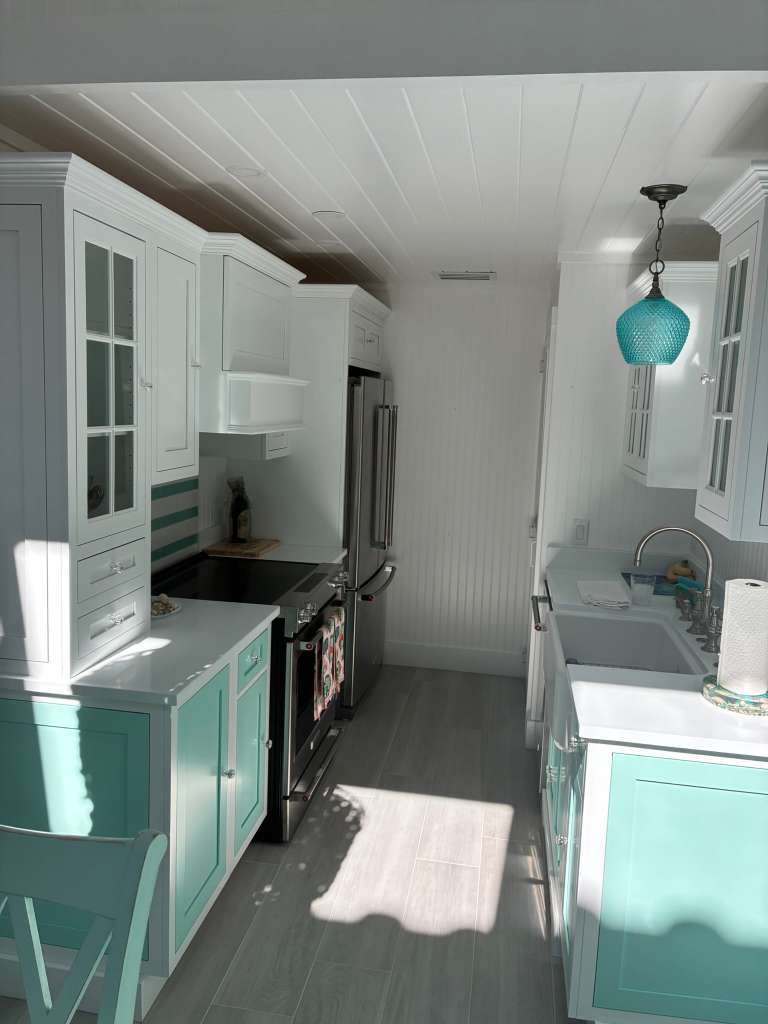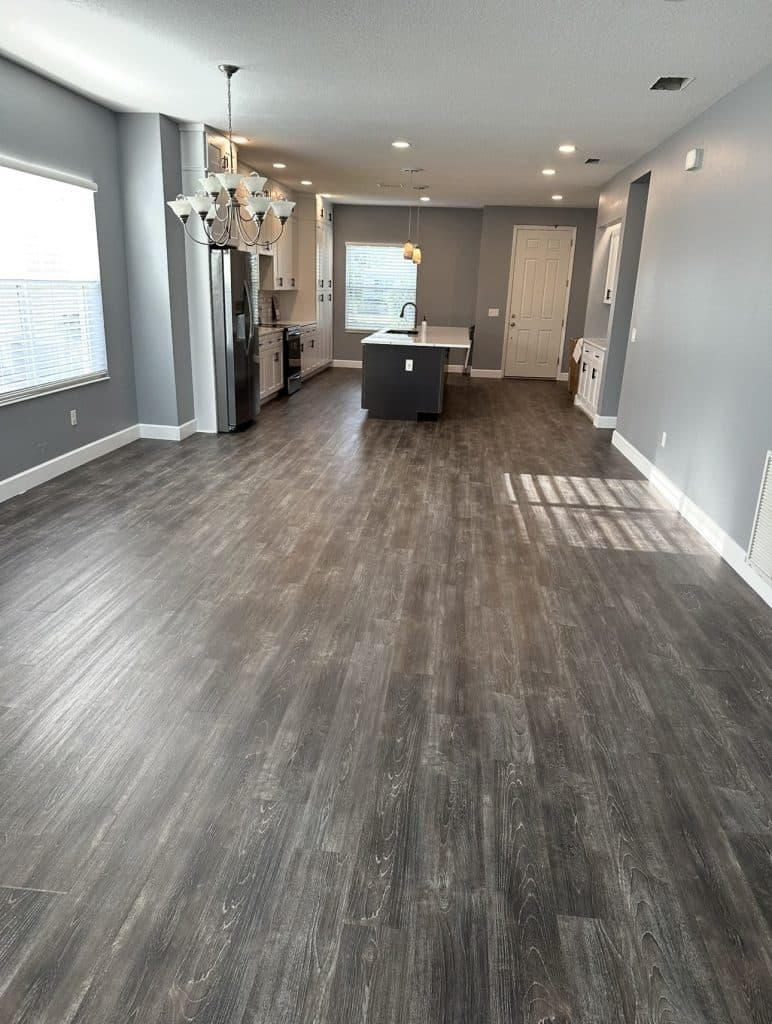
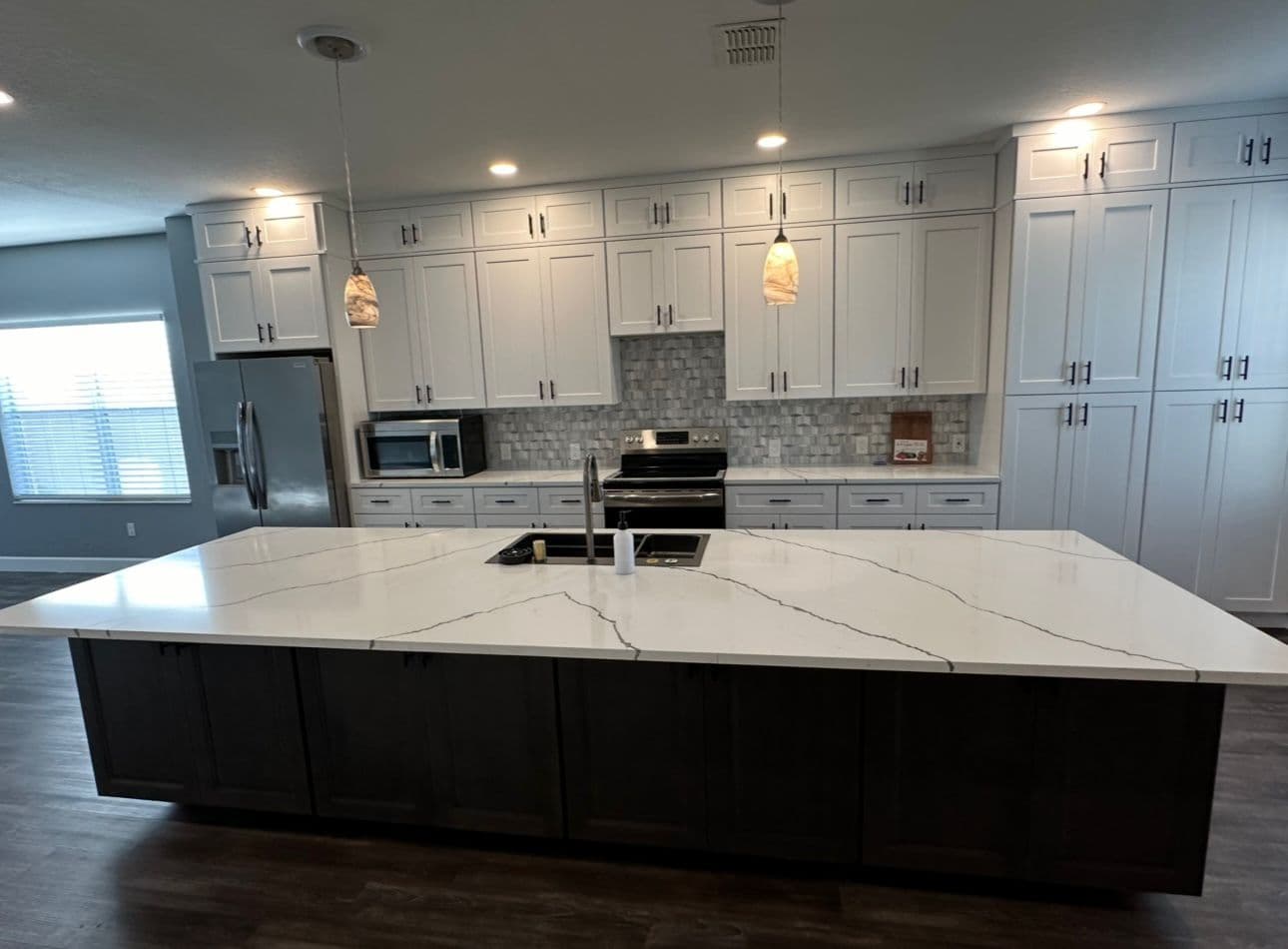
The right choice depends on layout and cabinet condition, which are central considerations in a kitchen remodel sarasota fl project.
Before ordering doors or cabinets, follow the recommended order for planning a kitchen remodel.
Cabinets are one of the biggest decisions in a kitchen remodel. They shape the layout, storage, finished look, and budget. For many Southwest Florida homeowners, the first question is whether to reface the existing cabinets or replace them completely.
Both options can make sense. The right answer depends on the condition of the cabinet boxes, the current layout, moisture history, storage needs, and how much change you want from the finished kitchen.
When Cabinet Refacing Makes Sense
Cabinet refacing keeps the existing cabinet boxes in place and updates the visible surfaces. New doors, drawer fronts, veneers, panels, pulls, and trim can make the kitchen look dramatically newer without removing the full cabinet system.
Refacing may be the right choice when:
- The cabinet boxes are solid and square
- The current layout works well
- You are not moving appliances, plumbing, or walls
- You want a cleaner look without a full rebuild
- The budget is focused on surfaces, counters, backsplash, and hardware
A good refacing job can pair well with new quartz countertops, updated lighting, a tile backsplash, and fresh paint. It is often faster than a full cabinet replacement because the kitchen footprint stays mostly intact.
When Cabinet Replacement Is Better
Replacement is the better option when the cabinets are damaged, poorly laid out, or not worth building around. In Florida homes, moisture is a major factor. Swollen cabinet bottoms, soft particleboard, mold concerns, water damage near sinks, and delaminating finishes usually point toward replacement instead of refacing.
Replacement is also smarter when the existing layout does not work. If you need better pantry storage, larger drawers, a new island, improved appliance placement, or a more open flow, keeping the old cabinet boxes can lock you into the same problems.
Choose replacement when:
- Cabinet boxes are water-damaged or sagging
- Drawers do not operate properly
- You want to change the layout
- You are adding an island or pantry wall
- You are moving appliances or plumbing
- You want long-term durability instead of a cosmetic refresh
The Hidden Cost of Refacing Bad Cabinets
Refacing only works when the underlying cabinet structure is worth saving. If the boxes are weak, out of level, or moisture-damaged, new doors will not solve the real issue. You may spend money on a fresh surface and still have cabinets that do not close correctly, hold weight well, or support new countertops properly.
This is especially important with stone counters. Quartz and granite need stable, level support. If the existing boxes are compromised, the countertop investment is at risk.
Think About the Whole Kitchen, Not Just the Doors
Cabinet decisions should be made with the full kitchen plan in mind. Lighting, flooring, backsplash, counters, appliances, electrical updates, and plumbing all interact with the cabinet layout. A refacing project can become frustrating if you later realize the storage still does not work.
Before deciding, walk through the daily problems in the kitchen. Are the drawers too small? Is there no place for pantry items? Does the island block traffic? Are appliances crowded? If the layout works, refacing may be enough. If the layout is the problem, replacement is usually the cleaner investment.
Which Option Adds More Value?
A clean refacing project can improve resale appeal when the kitchen already functions well. Full replacement usually adds more value when it improves storage, layout, and durability. Buyers can tell the difference between a surface refresh and a kitchen that was planned well.
The best value comes from matching the scope to the home's price point and condition. Overbuilding a modest kitchen can waste money. Underbuilding a kitchen in a higher-value home can leave resale value on the table.
Get the Cabinets Assessed Before You Choose
Your Local GC helps homeowners in North Port, Sarasota, Venice, Port Charlotte, and nearby areas compare cabinet refacing and replacement as part of a practical kitchen remodel plan. If you are not sure which route fits your home, start with the cabinet boxes, moisture history, and layout. The right answer usually becomes clear once those three things are inspected.