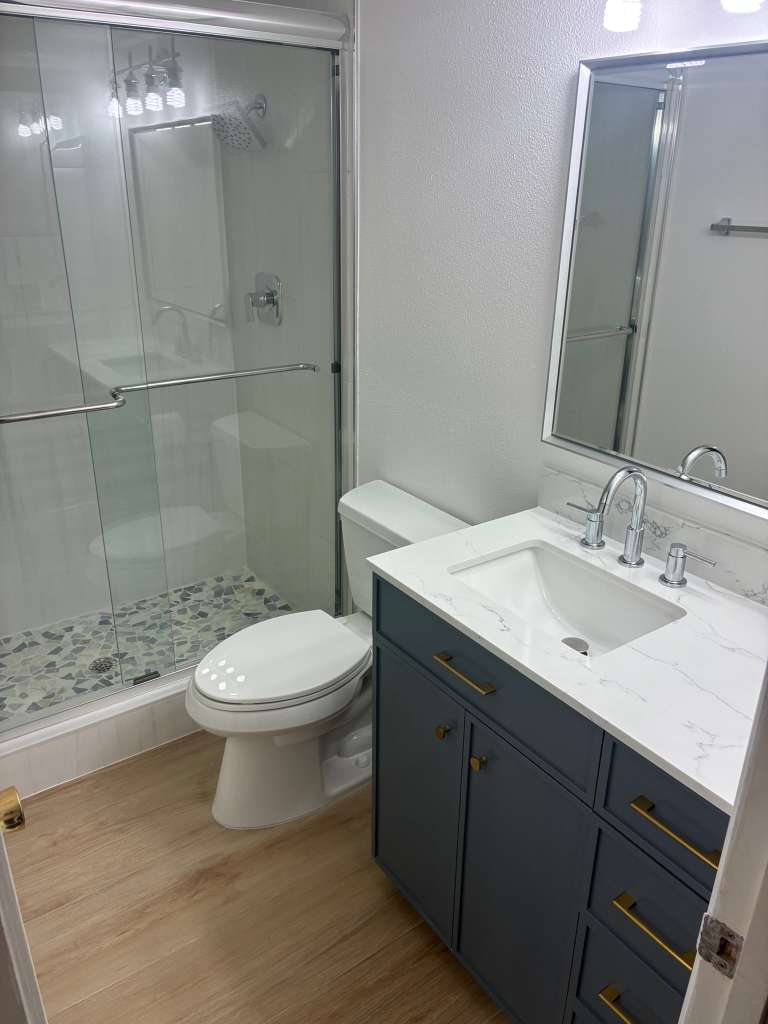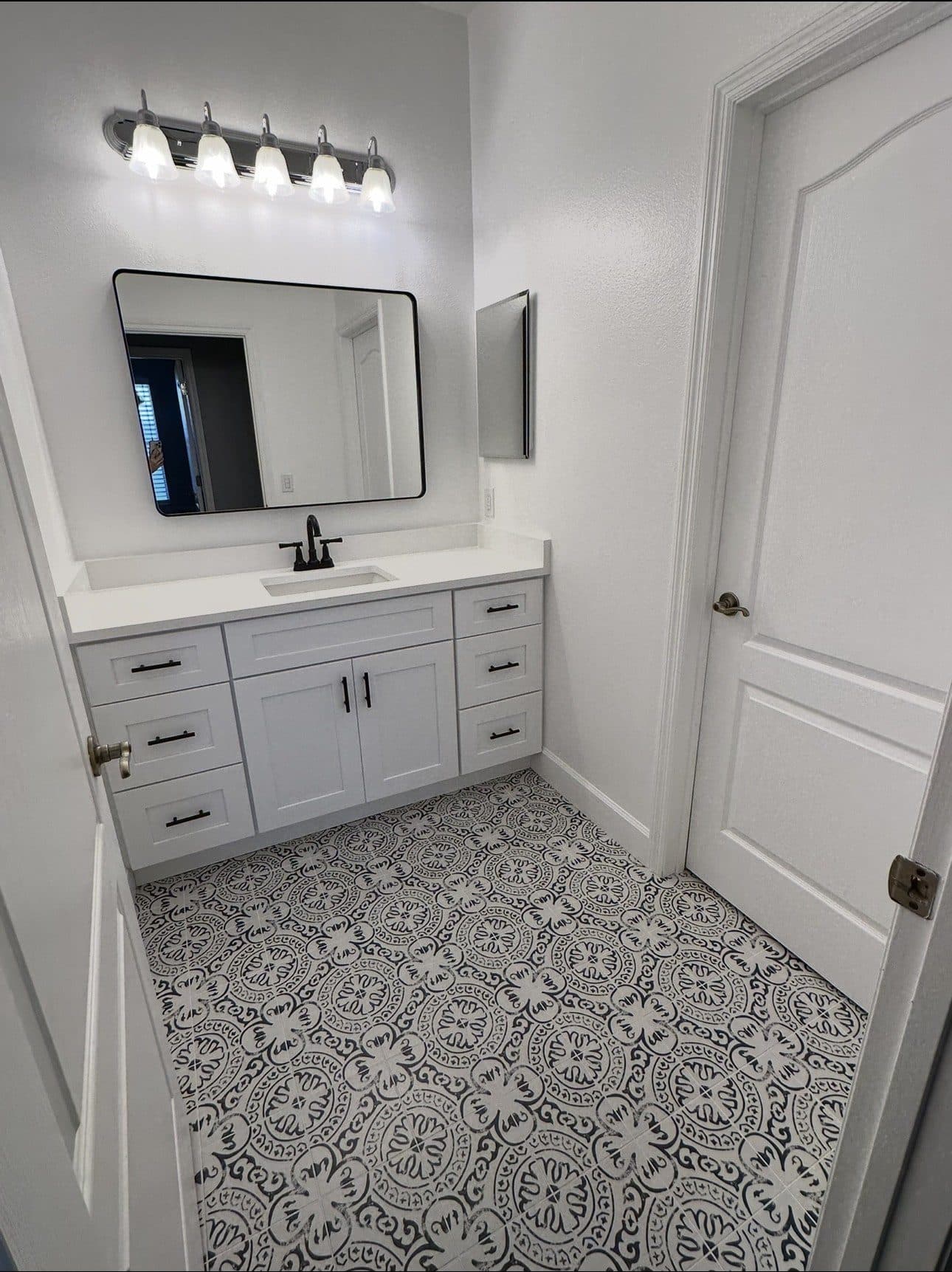
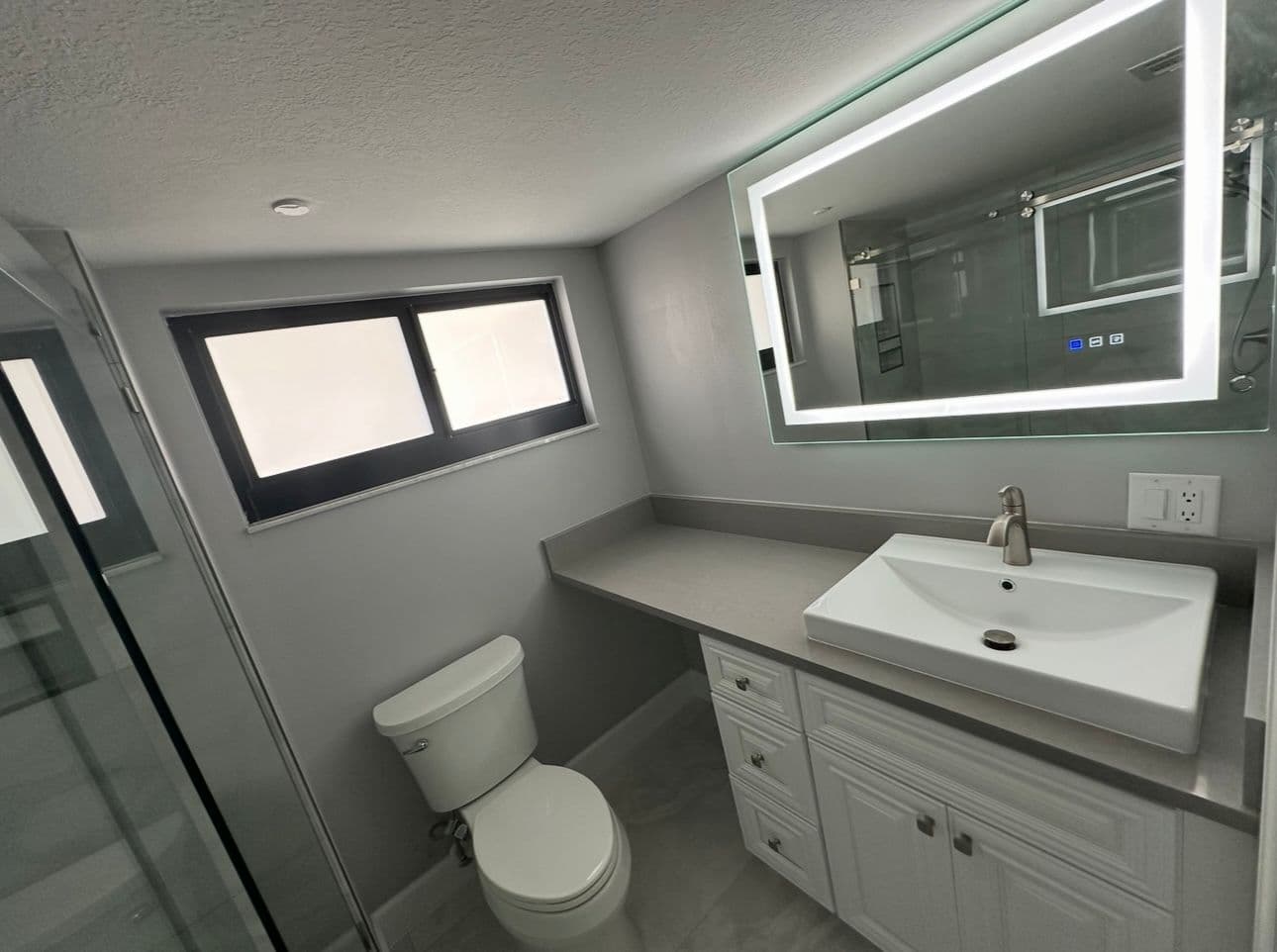
Yes—semi-gloss paint is generally a good choice for bathrooms, especially in humid Southwest Florida homes, because it resists moisture better than flatter finishes and is easier to wipe clean. That said, the paint sheen matters less than moisture control: if a bathroom has poor ventilation, an active leak, or hidden mold, even a good paint finish can fail early. In other words, semi-gloss is a practical option for bathroom walls and trim, but only when the room is dry, cleaned properly, and ventilated well.
Why semi-gloss is often recommended for bathrooms
Bathroom walls face a mix of steam, splashes, condensation, and frequent cleaning. Semi-gloss paint creates a tighter, smoother surface than eggshell or flat paint, which can make it more suitable in these conditions.
Easier to wipe down
Toothpaste splatter, soap residue, and everyday fingerprints are common in a bathroom. Semi-gloss tends to handle routine cleaning better than low-sheen finishes, so walls and trim are usually easier to maintain.
Better moisture resistance than flat paint
A bathroom is not just another interior room. Repeated humidity can cause flat paint to mark up faster, and it may show wear sooner in areas near sinks, tubs, and showers. Semi-gloss is often used because it holds up better to that kind of exposure.
Good for trim, doors, and high-touch areas
Semi-gloss is especially useful on trim, baseboards, doors, and casing because those surfaces get bumped, wiped, and cleaned more often than the rest of the wall.
What matters more than sheen: controlling moisture
If you are wondering, "is semi-gloss paint good for bathrooms?" the real answer depends on the bathroom environment as much as the paint itself. A well-ventilated bathroom with a working exhaust fan and no leak issues is much easier to keep in good shape than a steamy room that stays damp after every shower.
Start with the source of moisture
According to public health guidance on mold prevention, the first step is fixing leaks and drying wet materials quickly. Paint cannot solve a moisture problem hidden behind the walls or under the sink.
Ventilation makes a big difference
If steam hangs in the room long after a shower, the paint is working harder than it should. In Southwest Florida, where humidity is already high, an exhaust fan is especially important for limiting condensation and reducing the chance of mildew growth.
Dry surfaces are non-negotiable
Never paint over wet, chalky, peeling, or moldy surfaces. Paint may not bond properly, and the underlying problem can continue. Before repainting, the room should be cleaned, repaired, and fully dry.
When semi-gloss may not be the best choice
Semi-gloss is a strong all-around option, but it is not always the best solution for every bathroom. Some spaces need a more specialized approach.
Heavy steam bathrooms
If your bathroom gets frequent long showers, poor airflow, or visible condensation on the walls and mirror, a bathroom-specific mildew-resistant coating may be worth considering. These products are designed for moisture-prone rooms and may offer a better fit than standard interior semi-gloss.
Walls with surface damage
Semi-gloss reflects more light than flatter paints, which means dents, patches, and imperfections may stand out more. If the wall surface is uneven, prep work becomes more important before choosing this sheen.
Areas with active mold or recurring leaks
If mildew keeps coming back, the paint finish is not the root cause. Problems like hidden leaks, poor drainage, wet drywall, or failing grout need to be addressed first. For a related look at recurring moisture issues, see why bathroom mold keeps coming back.
Best practices before painting a bathroom
Good prep is just as important as the paint choice. A bathroom can look freshly painted and still fail quickly if the surface was not prepared correctly.
1. Inspect for leaks and damp spots
Check around the toilet, sink, tub, shower, and ceiling areas near attic or roof penetrations. Any sign of staining, bubbling, or soft drywall should be investigated before painting.
2. Clean mildew and residue
Soap film, dust, and mildew can prevent proper adhesion. Surfaces should be cleaned thoroughly and allowed to dry completely before any primer or paint goes on.
3. Repair and prime as needed
Patching holes, sanding rough spots, and using the right primer can help the finish last longer. In some cases, a stain-blocking or moisture-appropriate primer may be recommended depending on the condition of the wall.
4. Make sure ventilation is working
An exhaust fan should move humid air out of the room. If the fan is weak, noisy, or undersized for the space, the paint job may not hold up as well over time.
Semi-gloss versus other bathroom paint finishes
Choosing paint for a bathroom is usually a balancing act between durability, appearance, and how much maintenance you want to do.
Flat and matte finishes
These finishes hide wall imperfections well, but they are generally less washable and less moisture-resistant. They are usually not the first choice for a busy bathroom.
Eggshell and satin finishes
These can offer a softer look than semi-gloss and may work in lower-moisture powder rooms or guest baths with good ventilation. They are easier to clean than flat paint, but may not be as resilient in steamy conditions.
Semi-gloss finish
This is often the practical middle ground for bathrooms because it is durable, wipeable, and better suited to humidity than low-sheen paint. For many homeowners, it is a sensible choice for walls and trim alike.
Bath-specific coatings
In bathrooms with frequent steam or recurring mildew concerns, a dedicated bathroom coating may be the better upgrade. These products are formulated for moist spaces and can be a smart option when cleaning and ventilation are part of the challenge.
Southwest Florida considerations for bathroom painting
Bathrooms in Southwest Florida deal with more than normal indoor moisture. Warm air, seasonal humidity, and frequent AC use can all contribute to condensation issues in homes.
Humidity can linger longer
Even when the shower is off, humid air can stay in a bathroom if the room is not vented properly. That makes the paint choice more dependent on maintenance and airflow.
Coastal conditions can increase maintenance needs
Salt air and high humidity can affect finishes, trim, and caulk over time. Homeowners in the region often benefit from paying close attention to prep, sealing, and ventilation when updating a bathroom.
Remodels should address the whole room, not just the color
If you are updating a bathroom as part of a larger project, it is worth looking at ventilation, grout, caulk, drywall condition, and any water intrusion issues at the same time. Paint alone is only one part of the solution. For more local remodeling context, see bathroom remodel port charlotte fl.
How to decide if semi-gloss is right for your bathroom
Use these questions to narrow down the best finish for your space:
- Does the bathroom have a working exhaust fan?
- Do showers create visible steam or condensation for long periods?
- Are there any stains, leaks, or peeling spots on the walls or ceiling?
- Will the walls need frequent cleaning because of kids, guests, or heavy use?
- Is the wall surface smooth and properly prepped?
If most of your answers point to a clean, dry, well-ventilated room, semi-gloss is usually a sensible choice. If the room has ongoing moisture problems, fix those issues first and consider a more specialized bath coating.
Practical painting tips for a better result
A few simple steps can help the finish last longer and look better.
Choose the right surface
Semi-gloss often makes the most sense on trim and doors, while the walls may be finished in semi-gloss or another bathroom-appropriate sheen depending on the room.
Paint only when conditions are dry
Avoid painting after a shower-heavy day or during periods when the room is still humid. The room should feel dry and stable before application.
Keep the fan running after showers
Running the exhaust fan during and after use can reduce condensation and help preserve the paint finish over time.
Recaulk and repair before repainting
If caulk is failing around the tub or vanity, or grout is cracking near wet areas, fix those problems first. Paint is not a substitute for water management.
FAQ
Is semi-gloss paint good for bathrooms with no window?
Yes, it can be, but ventilation becomes even more important. If there is no window, a properly sized exhaust fan is especially helpful for reducing moisture buildup.
Is semi-gloss better than satin for bathrooms?
Semi-gloss is usually more durable and more moisture-resistant than satin, but satin can be a softer-looking option for less humid bathrooms. The best choice depends on how much steam and cleaning the room sees.
Can I use semi-gloss on bathroom walls and ceiling?
It can be used on walls, but many homeowners prefer a different sheen for the ceiling depending on the room and surface condition. The best option depends on the bathroom layout, moisture level, and the quality of the existing surface.
What if my bathroom already has mold?
Do not paint over it. Clean and dry the surface first, and address the moisture source so the problem does not return.
Does semi-gloss paint stop mildew?
It can help resist moisture and be easier to clean, but it does not solve the conditions that cause mildew. Good ventilation, dry surfaces, and leak repair matter more.
Should I hire a pro for a bathroom repaint?
If the room has peeling paint, mildew, water damage, or complex prep needs, professional help may be worth considering. Bathrooms often need more surface preparation than a standard bedroom or hallway.
Semi-gloss is a strong, practical choice for many bathrooms, especially in humid Southwest Florida homes. It offers a balance of durability, cleanability, and moisture resistance that works well when the room is properly ventilated and the surfaces are in good condition. If your bathroom has leak damage, recurring mildew, or failing caulk and grout, address those issues first so the new paint has a better chance of lasting.