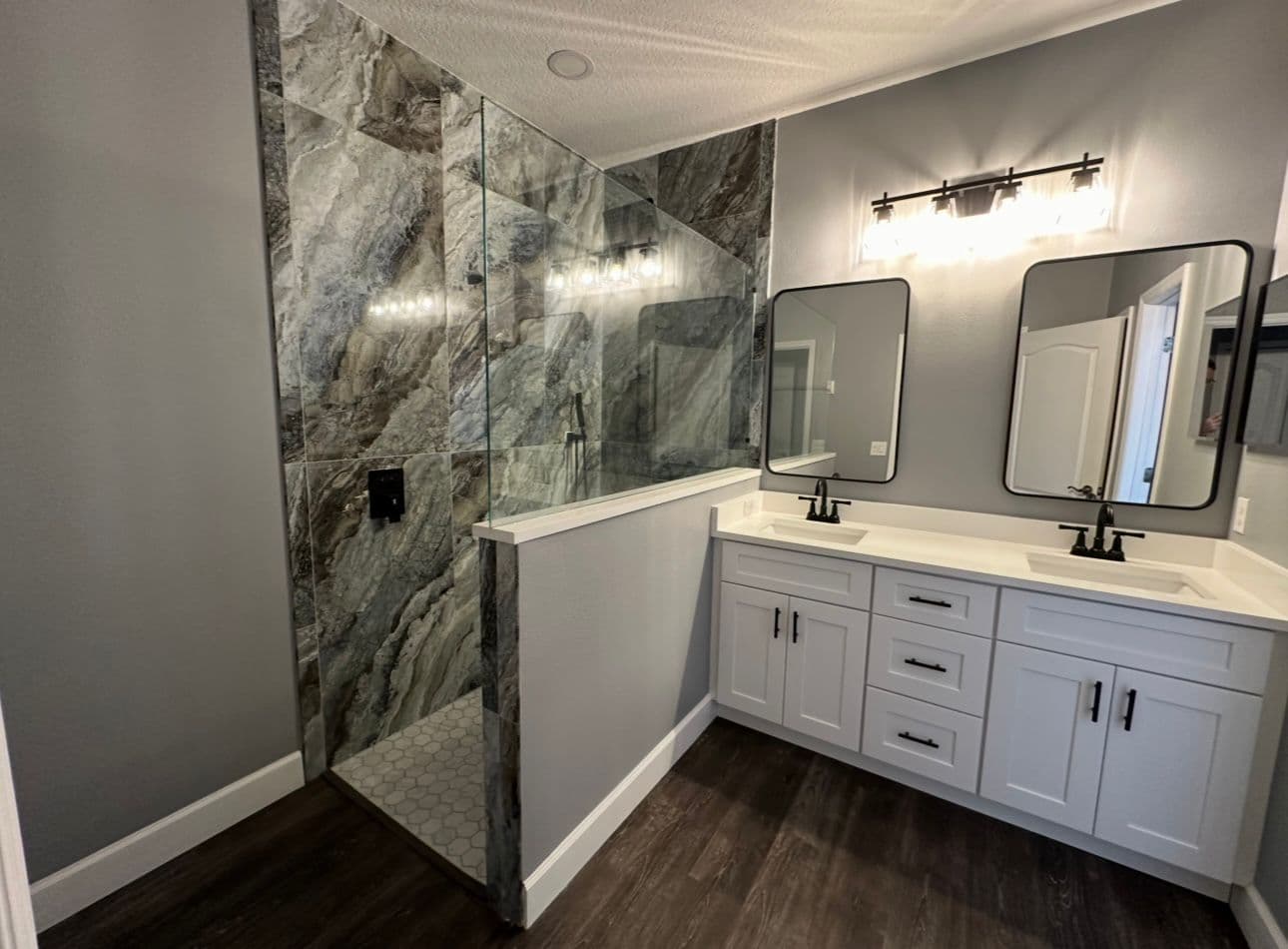
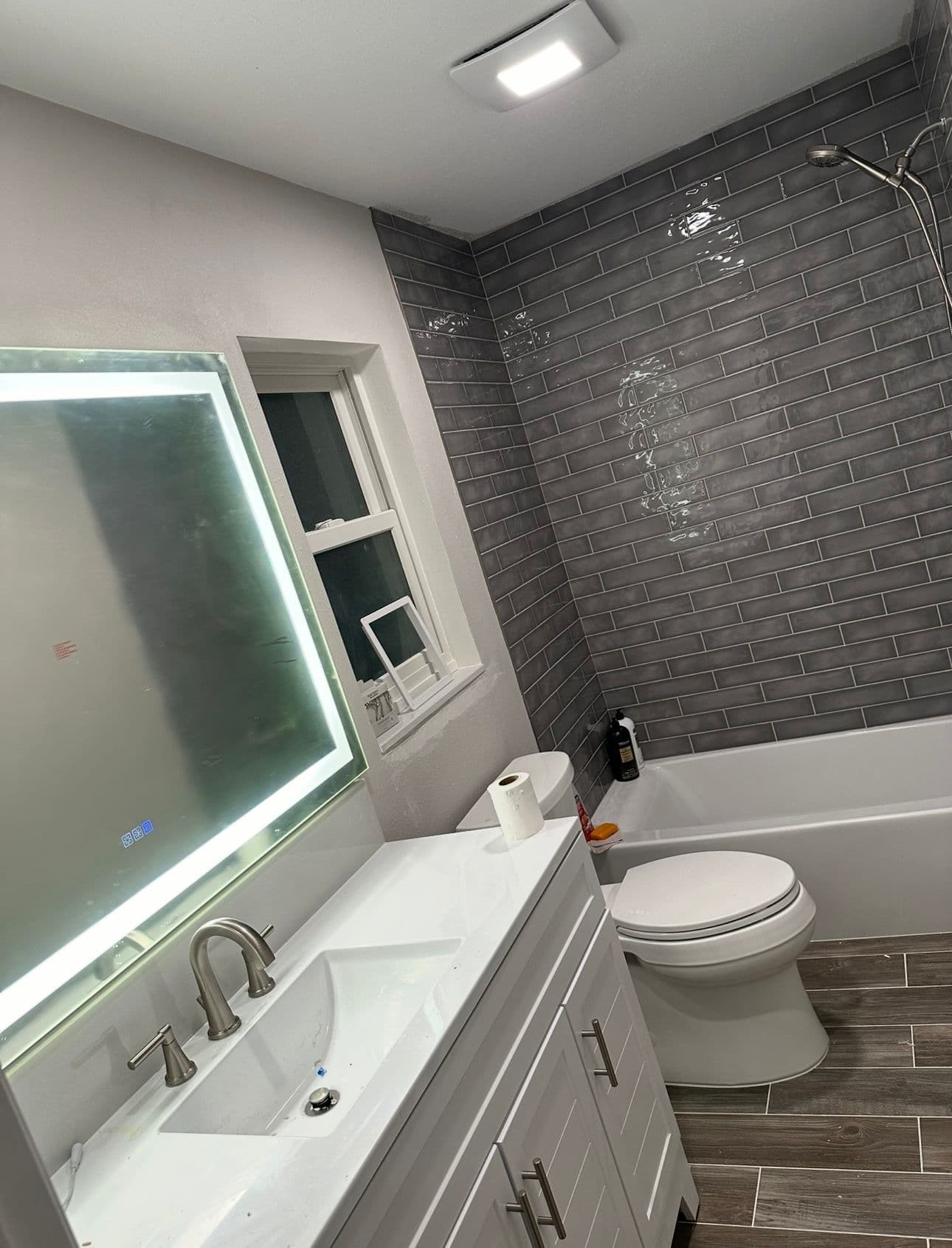
Bathroom tile can last for decades—often 20 to 50+ years—when it is installed well, kept dry, and maintained regularly. In many bathrooms, the tile itself is not what fails first; grout, caulk, and the surface underneath are usually the first parts to show wear, especially in humid Southwest Florida homes.
What Actually Determines Tile Lifespan?
Bathroom tile is durable by design, but a long-lasting tile job depends on more than the tile surface you see. The real life of the installation usually comes down to three things:
- Installation quality
- Moisture control
- Ongoing maintenance
If those three are handled well, ceramic or porcelain tile can stay in good shape for a very long time. If not, even newer tile can develop cracks, loose spots, staining, or hidden water damage.
Tile surface vs. tile system
People often ask how long bathroom tile lasts, but it helps to think of the bathroom as a system. The visible tile may remain intact for years, while the grout, caulk, and substrate can deteriorate sooner. That is why a bathroom can look “mostly fine” on the surface while still needing repair underneath.
Typical Bathroom Tile Lifespan
There is no exact expiration date for bathroom tile, because the lifespan depends on the material, installation, and conditions in the room. Still, a practical rule of thumb is helpful.
Common lifespan ranges
- Tile surface: often 20–50+ years
- Grout and caulk: may need attention every few years
- Full replacement: often driven by water damage, cracking, or major layout/style changes
Porcelain and ceramic tile are both made for durable service. In a bathroom that gets proper ventilation and routine care, it is common for tile to outlast several other finishes in the home.
What shortens that timeline?
A tile installation may fail sooner if it has:
- Poor waterproofing
- Weak or inconsistent grout lines
- Cracked or missing caulk
- Repeated leaks from plumbing or fixtures
- Movement in the floor or walls beneath the tile
- Heavy moisture with limited ventilation
In other words, the tile itself may be fine while the surrounding materials age faster.
Why Grout and Caulk Wear Out First
Grout is often the first visible material to show age. It helps fill the spaces between tiles and helps reduce the chance of moisture getting under the surface. Over time, grout can stain, crack, or loosen.
Grout maintenance matters
Cement-based grout usually needs sealing and periodic resealing. Epoxy grout is more moisture-resistant and does not need sealing, but it still benefits from regular cleaning and care. Even with good materials, grout is not maintenance-free.
Caulk needs replacement too
Caulk is especially important at corners, along tubs, and where tile meets another surface. It flexes where grout should not. When caulk starts shrinking, separating, or cracking, water can find its way behind the tile. That can lead to bigger repairs than a simple cosmetic fix.
Moisture Is the Biggest Threat in Southwest Florida
Bathrooms in Southwest Florida face extra pressure from humidity. That does not mean tile will fail quickly, but it does mean moisture management matters more.
Why humid weather changes the equation
When moisture lingers, mold can grow and hidden damage can spread. Bathrooms with weak ventilation, frequent condensation, or small leaks are more likely to develop problems around tile, grout, and backing materials.
Simple habits that help
To extend the life of bathroom tile:
- Run the exhaust fan during and after showers.
- Wipe down wet walls and shower glass when practical.
- Fix plumbing leaks quickly.
- Keep an eye on soft spots, discoloration, or musty odors.
- Recaulk when joints begin to separate.
These habits are simple, but they make a meaningful difference over time.
Signs Your Bathroom Tile Is Aging Well—or Not
Tile does not usually fail all at once. Most problems start small. Watching for early signs can help you decide whether you need maintenance, targeted repairs, or a bigger remodel.
Healthy signs
- Tile feels solid underfoot
- Grout lines are mostly intact
- Caulk stays flexible and sealed
- No persistent musty smell
- No staining around the tub, shower, or floor edges
Warning signs
- Cracked or loose tiles
- Grout that crumbles or falls out
- Dark stains that keep returning
- Mold or mildew that comes back after cleaning
- Hollow sounds when tapping tile
- Water spots or swelling in nearby walls or flooring
If you notice several of these issues, the problem may be deeper than the tile surface.
When Repairs Are Enough—and When Replacement Makes More Sense
Not every aging bathroom tile job needs a full tear-out. Sometimes targeted repairs can extend the life of the room for years.
Repairs may be enough if:
- Only a few tiles are cracked
- Grout needs cleaning, sealing, or spot repair
- Caulk has failed in a small area
- Water damage has not spread beyond the surface
Replacement may make more sense if:
- Water has gotten behind the tile repeatedly
- The substrate is damaged
- Large areas of grout are failing
- Multiple tiles are loose or cracked
- The bathroom has recurring mold or moisture problems
If you are not sure which category your bathroom falls into, it can help to look at the whole assembly rather than just the tile face.
Tile Materials and How They Compare
Not all bathroom tile performs exactly the same way, even though many materials can last a long time.
Ceramic tile
Ceramic tile is a common choice for bathrooms because it is durable, easy to maintain, and available in many styles. It can last for decades when properly installed and cared for.
Porcelain tile
Porcelain is denser and often performs very well in moisture-prone areas. It is a strong option for bathrooms, particularly where durability and water resistance are priorities.
Natural stone
Natural stone can look beautiful, but it typically requires more maintenance than ceramic or porcelain. It may need more frequent sealing and careful cleaning to stay in good condition.
The material is only part of the story
Even the best tile can fail early if the waterproofing, grout, or substrate is not right. That is why installation matters just as much as product choice.
How to Help Bathroom Tile Last Longer
If your goal is to keep a bathroom in good shape for as long as possible, focus on prevention.
Practical care tips
- Clean tile and grout with products that are safe for the surface
- Avoid harsh scrubbing tools that damage grout joints
- Keep caulk joints intact around tubs, showers, and corners
- Check for leaks under sinks and around fixtures
- Use ventilation consistently in steamy bathrooms
- Address small repairs before they turn into larger ones
A good maintenance rhythm
A smart approach is to inspect the bathroom a few times a year. Look closely at corners, edges, grout lines, and areas that get wet every day. Catching a small issue early can save the tile from hidden damage later.
What Homeowners Often Miss
Many people assume tile is permanent and do not think much about what is happening below it. That is understandable, but it can lead to surprises.
Hidden issues beneath the tile
- Moisture trapped behind walls
- A damaged backer board or underlayment
- Loose tile from movement below
- Deteriorated sealant at critical joints
This is why a bathroom can look acceptable on the surface while still needing meaningful repair. The visible tile may be doing fine, but the assembly underneath may be telling a different story.
If you are planning a larger update, it may help to read why shower grout keeps cracking in Florida for a closer look at one of the most common early warning signs.
Bathroom Tile in a Remodel Decision
Homeowners often ask whether they should repair aging tile or start fresh. The answer depends on the condition of the room and your goals for the space.
Consider a repair if:
- The tile is mostly in good shape
- The problem is limited to grout or caulk
- There is no evidence of widespread moisture damage
Consider a remodel if:
- The tile system has repeated failures
- You want to improve the bathroom’s layout, function, or style
- You are already dealing with hidden water damage or mold concerns
A bathroom remodel can be a practical time to correct moisture issues and rebuild the room with better materials and details for long-term durability. If you are exploring that path, bathroom remodel port charlotte fl may be a useful starting point for local homeowners.
FAQ: How Long Does Bathroom Tile Last?
How long does bathroom tile last on average?
Bathroom tile often lasts 20 to 50+ years, especially when it is properly installed and maintained. The grout, caulk, and substrate may need attention sooner.
Does ceramic tile last longer than grout?
Usually, yes. Tile surfaces are generally more durable than grout lines, which are more likely to stain, crack, or need resealing over time.
What usually causes bathroom tile to fail?
Most failures come from moisture intrusion, poor installation, movement in the substrate, or neglected grout and caulk—not from normal wear on the tile itself.
Can bathroom tile last a lifetime?
In some cases, tile can last for many decades, but “lifetime” depends on maintenance, humidity, and whether the bathroom stays dry and structurally sound.
How often should grout and caulk be checked?
It is a good idea to inspect them a few times a year and repair any cracking, shrinking, or separation as soon as you notice it.
Is replacing bathroom tile worth it if the surface still looks good?
It can be, if there is hidden moisture damage, recurring mold, loose tiles, or failing grout and caulk that signal deeper problems.
Bathroom tile can last a very long time, but its lifespan is really about the whole bathroom assembly, not just the visible surface. With good installation, steady moisture control, and timely grout and caulk maintenance, a tile bathroom can remain durable and attractive for decades. If you are seeing repeated cracking, staining, or water issues, it may be time to look beyond cleaning and consider whether a repair or remodel is the better long-term solution.