
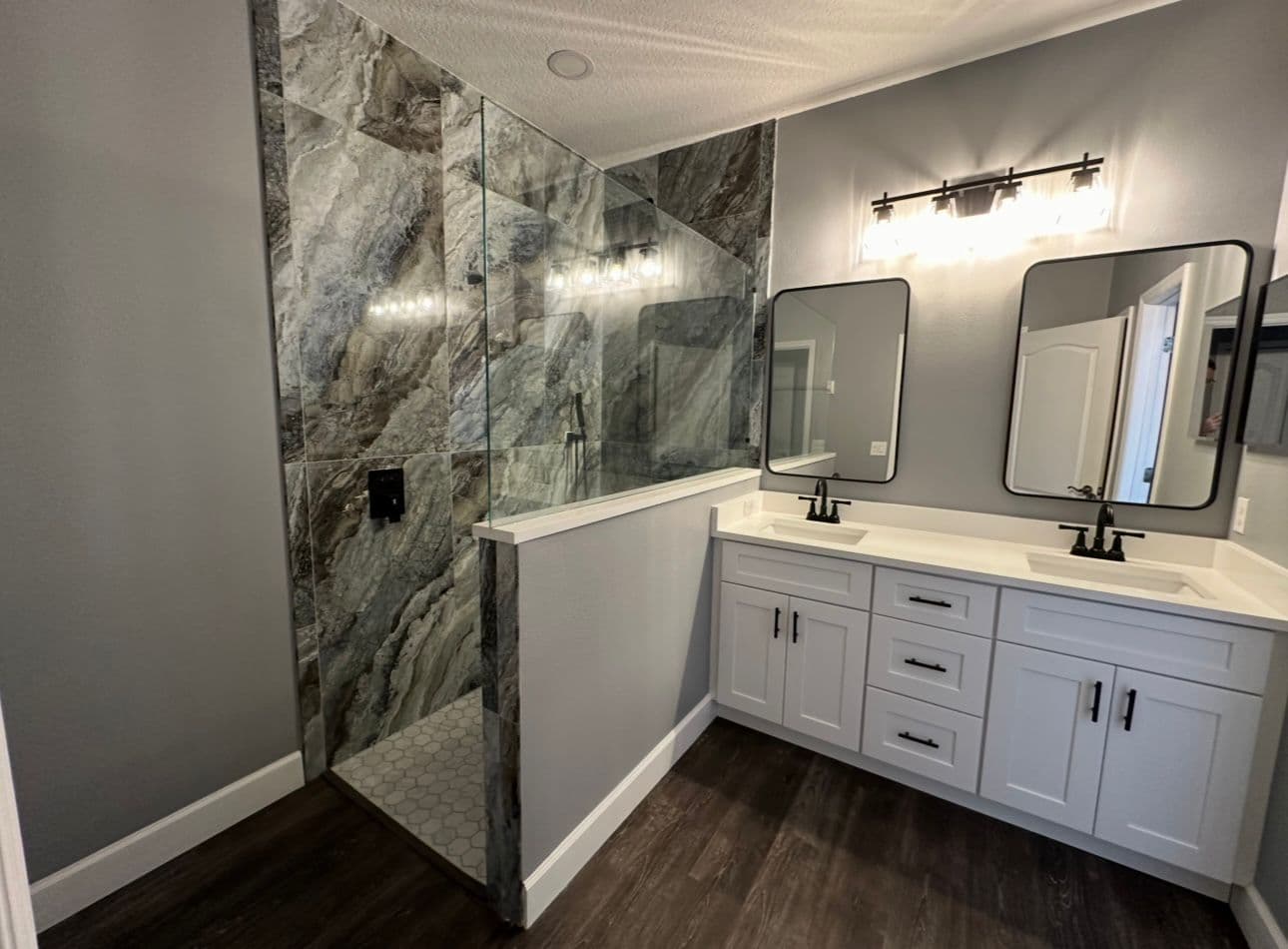
Replacing a shower with a bathtub means removing the existing shower base and rebuilding the space so a tub can be installed, supported, and waterproofed correctly. In most Florida homes, that is not just a cosmetic swap. It is usually a plumbing and waterproofing project that may require a permit, especially when drain lines, fixture locations, or wall surfaces are being changed.
For homeowners in Southwest Florida, the best way to think about this project is simple: the bathtub has to fit the room, the subfloor and framing have to support it, the drain and overflow need to line up, and the finished walls need to protect the space from moisture. If those parts are handled correctly, a shower-to-tub conversion can be a practical way to update a bathroom for family use, resale appeal, or better bathing comfort.
What the conversion actually involves
A shower-to-tub project is usually more than taking one fixture out and dropping another in. The shower receptor, some wall finishes, and often portions of the plumbing have to be removed before the new bathtub can go in.
Typical scope of work
A conversion like this commonly includes:
- Removing the shower pan or shower base
- Taking out wall tile, panels, or other finishes as needed
- Adjusting plumbing so the tub drain and overflow are in the correct position
- Checking the subfloor and framing for damage or weakness
- Installing the bathtub according to the manufacturer’s instructions
- Rebuilding the wall surfaces around the tub
- Replacing waterproofing details that were tied to the old shower
- Testing the new installation for leaks and drainage performance
The exact steps depend on the existing bathroom layout. A shower that was installed on a slab may involve different plumbing work than one built over a framed floor. Even small differences in drain placement or tub size can affect the amount of demolition and repair needed.
Why this is more than a fixture swap
A shower and a bathtub occupy the same general part of a bathroom, but they do not always use the same rough-in dimensions. The drain location, overflow height, wall height, and support requirements may all be different. That means the project often has to be planned around the new tub first, not around the old shower.
Permits and code requirements in Florida
In Florida, replacing a shower with a bathtub is often treated as regulated plumbing work. When plumbing systems are altered or fixtures are replaced in a way covered by code, a permit is commonly required unless a specific exemption applies. Local building departments in Southwest Florida review the work and handle inspections under the Florida Building Code framework.
Why permits matter
Permit review helps confirm that the finished bathroom meets current requirements for:
- Plumbing fixture installation
- Drain and overflow placement
- Waterproofing and moisture protection
- Proper support and structural stability
- Safe, sanitary bathroom function
It is also worth noting that a bathroom must still provide the required sanitary fixture set, which includes either a bathtub or a shower. So if you are removing a shower, the new tub is not just a design upgrade; it is also part of keeping the room compliant as a functional bathroom.
What homeowners should expect
Permit requirements can vary by local jurisdiction, and the scope of the work may change what is needed for review. In some cases, a simple fixture swap may be handled differently than a project that involves new plumbing, wall reconstruction, or floor repair.
If you are planning a tub conversion in the area, it is smart to start with local permit questions before demolition begins. That helps avoid delays if inspections or documentation are required.
For homeowners comparing remodel options, remodeling contractors Sarasota FL can be a useful place to start when planning a bathroom project that involves plumbing and waterproofing changes.
How the bathtub has to be supported
Bathtubs are not meant to just sit loosely on the floor. They need to be level, fully supported, and installed in a way that matches the manufacturer’s instructions. That is one of the most important parts of the project because a poorly supported tub can flex, leak, or cause tile and wall problems later.
Support details that matter
Manufacturers commonly require:
- A level installation surface
- Full support under the tub floor or base
- Correct drain and overflow assembly
- Shimming where needed to keep the tub stable
- Proper fastening to framing where required
Some tubs may also call for an optional mortar bed to improve support, depending on the model. The key point is that the product instructions matter. A tub install should follow the specific requirements for that exact fixture, not a one-size-fits-all method.
Why support affects durability
If a bathtub is not supported correctly, it can move slightly when someone enters, exits, or fills it with water. Over time, that movement can stress caulk lines, crack wall finishes, and create leaks around the drain area. In Southwest Florida, where humidity and moisture already put pressure on bathroom materials, solid support is especially important.
Drain, overflow, and plumbing changes
One of the biggest differences between a shower and a bathtub is the drain assembly. A shower receptor and a tub do not necessarily share the same drain height or overflow configuration, so the plumbing often has to be reworked.
What usually needs adjustment
The plumber or installer may need to:
- Move the drain connection to match the tub opening
- Set the overflow at the correct height
- Confirm the trap and waste line alignment
- Check that the drain components are assembled per the manufacturer’s instructions
- Verify leak-free operation before closing the walls
If the existing shower plumbing is in good condition and already close to the new tub location, the work may be simpler. If not, the subfloor or wall cavities may need more extensive access.
Why drain placement is so important
A bathtub that sits even slightly off from the drain opening can create installation problems that are hard to fix later. That is why the tub model is usually selected before the rough-in is finalized. The fixture choice and plumbing layout have to work together.
Waterproofing and wall reconstruction
When a shower is replaced with a bathtub, the wall surfaces around the tub have to be rebuilt so they protect the room from moisture. This is not just about appearance. It is about preventing water intrusion behind the finish surfaces.
What gets rebuilt
Depending on the condition of the bathroom, the rebuild may include:
- Backer board or other approved wall substrate
- Waterproof membranes or other moisture barriers
- Tile, panels, or another wall finish
- Caulk and sealant at the tub-to-wall junction
- Trim details around plumbing penetrations
If the original shower had water damage, hidden repairs may also be needed before the new tub and wall finish go in. That is especially common in older bathrooms or in rooms where the shower has leaked for some time.
Moisture control in Southwest Florida
Bathrooms in Southwest Florida deal with warm temperatures, humidity, and frequent use. That combination makes good waterproofing especially important. A tub surround that is not sealed properly can allow moisture to get into framing or wall materials, where it may lead to swelling, mold, or deterioration over time.
If you are already seeing signs of persistent moisture problems, it may help to read more about why shower grout keeps cracking Florida, since cracked grout and failing sealant often point to bigger waterproofing concerns.
Choosing the right bathtub for the space
The best tub for a shower conversion depends on the size of the bathroom, the existing framing, and how the room will be used.
Common tub types for conversions
Homeowners often choose from:
- Alcove tubs for standard three-wall bathroom layouts
- Tub-and-shower combinations for family bathrooms
- Soaking tubs when the room has enough space
- Accessible or low-threshold tub options in certain situations
A standard shower replacement usually works best with an alcove tub if the bathroom was already designed around a tub/shower wall configuration. If the room is tight, the available footprint becomes the biggest limitation.
Things to measure before selecting the tub
Before buying a fixture, it helps to confirm:
- Overall tub length and width
- Drain location
- Overflow configuration
- Wall height and apron style
- Existing framing limits
- Door swing and clear walking space
A tub that looks good in a showroom may still be a poor fit if the rough-in dimensions do not match the bathroom. That is why planning comes first.
What can make the project more complicated
Some shower-to-tub conversions are fairly straightforward. Others uncover issues that need to be fixed before the new tub can be installed.
Common complications
These may include:
- Damaged subflooring
- Improper framing or out-of-square walls
- Rot or mold around the old shower area
- Plumbing that is too high, too low, or in the wrong location
- Slab conditions that limit drain relocation
- Limited access behind walls or below the floor
If the bathroom has a history of leaks, the project may take on some repair work that was not visible at the start. That is one reason it helps to approach the job as a remodel rather than a quick fixture change.
When a conversion is a better fit than a full remodel
A shower-to-tub conversion can be a good option if:
- The layout already works well
- The room has enough space for the tub you want
- The subfloor and framing are in decent condition
- You want to keep the rest of the bathroom mostly unchanged
If the shower area has structural or moisture damage, though, the project may make more sense as part of a broader bathroom renovation.
Step-by-step overview of the process
Here is the general order a shower-to-tub project often follows:
- Evaluate the existing bathroom and measure the space.
- Select the bathtub model and confirm rough-in requirements.
- Check local permit needs before starting demolition.
- Remove the shower base, wall finishes, and any obstructing materials.
- Inspect the subfloor, framing, and plumbing.
- Rework the drain and overflow to match the new tub.
- Set the bathtub in place with proper support.
- Install wall backer, waterproofing, and finish surfaces.
- Seal joints and plumbing penetrations.
- Test the installation for proper drainage and leaks.
This sequence can shift depending on the home, the tub model, and the extent of the repairs needed. Still, the basic logic stays the same: remove, inspect, rebuild, install, and test.
What homeowners in Southwest Florida should plan for
In this region, bathroom remodels often have to account for moisture, age of the home, and local permit review. Even in a relatively simple tub conversion, the details matter.
A few practical planning points
- Schedule time for permits and inspections if required
- Be ready for hidden repairs once the shower is removed
- Choose materials that hold up well in humid conditions
- Make sure the tub support and waterproofing are done correctly the first time
- Confirm that the final design matches how the bathroom will actually be used
If you are still deciding whether a tub conversion fits your home, it may help to review broader remodel planning first. A local guide like bathroom remodeling ideas North Port home value can help you think through the bigger picture before choosing fixtures.
Is a shower-to-tub conversion worth it?
It can be, depending on your goals.
A bathtub may be a better choice if you want a family-friendly bathroom, a place to bathe children or pets, or a more versatile layout for resale. On the other hand, if everyone in the home prefers a shower, or if space is tight, the return on the project may be more about comfort and function than luxury.
The best value usually comes from doing the conversion carefully: correct fixture selection, proper permit handling, strong support, and waterproof finishes that can handle daily use.
FAQ
Do you always need a permit to replace a shower with a bathtub?
Not always, but in Florida this type of work is commonly permit-related when plumbing or regulated fixture changes are involved. Local requirements can vary, so it is best to confirm before demolition.
Can a bathtub fit where a shower used to be?
Often yes, if the room has enough space and the rough-in dimensions work. The drain location, wall framing, and surrounding finishes all need to match the new tub.
Do you have to change the plumbing for a tub conversion?
Sometimes. If the drain and overflow locations do not line up with the new bathtub, plumbing changes are usually needed. The more the new tub differs from the old shower layout, the more likely plumbing adjustments become.
What is the biggest mistake in this kind of project?
Poor support and weak waterproofing are two of the biggest problems. A tub that is not installed level and fully supported, or walls that are not sealed correctly, can lead to leaks and damage later.
Can you keep the existing tile around the tub?
Only if the existing materials are in good condition and the new tub height and wall layout allow it. In many cases, at least part of the wall finish has to be removed and rebuilt to fit the new fixture correctly.
How do I know whether my bathroom is a good candidate?
A good candidate usually has enough floor space, a sound subfloor, manageable plumbing adjustments, and no major hidden water damage. If any of those are uncertain, a site evaluation is the safest starting point.
The bottom line
So, how do you replace a shower with a bathtub? You remove the old shower components, verify the plumbing and structure, install a properly supported bathtub, rebuild the surrounding waterproof walls, and complete any required permit and inspection steps. In Southwest Florida, that process is usually straightforward only when the fixture, plumbing, and moisture protection are planned together.
If you are considering a conversion in Venice or nearby, start with the space you have, the tub you want, and the condition of the existing bathroom. A well-planned project can give you a more useful and comfortable bath area without creating future moisture problems.