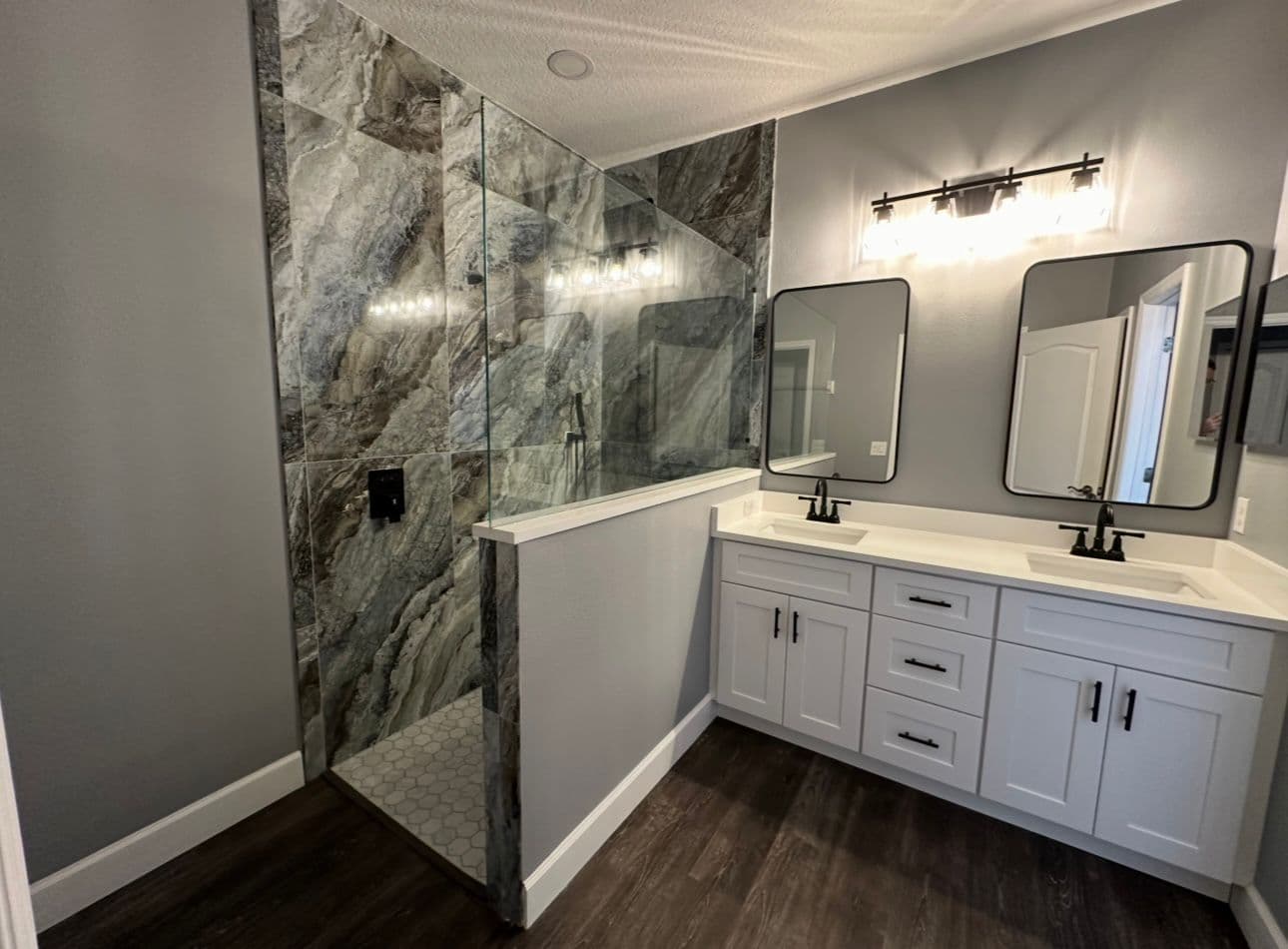
Choosing a bathroom vanity color starts with the room you already have, not the color you wish it had. The best choice usually depends on four things: the fixed finishes in the bathroom, how much natural light the space gets, the size of the room, and the style you want to create. In Southwest Florida, that often means leaning toward lighter, calmer colors that work well with bright daylight, coastal design, and bathrooms that need to feel clean and open. If you are asking how do you choose a bathroom vanity color?, the simplest answer is to let the tile, countertop, and lighting guide you first, then pick a shade that either blends with those finishes or gives you the right amount of contrast.
Start with the finishes you cannot easily change
Before you look at paint chips or cabinet samples, study the bathroom’s permanent or expensive-to-change materials. These usually include the countertop, wall tile, floor tile, shower surround, and metal fixtures.
Match the vanity to the room, not just to a swatch
A vanity color that looks great by itself can look wrong next to veined stone, patterned tile, or warm brass hardware. The goal is not to find the prettiest cabinet color in isolation. The goal is to make sure the whole room feels coordinated.
A few practical ways to think about it:
- If the tile or stone is busy, a simpler vanity color usually works better.
- If the countertop has cool undertones, very warm cabinet colors may clash.
- If the fixtures are matte black, chrome, brushed nickel, or brass, make sure the vanity color supports that metal tone rather than fighting it.
- If the room has mixed finishes, a neutral vanity color is often the safest bridge between them.
For homeowners planning a larger bathroom update, it can help to think about the vanity as part of the full room composition, not a separate furniture piece. If you are already considering a broader project, this bathroom remodel port charlotte fl page can be a useful starting point for the type of work that often happens around a vanity change.
Use natural light to guide the color choice
Light changes how cabinet color reads. The same vanity can look crisp in bright daylight and heavy or muddy at night. That is why paint and design guidance consistently recommends evaluating samples in the actual bathroom light before making a final decision.
Bright rooms can handle more color
If your bathroom gets a lot of natural light, especially in Southwest Florida, you have more flexibility. Strong daylight can keep deeper colors from feeling too heavy. In a bright room, a vanity can be a focal point instead of disappearing.
Low-light bathrooms usually need lighter choices
Small bathrooms, interior bathrooms, and powder rooms with limited daylight often benefit from lighter vanity colors. Light shades reflect more available light and usually make the room feel larger and fresher.
Good options for lower-light spaces often include:
- Soft white
- Off-white
- Light warm gray
- Pale greige
- Very muted coastal blue
Test samples at different times of day
Do not choose the color based only on a showroom sample or a phone screen.
Instead:
- Bring home two or three cabinet samples.
- Place them next to the countertop and tile.
- Check them in morning light, afternoon light, and at night with the bathroom lights on.
- Look at them with the door open and closed.
This matters in Southwest Florida because intense sun and bright reflected light can change the way a finish feels during the day. What seems soft and warm indoors may look much brighter once daylight hits it.
Consider the size of the bathroom
Room size affects how bold you can go. In a small bathroom, the vanity often takes up a lot of visual space, so the color choice has an outsized effect.
Small bathrooms usually favor lighter colors
If you want a bathroom to feel more open, lighter vanity colors are usually the easiest path. White, off-white, pale gray, and soft neutral tones help reduce visual weight.
These colors tend to work well when:
- The bathroom is compact
- There is little natural light
- The vanity is large relative to the room
- The rest of the finishes are already visually active
Larger bathrooms can support deeper shades
A bigger bathroom can handle stronger color contrast without feeling cramped. That is where deeper navy, charcoal, and dark green can work well, especially if the room has good lighting and simpler surrounding finishes.
Powder rooms can be more expressive
Because powder rooms are smaller and usually used for shorter visits, homeowners sometimes choose bolder vanity colors there. A dramatic vanity can become a design feature instead of overwhelming the space.
Still, even in a powder room, the same basic rules apply: check the lighting, confirm the fixture finish, and make sure the surrounding tile does not already create too much visual noise.
Choose the mood you want the bathroom to have
Once the practical factors are covered, think about the feeling you want the room to create. Color is one of the fastest ways to shape mood.
For a calm, spa-like look
Soft blues, blue-greens, sage, and muted green tones often work well when you want a relaxed atmosphere. These colors can feel coastal without becoming overly themed, which is a good fit for many Southwest Florida homes.
For a timeless, flexible look
White, off-white, warm gray, and greige are common choices when you want a vanity color that will not feel tied to one trend. These shades usually pair easily with many countertops and fixtures, which makes them practical for homes that may be updated in stages.
For a custom or dramatic look
Navy, charcoal, and dark green can add personality and contrast. They are often most successful when the rest of the bathroom is relatively simple.
That means:
- Less busy tile
- Clean countertop lines
- Enough lighting to keep the room balanced
- Hardware and trim that complement the deeper shade
For a coastal Southwest Florida feel
In this region, lighter neutrals and soft coastal tones tend to work especially well because they match the bright, airy feel many homeowners want. Warm whites, soft grays, muted blue-greens, and gentle sage tones often feel natural in homes with strong daylight and easy indoor-outdoor flow.
Pick a color family that fits the rest of the home
A vanity does not need to match every finish exactly, but it should feel connected to the rest of the home.
Good color families to consider
- White / off-white: Best if you want the brightest, most timeless look.
- Greige / warm gray: Good if you want neutral without looking stark.
- Sage / muted green: Good for a soft, spa-like, coastal result.
- Navy / charcoal: Good for contrast and a more custom feel.
Think about undertones
Undertones matter more than many homeowners expect. A cabinet color that looks “gray” may actually lean blue, green, or purple in your bathroom light. A white that seems clean in a store may look yellow against a cool countertop.
To reduce surprises:
- Compare the vanity sample against the countertop directly.
- Hold it next to the floor tile and backsplash.
- Check it against the trim color, if trim is staying the same.
If you are researching related bathroom issues while planning the room, you may also find this article on why shower grout keeps cracking Florida helpful, especially if you are coordinating vanity updates with other surface repairs.
Choose the finish as carefully as the color
Color gets the most attention, but finish affects how the vanity looks and performs.
Satin and semi-gloss are common cabinet-friendly options
Bathroom cabinetry is exposed to humidity, splashes, and frequent cleaning. Finishes that are easier to wipe down are usually practical.
In general:
- Satin can give a softer look and still clean reasonably well.
- Semi-gloss often offers more wipeability and a bit more moisture resistance.
That does not mean one finish is always right and the other is wrong. The right choice depends on the look you want, the cabinet material, and the level of use the bathroom gets.
Matte finishes need more care
Matte can be beautiful, but in a bathroom it may show marks more easily and may not be the best fit in a highly used space. If you prefer a softer finish, ask how the surface will hold up to cleaning and humidity before deciding.
A simple step-by-step process that works
If you want a practical way to choose, follow this order.
1. Identify the fixed finishes
List the countertop, tile, flooring, and fixtures that are staying.
2. Decide whether the vanity should blend or contrast
Ask yourself whether you want the vanity to disappear into the room or stand out as a focal point.
3. Narrow the options to a small palette
Pick two or three color families that fit the room’s style and lighting.
4. Test samples in the actual bathroom
Look at each sample in daylight and artificial light.
5. Choose the finish that matches use and maintenance
Consider how often the bathroom is used and how easy the surface will be to keep clean.
6. Step back and judge the whole room
Do not evaluate the vanity by itself. Look at it with mirrors, fixtures, flooring, and wall color all in view.
Common mistakes homeowners make
Choosing before the countertop is selected
This often creates a mismatch later. The countertop and vanity should be part of the same conversation.
Ignoring undertones
A warm vanity color may clash with a cool stone top, even if both are technically neutral.
Picking a color from a screen
Digital images are useful for inspiration, but they are not reliable for final selection.
Going too dark in a small, dim bathroom
Deep color can look sophisticated, but it can also make a small room feel tighter if there is not enough light.
Forgetting the humidity factor
Bathrooms need finishes that suit moisture and cleaning. The color matters, but the cabinet finish and coating matter too.
Southwest Florida-specific color guidance
Homes in Southwest Florida often deal with strong daylight, a bright overall feel, and design styles that lean coastal, relaxed, or transitional. That makes certain vanity colors especially practical.
Often dependable choices for the region
- Warm white
- Soft off-white
- Light greige
- Pale gray
- Muted blue-green
- Gentle sage
These colors usually feel clean and airy without becoming too cold or too trendy. They also tend to coordinate well with the light-filled, open look many local homeowners prefer.
When deeper colors can still work
Darker vanity colors can still be a strong choice in Southwest Florida if:
- The bathroom has plenty of natural or layered lighting
- The room is large enough to handle contrast
- The surrounding finishes are calm and simple
- You want a more custom, tailored look
When to ask for help from a remodeling professional
If you are changing only the vanity color, the project may seem simple. But once you start coordinating countertops, lighting, plumbing fixtures, mirrors, and wall finishes, the decision gets more complicated.
A remodeling professional can help you think through how the vanity color will work with the room as a whole, especially if you are replacing the cabinet, not just repainting it.
If your project is part of a larger bathroom update in the region, this general contractor north port fl page may be useful as a starting point for planning a broader remodel.
FAQ
What is the safest bathroom vanity color?
White or off-white is usually the safest choice because it works with many countertops, tile styles, and fixture finishes.
What vanity color makes a small bathroom look bigger?
Light colors usually make a small bathroom feel more open. Soft whites, pale grays, and light greige are common choices.
Should the vanity match the tile exactly?
Not necessarily. It usually looks better when the vanity complements the tile instead of matching it perfectly.
Are dark vanity colors a bad idea in bathrooms?
No. Dark colors can look great in larger or well-lit bathrooms, but they are usually harder to use well in small, dim rooms.
What vanity colors work best in Southwest Florida homes?
Lighter neutrals, soft whites, warm grays, and muted coastal blues or greens are often the most flexible and practical choices.
How do I test a vanity color before committing?
Bring samples into the actual bathroom, check them in daylight and at night, and compare them directly with the countertop, tile, and fixtures.
Choosing a bathroom vanity color is really about balance. Start with the finishes you already have, pay attention to the light in the room, think about how large the bathroom feels, and decide whether you want the vanity to blend in or stand out. In many Southwest Florida homes, that leads to calm, light-reflective colors that keep the bathroom feeling fresh, bright, and easy to live with.