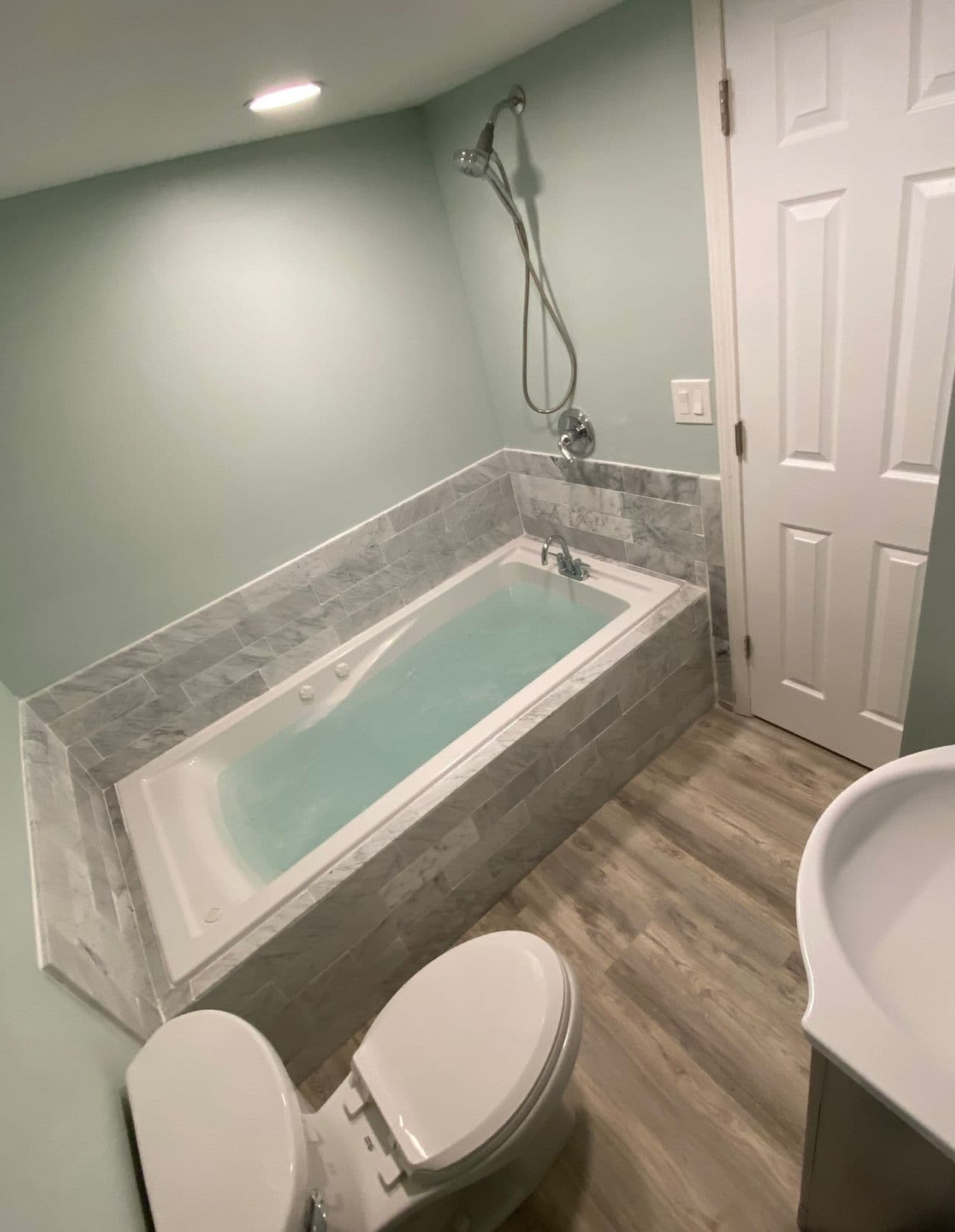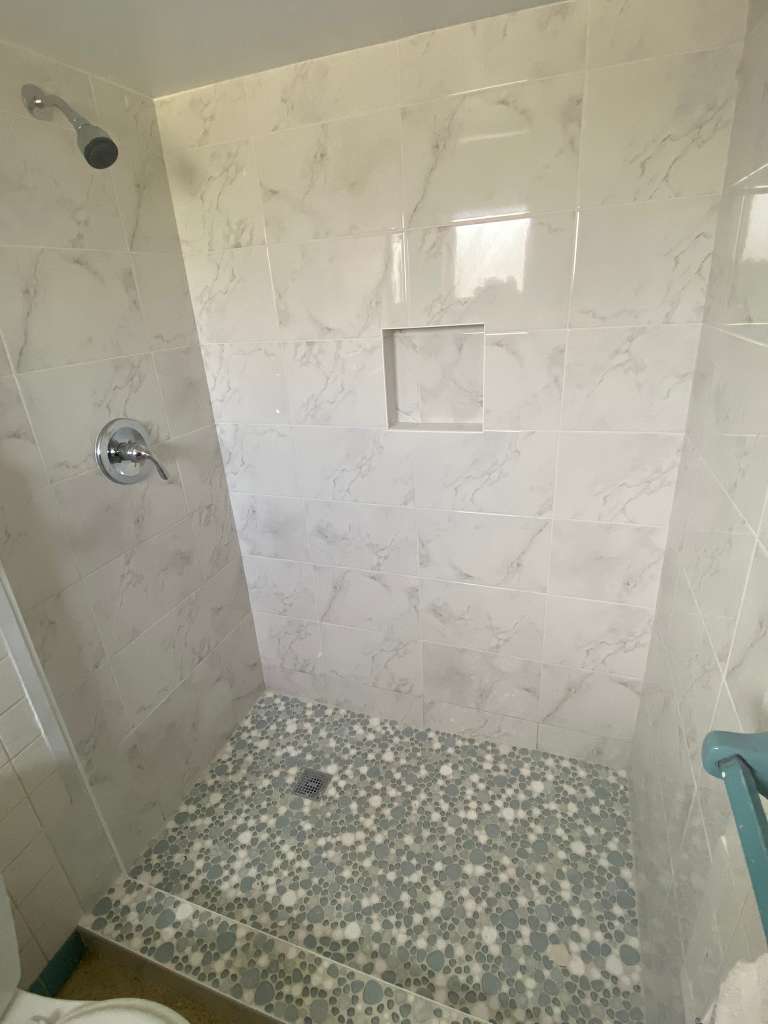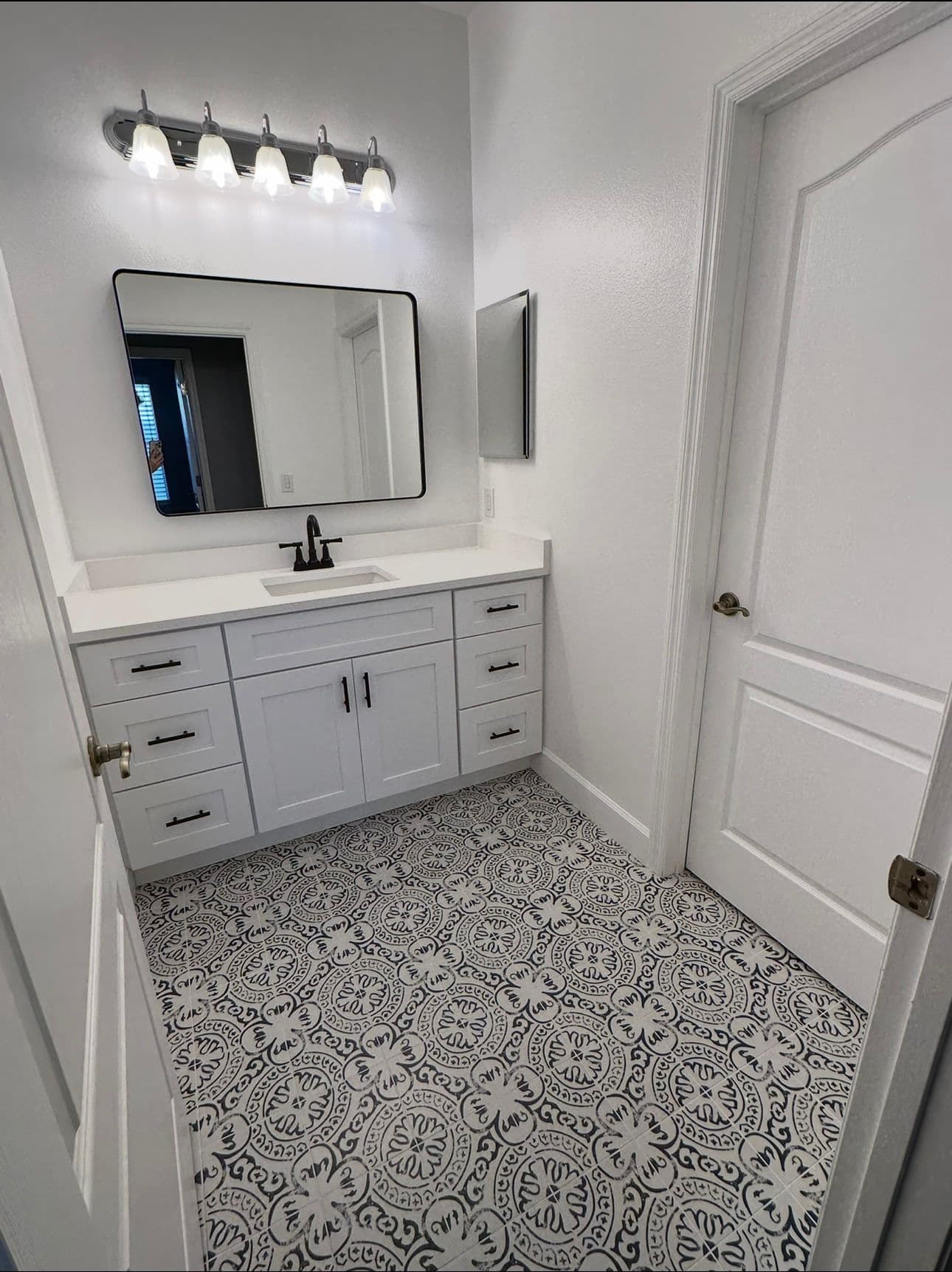
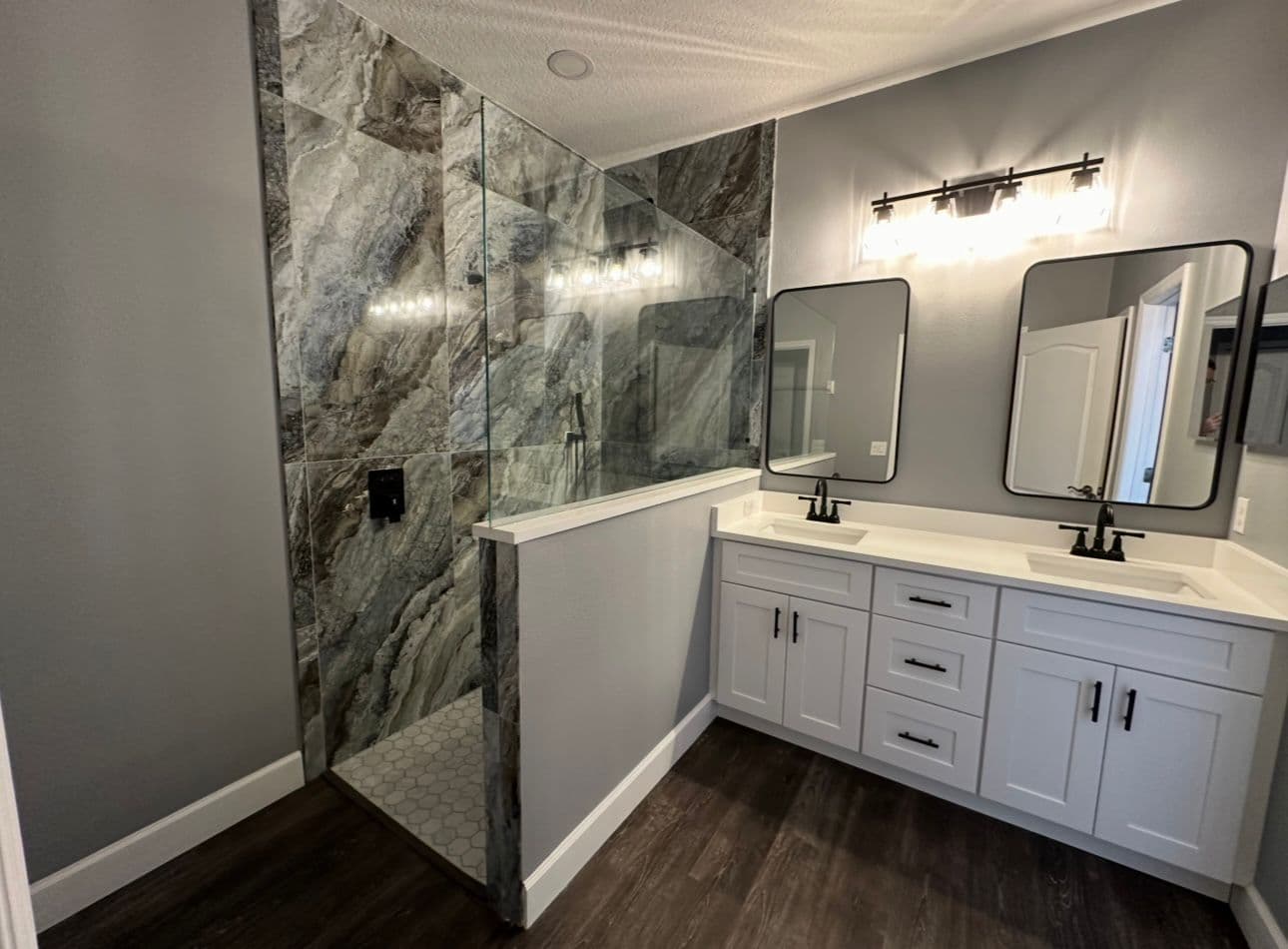
Yes, you can mix brushed nickel and chrome, and in many bathrooms they work together very naturally. Brushed nickel and polished chrome are both cool-toned finishes, so they often feel compatible rather than conflicting. The key is not whether you can mix them, but whether the mix looks intentional, balanced, and suited to the rest of the room.
Why brushed nickel and chrome work together
Brushed nickel has a softer, muted look, while chrome is brighter and more reflective. Because both sit in the cool-metal family, they usually coordinate well in bathrooms, kitchens, and laundry rooms.
The visual difference is helpful, not harmful
A mix of finishes can add depth to a room. Instead of making every surface look identical, the contrast can break up the space in a subtle way. In a coastal Southwest Florida home, that can be especially appealing because bright finishes often pair nicely with light tile, white cabinetry, and airy paint colors.
Both finishes are common in bathrooms
Chrome and brushed nickel are standard choices for faucets, shower trim, cabinet hardware, towel bars, and mirror accents. That makes it easier to source matching pieces in each finish without forcing a look that does not fit the room.
The best way to mix metals without making the room feel random
The most important rule is consistency. If brushed nickel and chrome appear only once each, the room can feel unplanned. If each finish shows up more than once, the design usually feels intentional.
Use one finish as the dominant metal
A practical guideline is to let one finish carry most of the visual weight. That might mean using chrome for the main faucet and shower fixtures, then using brushed nickel on cabinet pulls or a mirror frame. Or it could work the other way around.
Repeat each finish at least once
If you use chrome for the faucet, consider chrome again on the shower trim or lighting detail. If brushed nickel appears on the vanity hardware, repeat it on a towel ring or drawer pull. Repetition helps the finishes read as part of the same design.
Keep the shapes and style consistent
Even when the finishes differ, the fixture styles should feel related. A modern chrome faucet paired with a traditional brushed nickel cabinet pull can look disconnected. If the room is transitional, coastal, or contemporary, stick with similar shapes and clean lines.
Where each finish usually works best
Different fixtures play different visual roles, so not every metal has to do the same job.
Good places for chrome
Chrome tends to work well on items that you want to stand out a little more:
- Sink faucets
- Shower trim
- Tub fillers
- Mirror frames with a cleaner, brighter look
- Small decorative accents
Because chrome reflects more light, it can make a bathroom feel brighter and sharper.
Good places for brushed nickel
Brushed nickel is often a good choice for pieces that you want to blend more quietly into the room:
- Cabinet hardware
- Towel bars and rings
- Vanity lights with softer finishes
- Closet or linen storage hardware
- Secondary bathroom accessories
Its satin texture is often easier on the eye in rooms that already have a lot of shine from tile, glass, or polished surfaces.
What to consider in Southwest Florida homes
In Southwest Florida, design choices are often shaped by humidity, bright daylight, and a preference for easy-to-maintain materials. That does not mean one finish is always better than another, but it does affect how the mix looks and feels.
Bright light changes how finishes read
Natural light can make chrome look even brighter and brushed nickel look a little warmer or softer by comparison. In a sunny bathroom, that contrast is usually noticeable but still manageable.
Coastal and transitional styles usually handle mixed metals well
Homes with coastal, transitional, or modern-farmhouse influences often already blend textures and finishes. In those spaces, brushed nickel and chrome usually fit in without much effort.
Moisture and cleaning habits matter
Bathrooms near the coast often face humidity and frequent use. Finish choice should account for maintenance as well as appearance. Chrome can show water spots more readily, while brushed nickel may hide minor smudges a little better. The best option depends on how the bathroom is used and how often you want to wipe fixtures down.
A simple room-by-room approach
If you are unsure how to combine the two finishes, start with the biggest items and work down.
Step 1: Choose the main fixture finish
Pick the finish you want to see first when you walk into the room. That will usually be the faucet, shower trim, or vanity lighting. This becomes the dominant metal.
Step 2: Add the second finish in smaller doses
Use the other finish on hardware, a mirror detail, a hook, or a towel bar. Small accents are usually enough to create contrast without making the room feel busy.
Step 3: Check the whole room from across the space
Stand back and look at the bathroom as a whole. Ask whether the finishes feel repeated and balanced. If the two metals are scattered without pattern, it may help to remove one item or swap a piece so the room feels more deliberate.
Step 4: Make sure the undertones match the rest of the room
Brushed nickel sometimes looks slightly warmer than chrome. If your tile, paint, and cabinetry already lean warm, that can be fine. If the room is very cool and crisp, chrome may become the stronger anchor.
When mixing brushed nickel and chrome can look awkward
The finishes themselves are not the problem. Usually, the issue is how they are introduced.
Too many unrelated finishes
If brushed nickel and chrome are mixed with brass, black, and oil-rubbed bronze all in one small room, the result can feel cluttered. A bathroom usually looks best when the finish palette stays tight.
Different design styles
A highly decorative brushed nickel faucet paired with a sleek chrome robe hook can feel mismatched. The more the styles differ, the harder it is to make the finish mix look purposeful.
Low repetition
If one chrome item appears alone and nothing else in the room matches it, it may look accidental. That is why repeating both finishes matters.
Practical design examples
Here are a few simple ways the combination can work.
Example 1: Chrome faucet with brushed nickel hardware
This is a common and easy pairing. The faucet becomes a focal point, while the brushed nickel cabinet pulls stay understated.
Example 2: Brushed nickel faucet with chrome shower trim
This works if the bathroom already has chrome accents in mirrors, lighting, or accessories. The brushed nickel faucet can soften the vanity area while chrome adds brightness in the shower.
Example 3: Chrome main fixtures with brushed nickel accessories
This is a good option when you want a cleaner, brighter look overall but still want some softness in the room.
Example 4: Brushed nickel main fixtures with chrome details
This can work well in homes that want a more relaxed, lived-in look. Chrome accents keep the room from feeling too muted.
How to decide if the mix is right for your bathroom
Before you commit, look at the rest of the room and answer a few basic questions.
- Is the bathroom more modern, coastal, or transitional than formal or ornate?
- Do the finishes appear in more than one place each?
- Does one finish clearly play the lead role?
- Do the faucet, hardware, and lighting styles feel related?
- Will the mix still make sense when the room is fully furnished and used every day?
If the answer to most of those questions is yes, the combination is probably on track.
Remodeling and replacement decisions
If you are updating a bathroom, the safest time to decide on mixed finishes is before you order fixtures. Swapping metals after installation can create delays and extra labor, especially if the room is already partially finished. If you are planning a larger update, it may help to think through the vanity, shower, lighting, and accessories as one design set rather than as separate purchases.
If you are considering a larger update in the area, this bathroom remodel port charlotte fl page may be useful for thinking through the scope of a bathroom project.
A good rule of thumb for homeowners
If you want the short answer to can you mix brushed nickel and chrome?, it is yes. The finishes are similar enough in tone that they usually work well together, especially in bathrooms. The design is most successful when one finish leads, the other supports, and the same metal shows up more than once.
For homeowners in Southwest Florida, that usually translates to a look that feels clean, bright, and easy to live with. In sunny, humid spaces, subtle contrast can be a strength as long as the room stays simple and coordinated.
For more on common bathroom issues that can affect remodeling decisions, see why shower grout keeps cracking Florida.
FAQ
Can you mix brushed nickel and chrome in a small bathroom?
Yes. In a small bathroom, it often helps to keep the mix simple. Use one finish for the main fixture and the other for a small number of accents.
Is brushed nickel warmer than chrome?
Usually, yes. Brushed nickel often reads a little softer and warmer, while chrome looks brighter and more reflective.
Should all bathroom fixtures match exactly?
No, they do not have to match exactly. They do need to feel intentional. Repeating finishes and keeping the styles consistent usually matters more than matching every item.
Does chrome go with brushed nickel in coastal-style homes?
Often, yes. Coastal and transitional homes usually handle this mix well because both finishes are clean, classic, and easy to pair with light colors and natural textures.
Which finish should be the dominant one?
Either can be dominant. The best choice depends on the overall style of the bathroom, the amount of natural light, and which fixture you want to stand out most.
Is mixed metal a good idea for a full remodel?
It can be. The key is to plan the mix early so the faucets, hardware, lighting, and accessories all support the same design direction.