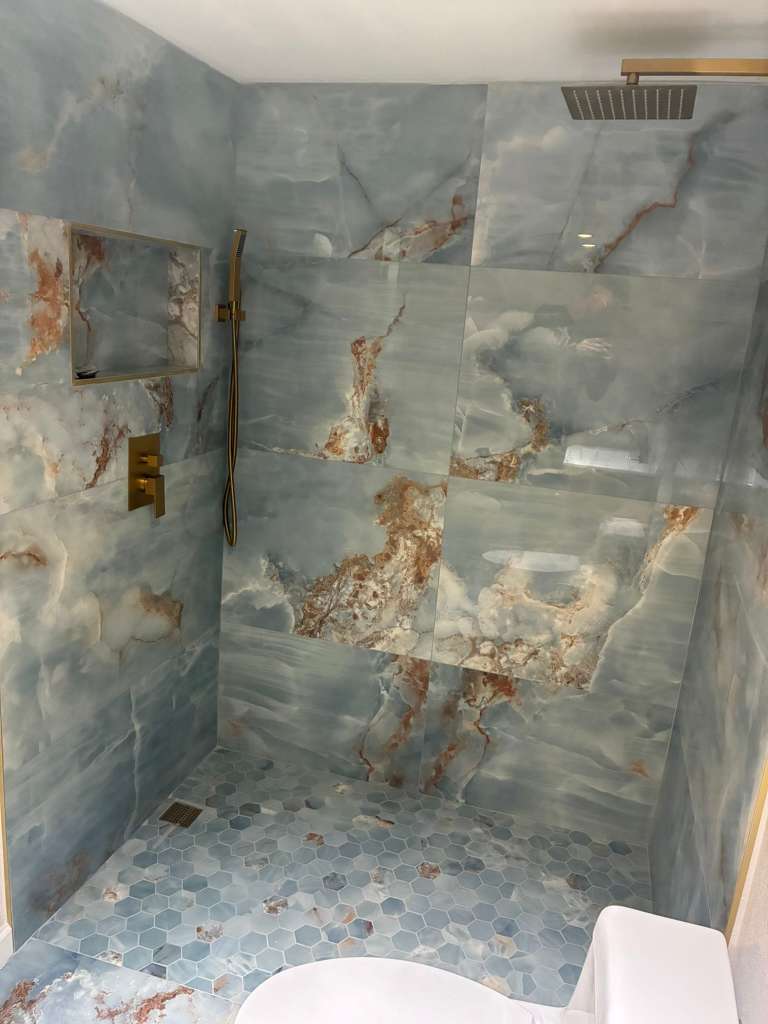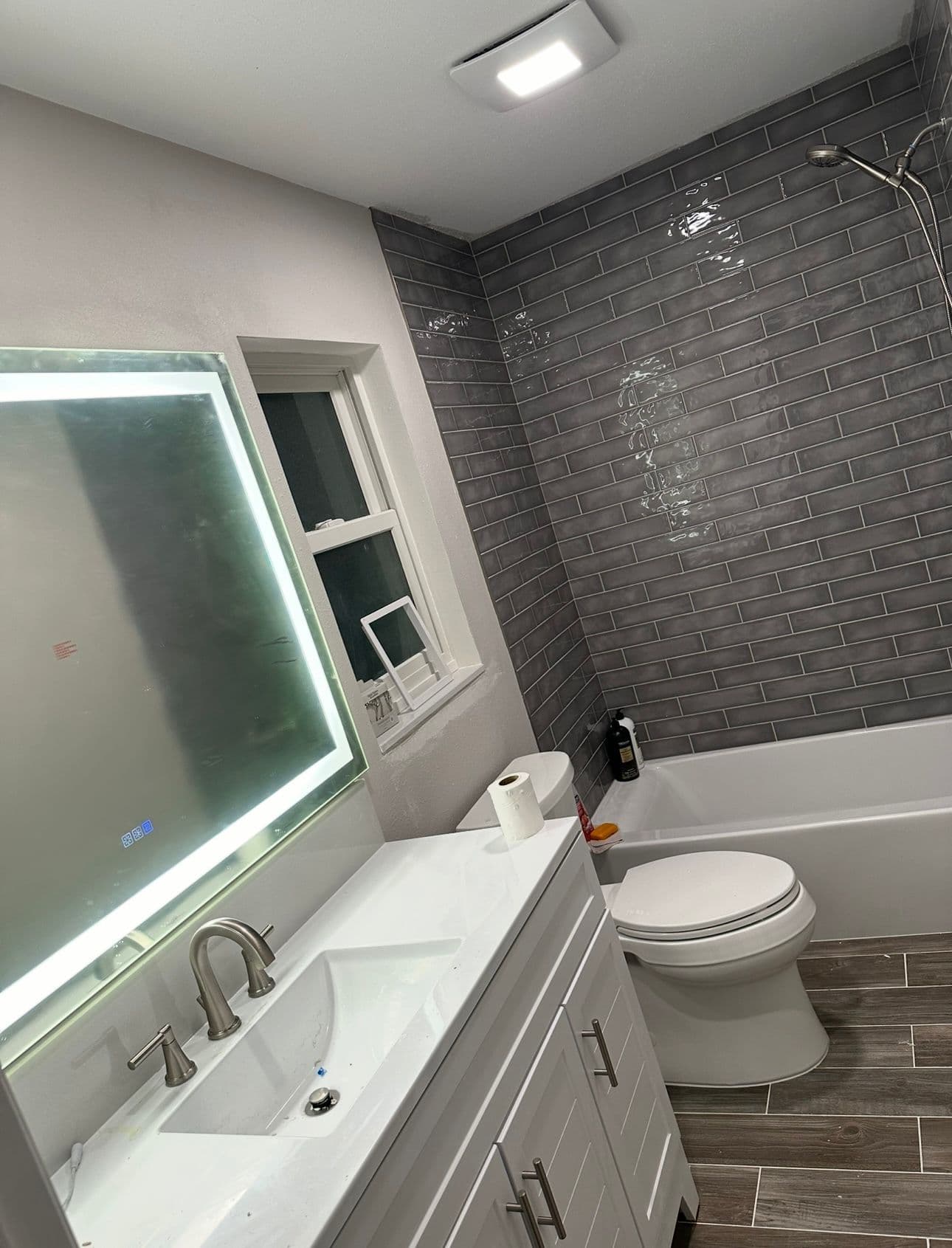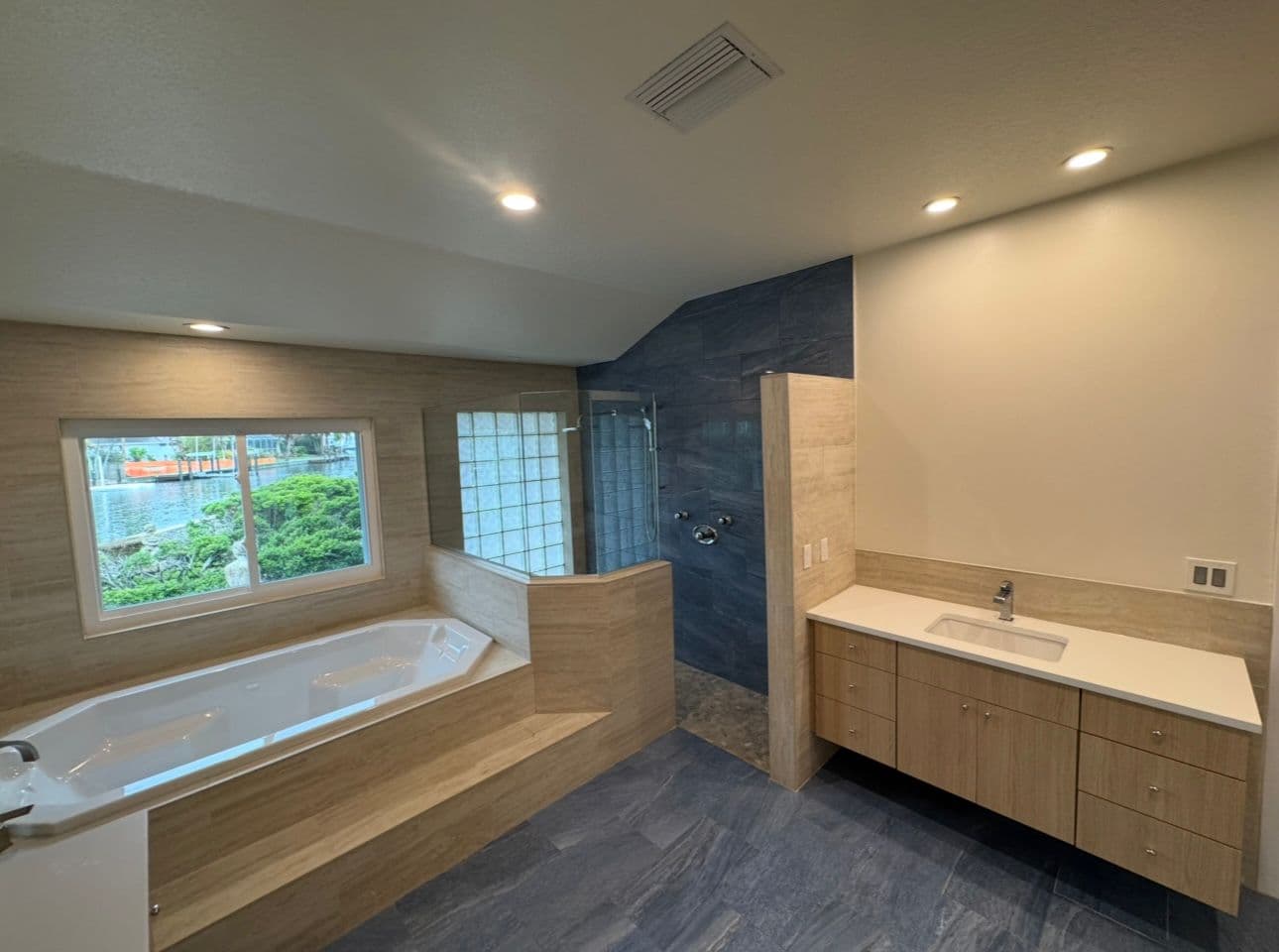
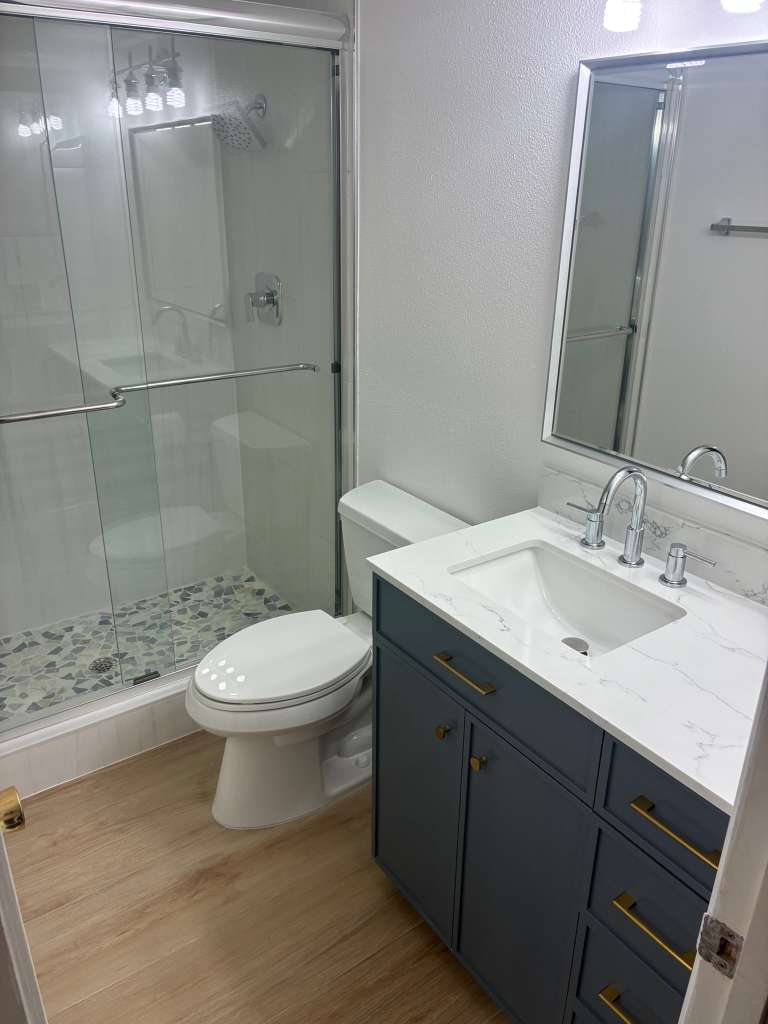
For most bathrooms, the best choice is a mildew-resistant interior paint with a satin or semi-gloss finish. In a humid Southwest Florida home, that matters even more because bathrooms face daily moisture, warm air, and frequent cleaning. Semi-gloss is usually the most forgiving and easiest to wipe down, while satin gives you a softer look with solid moisture resistance. Flat paint is usually the wrong choice for bathrooms because it can absorb moisture and stains more easily.
Why bathroom paint choice matters in Southwest Florida
Bathroom paint is not just about color. It has to hold up to steam from showers, splashes around sinks, and the kind of humidity that can linger long after the water is off. In Southwest Florida, that challenge is bigger because outside humidity can already be high before you even turn on the shower.
A good bathroom paint should help with three things:
- resisting moisture
- making cleanup easier
- limiting mildew growth on painted surfaces
That does not mean paint can solve every moisture problem. If a bathroom has weak ventilation, hidden leaks, or recurring mildew, those issues need attention too. Paint is part of the solution, not the entire fix.
What humidity does to the wrong paint
When the wrong finish is used in a bathroom, you may notice:
- peeling or bubbling
- water marks
- visible mildew spots
- staining around the vanity or toilet area
- walls that are harder to clean without damaging the finish
If a bathroom is poorly ventilated, those problems can show up faster. That is especially true in guest baths, hall bathrooms, and small spaces that do not get much airflow.
The best paint finish for bathroom walls
For most homeowners, the best finishes for bathroom walls are satin or semi-gloss. Both are practical, but they offer slightly different looks and benefits.
Satin finish: a balanced choice
Satin is a popular option because it gives walls a softer, less shiny appearance than semi-gloss while still standing up reasonably well to moisture and cleaning.
Good reasons to choose satin:
- more subtle look
- easier to live with in a primary bath or guest bath
- handles everyday wiping better than flatter finishes
- works well if you want a more understated style
Satin can be a strong choice for bathrooms that get regular use but do not have constant heavy steam exposure.
Semi-gloss finish: the most durable common option
Semi-gloss is often recommended for bathroom walls, trim, and doors because it resists humidity well and is easier to clean than lower-sheen paints.
Good reasons to choose semi-gloss:
- very washable
- better moisture resistance than satin or flat finishes
- useful in busy family bathrooms
- helps surfaces hold up to frequent cleaning
The tradeoff is that semi-gloss reflects more light, so wall imperfections may show more. If your walls are not smooth, that is worth considering before you choose it.
Why flat paint is usually a poor bathroom choice
Flat paint can look nice in dry rooms, but bathrooms are different. It tends to absorb moisture and can stain more easily. In a room where splashes, steam, and cleaning happen often, that makes flat paint harder to maintain.
Flat finishes may be best avoided on bathroom walls unless a product is specifically designed for high-humidity use and the space has very good ventilation.
Best paint for bathroom ceilings, trim, and doors
Different parts of the bathroom need different levels of durability. It is common to use one paint finish for the walls and another for trim, doors, or ceilings.
Ceilings: prioritize mildew resistance
Bathroom ceilings often collect steam and condensation, especially in showers without strong ventilation. For that reason, a mildew-resistant interior paint is a smart choice for the ceiling, and a bath-specific product can be especially helpful in very humid or poorly ventilated bathrooms.
A ceiling paint for a bathroom should be:
- mildew resistant
- designed for interior use
- able to handle frequent moisture exposure
Trim and doors: semi-gloss usually works best
Trim and doors take more wear than walls because they get touched often and may need more frequent cleaning. Semi-gloss is a practical choice here because it is durable and easy to wipe down.
This is especially useful for:
- baseboards
- door frames
- window trim
- vanity cabinet exteriors if painted
A simple finish plan by surface
If you are deciding room by room, a common approach is:
- walls: satin or semi-gloss
- ceiling: mildew-resistant bath paint
- trim and doors: semi-gloss
That combination gives you a good balance of appearance and function.
What kind of paint formulation should you look for?
The finish matters, but the paint formula matters too. In a bathroom, it helps to look for a product specifically marketed for high-humidity, bath, or spa environments.
Look for mildew-resistant labeling
Mildew resistance is one of the most important features for bathroom paint. It does not mean mildew can never happen, but it helps the painted surface better resist growth in damp conditions.
Choose paint made for humid spaces
Some paints are designed for bathrooms, laundry rooms, and other moisture-prone areas. These can be useful in Southwest Florida because the local climate adds extra pressure to already humid rooms.
Consider washability
Bathrooms need frequent cleaning, so a washable paint is a practical benefit. If toothpaste splatters, soap residue, or dust builds up, you want a finish that can be cleaned without dulling too quickly.
Don’t ignore the surface beneath the paint
Even a good paint can struggle if the surface underneath is dirty, chalky, or damp. Proper prep is part of the product choice because performance depends on what the paint is applied over.
If you are planning a larger update, it can also help to think about the paint decision as part of the overall bathroom remodel. A broader project may affect ventilation, drywall repairs, and finish choices, which is one reason homeowners often discuss painting alongside remodeling contractors Sarasota FL when they are planning a full refresh.
How ventilation affects paint performance
Paint can only do so much if the bathroom holds moisture for too long. Good ventilation helps any paint finish last longer.
Signs ventilation may be an issue
You may need to look closer at ventilation if you notice:
- mirrors fogging for a long time after showers
- damp walls that stay wet
- recurring mildew in corners or around the ceiling
- peeling paint near the shower or tub
- musty odors
What to do before painting
Before you paint, make sure the bathroom is as dry and clean as possible. If ventilation is weak, improving it can make a bigger difference than switching between two similar paint products.
Helpful steps include:
- Use the exhaust fan during showers and for a while afterward.
- Open a window if the room design allows it.
- Clean mildew and residue from surfaces before painting.
- Repair leaks, caulk gaps, and address water intrusion.
- Let surfaces fully dry before applying primer or paint.
Why paint alone is not enough
If water is constantly getting into the walls or ceiling, the coating will eventually fail no matter how good the product is. Paint should protect a sound surface, not hide a moisture problem.
Prep work that helps bathroom paint last longer
The best bathroom paint can still disappoint if the prep is rushed. Good prep improves adhesion, appearance, and durability.
Clean first
Before painting, remove soap residue, dust, grime, and mildew. Painting over contamination can trap the problem under the finish and lead to early failure.
Repair damaged areas
If the bathroom has peeling paint, soft drywall, or cracked caulk, those issues should be fixed first. A smooth, stable surface gives the new paint a better chance to perform well.
Use the right primer when needed
A primer can help when:
- covering stains
- switching from a darker color
- sealing patched areas
- improving adhesion on problem surfaces
Not every bathroom project needs the same primer, but skipping this step when the surface calls for it can shorten the life of the finish.
Let moisture levels settle
Bathrooms in Southwest Florida can hold onto humidity even after cleaning. Painting over a damp surface is a shortcut to trouble, so timing matters.
Matching paint choice to the type of bathroom
Not every bathroom gets the same amount of use, so the best paint choice can vary.
Primary bathroom
A primary bathroom usually sees daily use, which means more steam, more cleanup, and more wear. Satin or semi-gloss with mildew resistance is usually a practical choice.
Guest bathroom
A guest bath may not get as much daily use, but it still benefits from humidity-resistant paint. Since these rooms may sit closed for long periods, mildew resistance is still important.
Kids’ bathroom
Kids’ bathrooms often need the most cleanability because walls and trim may get bumped, splashed, and wiped down often. Semi-gloss can be a useful option here.
Powder room
A powder room has less humidity than a full bath, so you have more flexibility. Still, if the room is in a humid home environment, a moisture-resistant finish is a sensible choice.
Color, sheen, and the look you want
Paint choice is not only about function. It also affects the feel of the room.
Higher sheen means more light reflection
Semi-gloss reflects more light, which can make a small bathroom feel brighter. That can be helpful in windowless or compact spaces.
Lower sheen can feel softer
Satin gives a softer appearance and may be easier on the eyes in a bathroom where you want a calmer look.
Light colors can help, but don’t rely on them alone
Lighter paint colors can make a bathroom feel cleaner and larger, but color does not replace moisture resistance. A white flat paint is still not a good bathroom solution just because it looks fresh at first.
When it makes sense to ask for remodeling help
Sometimes the paint question is really part of a bigger bathroom issue. If you are dealing with recurring mildew, peeling finishes, damaged drywall, or a bathroom that never seems to dry out, the problem may not be the paint at all.
That is where a remodel discussion can help, especially if ventilation, layout, or moisture control needs improvement. Homeowners planning a larger update often start by comparing surface finishes and then move into bigger decisions about waterproofing, fan placement, and fixture upgrades. If you are at that stage, it can be useful to review why shower grout keeps cracking Florida because the same moisture conditions that damage grout can also affect painted surfaces.
A simple bathroom paint recommendation
If you want the short version, here it is:
- Use mildew-resistant interior paint.
- Choose satin for a softer look or semi-gloss for maximum washability.
- Use semi-gloss on trim and doors.
- Use mildew-resistant paint on the ceiling, especially in humid or poorly ventilated bathrooms.
- Clean and repair the surface before painting.
- Improve ventilation if moisture is a recurring problem.
For most Southwest Florida bathrooms, that combination offers the best balance of appearance, durability, and cleanup.
FAQ
Is semi-gloss always the best bathroom paint?
Not always, but it is one of the most durable and easiest to clean. Satin is also a good option if you want a less shiny look.
Can I use flat paint in a bathroom?
It is usually not recommended because flat paint can absorb moisture and stains more easily. In a humid bathroom, that can shorten the life of the finish.
What is the best paint for a bathroom ceiling?
A mildew-resistant interior paint is a smart choice for bathroom ceilings. In very humid or poorly ventilated rooms, a bath-specific paint can be even better.
Do I need special paint if my bathroom has an exhaust fan?
An exhaust fan helps, but it does not remove the need for moisture-resistant paint. The room still deals with steam, splashes, and condensation.
How do I keep bathroom paint from mildewing?
Start with a mildew-resistant product, clean the surface before painting, and improve ventilation as much as possible. Also fix leaks and moisture problems early.
Should trim and walls use the same finish?
They can, but many homeowners prefer semi-gloss on trim and doors because it is easier to clean and more durable than some wall finishes.
Choosing bathroom paint is really about balancing moisture resistance, cleanability, and the look you want. In Southwest Florida, that balance matters even more because humidity never takes a full season off. If you are planning a bathroom update and want to think through paint, ventilation, and finish choices together, a local remodeling conversation can help you make a more durable decision for the space and the climate.