Brushed nickel pairs best with other warm or muted metals, especially polished nickel, satin nickel, brushed brass, champagne bronze, matte black, and oil-rubbed bronze. If you want the simplest rule, use brushed nickel as the main finish and add one accent metal in small, repeated touches so the room feels coordinated instead of random.
Why brushed nickel is so easy to mix
Brushed nickel is a low-gloss finish with a soft, muted look. That makes it more forgiving than highly reflective metals, and it tends to blend well with a range of cabinet hardware, faucets, shower trim, lighting, and door accents.
For homeowners in Southwest Florida, that flexibility matters. Coastal homes often pull in light woods, sandy neutrals, white paint, and natural texture. Brushed nickel fits that palette because it does not shout for attention. It quietly supports the rest of the room.
The finish itself matters more than the name
Different manufacturers label finishes a little differently, so “brushed nickel” may look slightly warmer or cooler depending on the product line. That is why it helps to compare actual samples side by side when you are matching faucets, pulls, shower doors, or light fixtures.
The best metals to pair with brushed nickel
Polished nickel and satin nickel
If you want the safest match, start here. Polished nickel and satin nickel are in the same general family as brushed nickel, so they usually feel intentional together.
Why they work:
- Similar undertone and overall warmth
- Easy to use across plumbing fixtures and hardware
- Good for a unified look in bathrooms and kitchens
This is often the best choice when you want a calm, coordinated finish story throughout the space. If you are updating a bathroom and want the room to feel consistent, brushed nickel and satin nickel are especially easy to blend.
Chrome and polished chrome
Chrome gives brushed nickel a cleaner, brighter contrast. Chrome is cooler and more reflective, so the two finishes do not disappear into each other.
Why it works:
- Adds crisp contrast without feeling overly bold
- Useful if you want a brighter, more polished look
- Common in bathrooms where light reflection is helpful
This pairing can work well in smaller Southwest Florida bathrooms where you want the room to feel open and fresh. Just be sure the contrast is intentional. When one finish is cool and shiny and the other is warm and soft, the difference should look designed, not accidental.
Brushed brass, champagne bronze, and brushed gold
These warmer metals are a strong match for brushed nickel, especially in transitional and coastal-inspired interiors.
Why they work:
- Warm-on-warm pairing feels relaxed and inviting
- Works well with white, cream, sand, and wood tones
- Can make a room feel more layered and custom
This combination is useful if you want a space that feels a little softer than all-black or all-chrome finishes. In kitchens and bathrooms with natural materials, brushed nickel and brushed brass can balance each other nicely.
Matte black
Matte black is one of the most common contrast metals used with brushed nickel today. It gives the room definition without adding shine.
Why it works:
- Strong contrast without being flashy
- Helps outline shapes and details
- Works well in modern, transitional, and coastal-modern spaces
Matte black is especially effective when it repeats in small amounts, such as cabinet hardware, mirror frames, light fixtures, or a shower trim detail. A little goes a long way.
Oil-rubbed bronze
Oil-rubbed bronze is another compatible warm finish, especially in traditional or transitional homes.
Why it works:
- Shares a warm, grounded feel with brushed nickel
- Pairs well with darker woods and richer color palettes
- Can make a room feel more classic
This can be a good option if your home already leans traditional or if you want to echo darker accents in lighting or furniture.
How to mix metals without making the space feel busy
Mixing metals is usually less about strict matching and more about creating a clear pattern. The most practical approach is to choose one dominant finish and then use one accent finish in measured places.
A simple design formula
Use this approach:
- Pick brushed nickel as the anchor finish.
- Choose one secondary metal for contrast or warmth.
- Repeat both finishes in more than one place.
- Keep the shapes and styles consistent.
For example, brushed nickel on the faucet, shower trim, and towel bar can pair with matte black light fixtures or brushed brass cabinet pulls. That reads as intentional because the finishes repeat.
Where to repeat each finish
To keep the look cohesive, repeat your finishes across:
- Faucets and shower trim
- Cabinet hardware
- Lighting
- Mirror frames
- Towel bars and accessories
- Door levers or knobs
If one finish only appears once, it can feel disconnected. Repetition helps the eye understand the design.
Try to match undertones, not just color
Two metals may both look “warm,” but one can lean yellow, another pink, and another brown. That is why brushed nickel sometimes looks best with brushed brass or polished nickel, while in other rooms it works better with chrome or matte black.
If you are unsure, put samples together in the actual room lighting. Southwest Florida daylight can be bright and indirect light can change how a finish reads at different times of day.
Room-by-room guidance for Southwest Florida homes
Kitchens
In kitchens, brushed nickel is a good choice if you want a finish that feels clean but not sterile. It works with white cabinets, soft gray cabinets, natural wood tones, and many quartz and stone countertops.
Helpful pairings:
- Brushed nickel faucets with brushed brass cabinet hardware
- Brushed nickel pulls with matte black pendant lights
- Brushed nickel sink fixtures with polished nickel appliance accents
If your kitchen has a coastal or transitional look, brushed nickel can keep the room grounded while another metal adds character. If you are planning a larger update, this is a good time to think through the whole finish palette during a kitchen remodel sarasota or a similar project.
Bathrooms
Bathrooms are where brushed nickel is most often used, and for good reason. It works well with glass, tile, white plumbing fixtures, and light-colored vanities.
Good combinations include:
- Brushed nickel faucet with chrome or polished chrome shower glass hardware
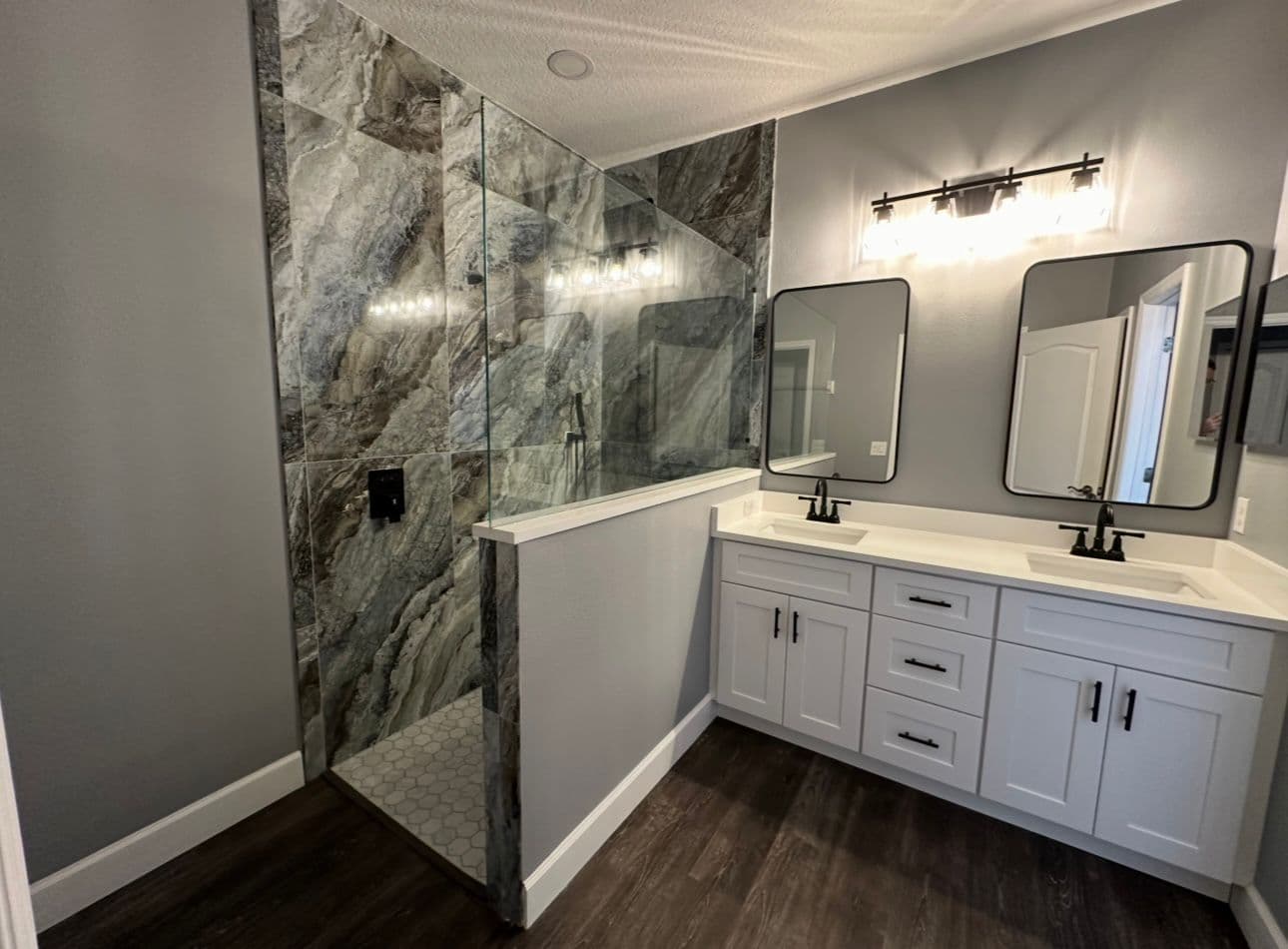
- Brushed nickel vanity faucet with matte black sconces
- Brushed nickel tub trim with polished nickel mirror accents
In a bathroom, consistency matters because there are so many visible metal elements in a smaller space. If you are updating a bath, it may help to think about the whole room rather than each fixture on its own. For more planning context, this article on bathroom remodeling ideas north port home value can help you think through finish choices as part of the larger design.
Laundry rooms, mudrooms, and utility spaces
These rooms can handle a little more flexibility. Brushed nickel blends well with practical finishes and does not feel too precious.
Useful pairings:
- Brushed nickel cabinet pulls with matte black hooks
- Brushed nickel utility faucet with chrome shelf hardware
- Brushed nickel door hardware with oil-rubbed bronze lighting
These spaces are often overlooked, but a coordinated finish plan can make the whole home feel more put together.
When brushed nickel should stay the main finish
There are times when brushed nickel should remain the star rather than just one finish in a mix.
Good reasons to keep brushed nickel dominant
- You want a calm, classic look
- Your home already has warm neutral tones
- You prefer low shine over high reflectivity
- You want fewer finish decisions across multiple rooms
In those cases, choose brushed nickel for the main fixtures and only introduce one accent metal in small amounts. That keeps the design simple and avoids visual clutter.
When to use stronger contrast
If your home feels flat or lacks definition, contrast can help. Matte black or chrome can sharpen the look, while brushed brass can warm it up. The right choice depends on your cabinets, tile, wall color, and how much natural light the room gets.
Common mixing mistakes to avoid
Using too many finishes at once
Three or four metals in one small room can make the space feel disconnected. In most homes, two finishes are enough.
Mixing finishes without repetition
A single lone brass towel ring in a room full of brushed nickel can look accidental. If you introduce a second metal, repeat it in at least one or two other spots.
Ignoring the room’s lighting
Warm finishes can look different under cool LED light or in a room with strong daylight. In Southwest Florida, bright natural light can make cool finishes feel even cooler, so test samples before you commit.
Forgetting the style of the home
A historic-inspired home, a modern condo, and a coastal family home may all use brushed nickel differently. The finish is only one part of the design. Cabinet profile, tile pattern, and fixture shape matter too.
Practical examples of brushed nickel pairings
Soft coastal look
- Brushed nickel faucet
- Brushed brass cabinet pulls
- Light oak vanity or cabinets
- White or sandy wall color
This mix feels relaxed and warm without becoming too rustic.
Clean transitional look
- Brushed nickel plumbing fixtures
- Polished nickel mirror frame
- Neutral stone countertop
- Simple cabinet hardware in a matching finish
This works well if you want a polished but understated room.
Modern contrast look
- Brushed nickel faucet
- Matte black lighting
- Matte black cabinet pulls
- Light cabinets and bright tile
This is a strong choice when you want definition and a more current feel.
Traditional warmth look
- Brushed nickel faucet
- Oil-rubbed bronze lighting or accent hardware
- Warm wood tones
- Cream or beige tile
This combination feels grounded and classic.
How a remodeler can help with finish selection
Finish choices seem small, but they affect the whole room. A remodeler can help you think through how brushed nickel will look with cabinet color, stone, tile, lighting, and layout so the finished space feels consistent.
That is especially helpful when you are trying to coordinate multiple trades and products at once. In a larger remodel, finish decisions often need to be made before the last minute so the fixtures, hardware, and lighting all work together.
If you are planning a bathroom or kitchen update in Southwest Florida, it can help to talk through those choices early with a local remodeling professional such as general contractor north port fl.
FAQ
What metals go with brushed nickel best?
Polished nickel, satin nickel, brushed brass, champagne bronze, matte black, chrome, and oil-rubbed bronze are all common pairings. The best choice depends on whether you want more warmth or more contrast.
Can brushed nickel and chrome be mixed?
Yes. They can work well together, especially in bathrooms. Chrome is brighter and cooler, while brushed nickel is softer and warmer, so the contrast should feel intentional.
Is brushed brass too warm to pair with brushed nickel?
Not usually. Brushed brass can be a very good match if you want a warm, layered look. The key is to repeat both finishes and keep the overall style consistent.
Should all bathroom metals match brushed nickel exactly?
No. Exact matching is not always necessary. A coordinated palette often looks more natural than a perfectly uniform one, as long as the finishes are repeated on purpose.
Is matte black a good accent with brushed nickel?
Yes. Matte black is one of the easiest contrast metals to use with brushed nickel, especially in modern and transitional spaces. It adds definition without adding glare.
How do I know if a mixed-metal look will work in my home?
Put physical samples together in the room and view them in daylight and artificial light. The same finishes can look different depending on paint color, tile, and lighting.
The bottom line
If you are asking what metals go with brushed nickel, the short answer is that it works best with other warm or muted finishes, especially polished nickel, satin nickel, brushed brass, champagne bronze, matte black, chrome, and oil-rubbed bronze. The most reliable approach is to make brushed nickel the anchor finish, then add one accent metal and repeat it thoughtfully throughout the room.
That strategy helps a kitchen or bathroom feel finished, especially in Southwest Florida homes where bright light and open, airy interiors can make finish choices more noticeable. When the metal palette is planned well, the whole space feels calmer, cleaner, and more intentional.