If you’re asking how do you make a bathroom safer for seniors, the short answer is to reduce fall risk with a few focused changes: install grab bars, improve lighting, remove slippery or cluttered surfaces, make bathing easier to access, and choose fixtures that support balance and mobility. Those improvements matter because bathrooms are one of the most common places for falls, and even small changes can make daily routines feel much safer and more manageable.
For Southwest Florida homeowners, that often means looking at the bathroom through an aging-in-place lens. A safer bathroom does not have to be a full gut renovation. In many homes, the best results come from a mix of targeted upgrades and better maintenance habits. In others, especially where mobility is limited or a tub is difficult to step over, a larger remodel may be the safer long-term solution. A bathroom remodel port charlotte fl can be planned around safety first, then comfort and style second.
Start with the main risk: falls
The core goal in a senior-friendly bathroom is simple: make slipping, tripping, and losing balance less likely. That means paying attention to every part of the room, not just the shower.
Common bathroom hazards for older adults
- Wet tile or slick surfaces
- Loose bath mats or rugs
- Poor lighting at night
- A high tub wall or step-in shower threshold
- No support near the toilet, shower, or tub
- Clutter on the floor
- Hard-to-reach storage that encourages stretching or climbing
Why this matters
A bathroom combines water, hard surfaces, and frequent transitions between sitting, standing, and turning. Those conditions can be especially risky for anyone with arthritis, limited mobility, balance concerns, or a history of falls. The safest bathroom is one that helps the user stay steady at every step.
Add grab bars where they will actually be used
Grab bars are one of the most effective bathroom safety upgrades, but only when they’re placed correctly and anchored properly. Towel bars and decorative accessories are not substitutes for real support bars.
Best places for grab bars
- Next to the toilet for sitting and standing
- Inside the shower near the controls
- At the shower entrance or tub entry
- On the wall where someone naturally reaches for support
What to keep in mind
- Placement should match the user’s height and movement pattern
- Bars need to be secured into framing or another approved support system
- The finish should be easy to grip even with wet hands
- The layout should allow a person to reach the bar before they need it, not after
If you’re wondering how do you make a bathroom safer for seniors in the most practical way, grab bars are usually near the top of the list because they provide immediate, everyday support.
Improve lighting so nighttime trips are less risky
Many bathroom accidents happen when a person gets up at night and cannot see clearly. Better lighting can reduce missteps and make the room easier to use without strain.
Lighting upgrades that help
- Brighter overhead lighting
- Night lights near the bathroom path
- Motion-activated fixtures for late-night use
- Light switches positioned where they’re easy to reach
- Reduced shadows near the toilet and shower
Why good lighting matters in Southwest Florida homes
Homes in this area often have tile floors and open layouts, which can be beautiful but sometimes create glare or shadow changes. A room can look bright during the day and still feel dim at night. That’s why layered lighting is useful: it helps during daytime use, and it also supports safer nighttime movement.
Make the shower or tub easier to enter and use
Bathing is often the hardest part of the bathroom routine for seniors. Stepping over a tub wall or balancing in a wet shower can be difficult, especially for someone with knee, hip, or balance issues.
Safer bathing options
Low-threshold or zero-threshold shower
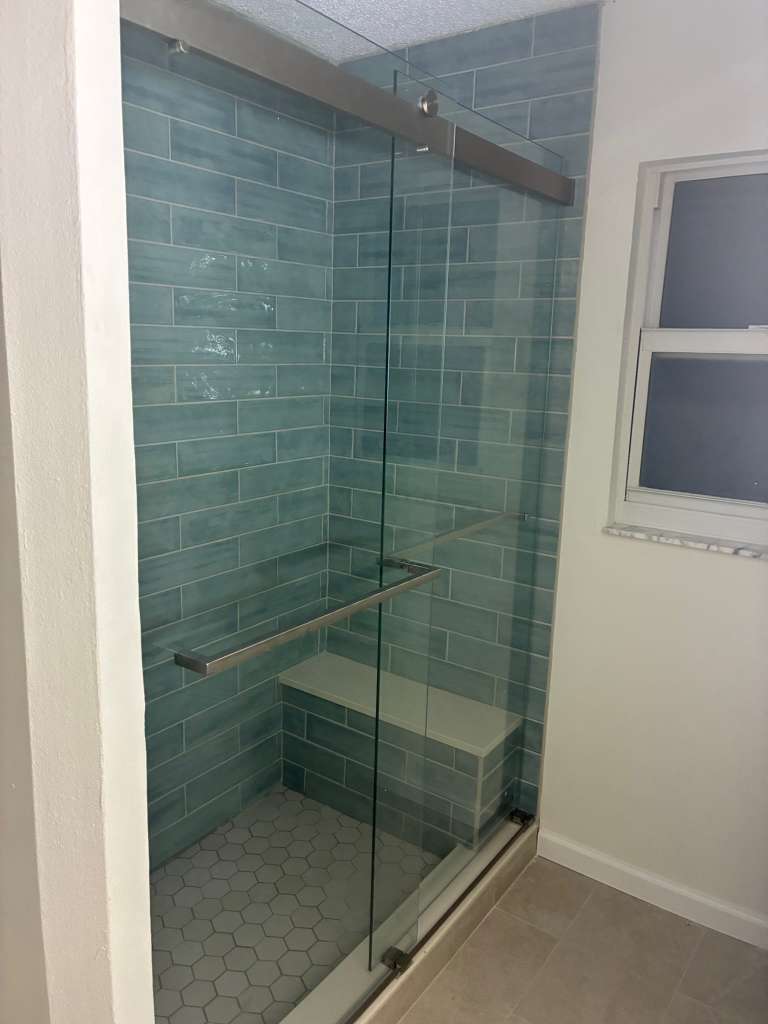
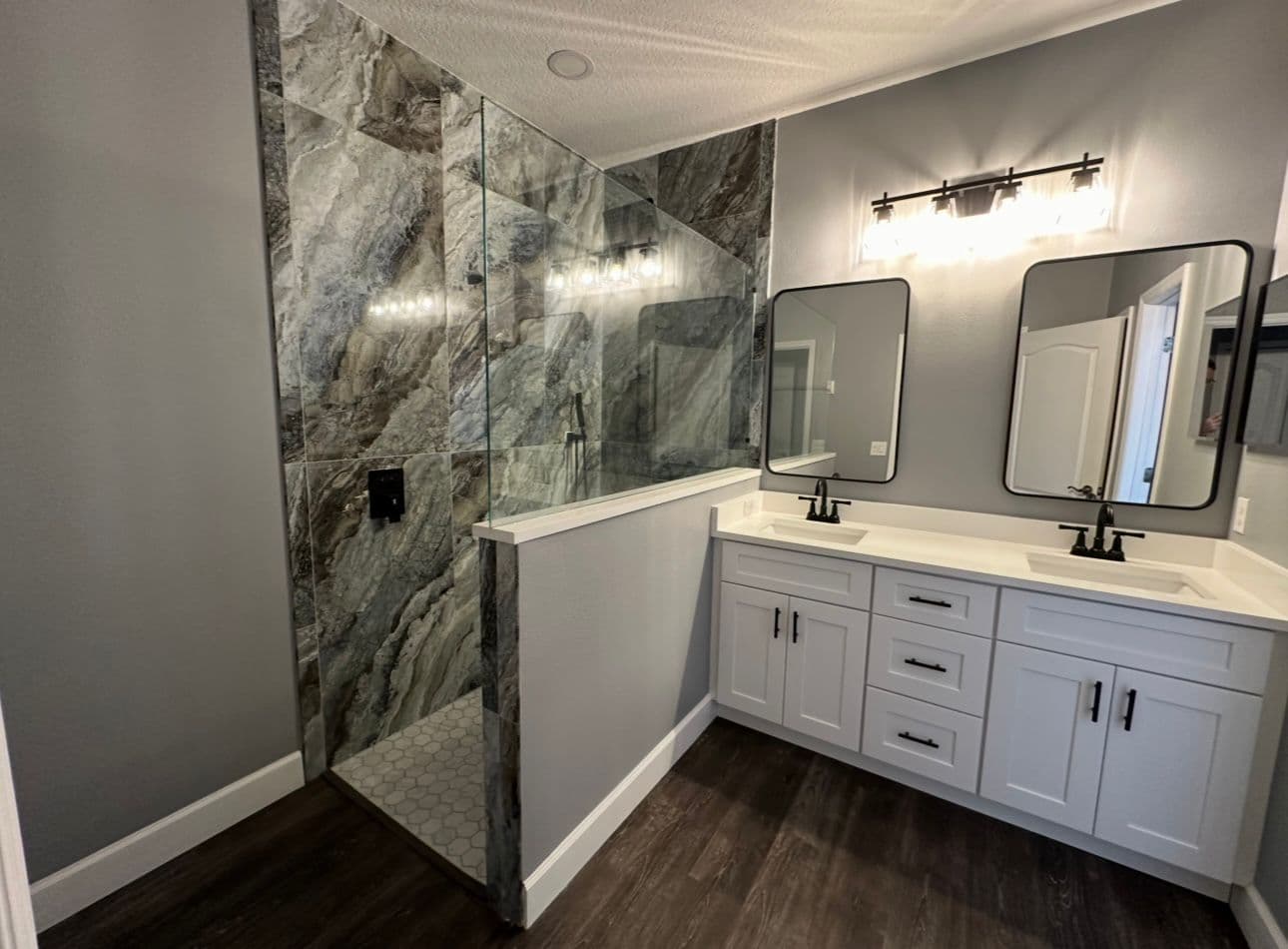
A walk-in shower with a low or no step can make entry much easier. This is often one of the most helpful aging-in-place upgrades when feasible within the home’s layout.
Shower seat or bench
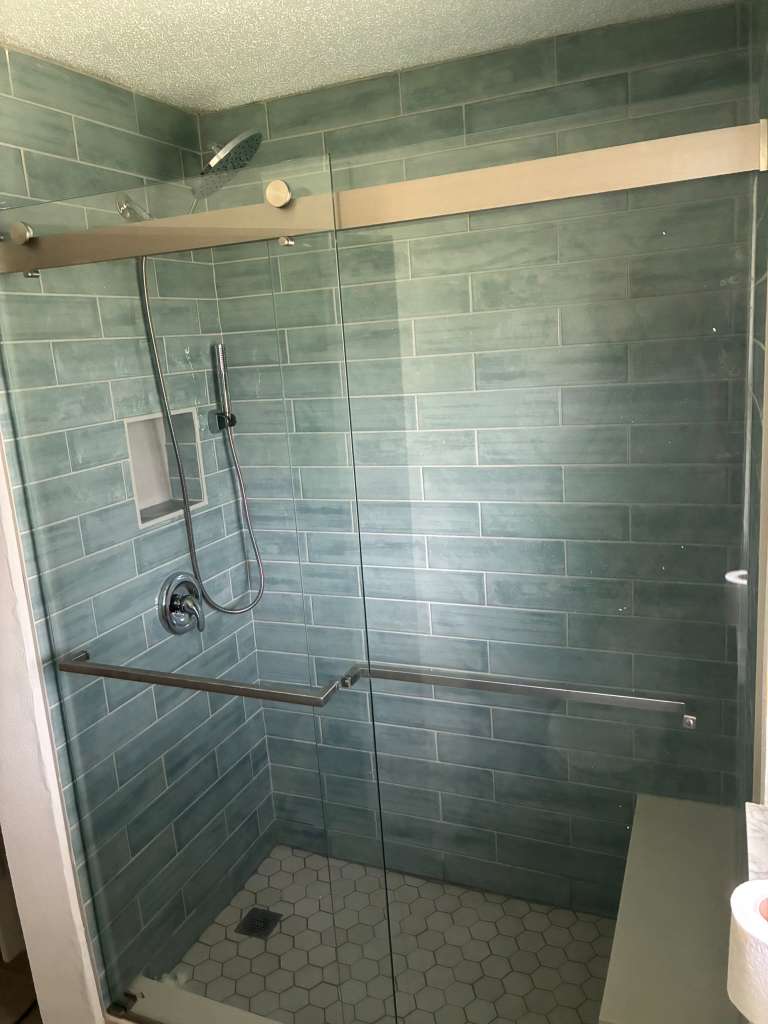
A fixed bench or sturdy shower seat reduces the need to stand for long periods and can make bathing feel less tiring.
Handheld showerhead
A handheld showerhead makes it easier to bathe while seated and helps reduce awkward reaching.
Slip-resistant shower surface
A textured shower floor or non-slip treatment can improve traction in a wet area.
When a bigger change may be worth considering
If stepping into the tub is already difficult, or if someone uses a walker or has frequent balance problems, a remodel that replaces the tub with a safer shower setup may be more practical than adding accessories to the current space.
Choose flooring and surfaces that support traction
Flooring is one of the most important safety factors in a bathroom, but it is often overlooked until someone slips.
Safer surface choices
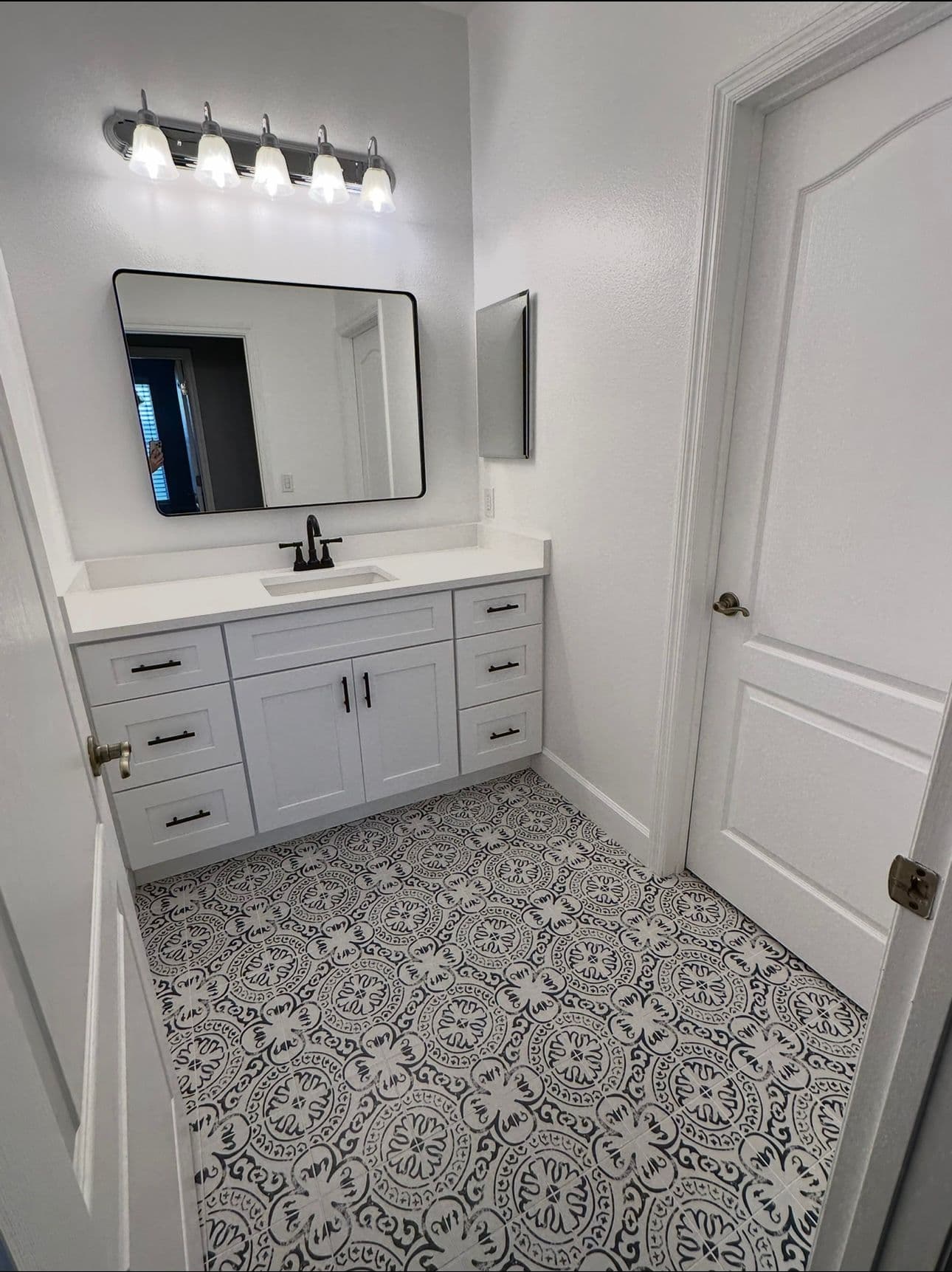
- Non-slip flooring materials
- Textured shower pans or floor inserts
- Slip-resistant strips or mats in wet areas
- Surfaces that are easy to clean and maintain
What to avoid or rethink
- Loose rugs that slide on tile
- Mats without a secure backing
- Highly polished surfaces in wet areas
- Uneven transitions that create a trip hazard
If a mat is used, it should stay flat and stay put. If a floor is already slippery, a change in material or finish may be more effective than adding a small rug.
Make the toilet area easier to use
The toilet is another place where seniors often need extra support, especially when standing up or lowering down.
Helpful toilet-related upgrades
- Comfort-height toilet
- Toilet support bars or nearby grab bars
- Clear floor space around the toilet
- Easy-to-reach toilet paper holder and supplies
Why this helps
A slightly taller toilet can reduce strain on knees and hips, and support bars can provide the stability needed for safe transfers. The goal is to make the movement from sitting to standing feel controlled, not rushed.
Keep pathways clear and storage within easy reach
Safety is not only about fixtures. It is also about daily habits and layout.
Simple changes that make a difference
- Keep floors clear of cords, baskets, and clutter
- Remove loose rugs or secure them properly
- Store daily items at a reachable height
- Avoid forcing someone to bend, twist, or climb for necessities
- Keep the route to the bathroom lit at night
Smart storage ideas
- Open shelves at a safe height
- Drawers with easy-grip pulls
- Frequently used items stored between waist and shoulder height
- Baskets or organizers that don’t require deep bending
A bathroom can be technically “updated” and still be unsafe if the person using it has to stretch, twist, or step around obstacles every day.
Use fixtures that are easier to operate
The smaller details matter more than many people expect. Seniors with arthritis, reduced hand strength, or limited dexterity may find some standard fixtures difficult to use.
Easier-to-use features
- Lever-style faucets
- Easy-turn handles
- Controls that do not require a tight grip
- Simple, clearly visible hardware
- Storage and accessories that don’t require reaching overhead
Why these details matter
A bathroom should feel intuitive. If turning a knob, lifting a heavy shower curtain, or reaching for a high shelf creates unnecessary strain, the room is asking too much from the person using it.
Think beyond the bathroom itself
A safer bathroom usually depends on the space leading into it too. That path matters just as much as the room.
Nearby improvements to consider
- Better hallway lighting
- A clearer path from bedroom to bathroom
- Threshold adjustments at the doorway if needed
- Non-slip flooring outside the bathroom
- A night light or motion light along the route
These small changes can help someone get to the bathroom more safely, especially during nighttime trips when visibility and balance may be reduced.
When a remodel makes more sense than quick fixes
Some bathrooms can be made safer with a few targeted upgrades. Others need a more complete update because the layout itself is the problem.
A larger remodel may be worth considering if:
- The tub is hard to step over
- The shower is too cramped to move safely
- There is no practical place to install support bars
- The floor plan creates awkward turns or tight traffic flow
- The current bathroom has worn surfaces or repeated moisture problems
- The user has increasing mobility concerns
If the room needs more than accessories and minor repairs, a broader plan may be the safest path forward. For homeowners comparing layout options and safety features, our bathroom remodeling ideas North Port home value article can help frame the conversation around practical upgrades.
A practical step-by-step approach
If you want to improve bathroom safety without guessing, start with a simple review of the room.
Step 1: Observe daily use
Watch where the person reaches, turns, steps, and pauses. The problem areas are usually easy to spot when you focus on real movement instead of just the room’s appearance.
Step 2: Remove obvious hazards
Clear clutter, secure rugs, and improve lighting first. These are often the fastest changes and can reduce risk right away.
Step 3: Add support where it’s needed
Install grab bars, a shower seat, and other support features based on how the room is actually used.
Step 4: Upgrade the bathing area if needed
If stepping into the tub or standing in the shower feels unsafe, consider a lower-threshold shower or another more accessible configuration.
Step 5: Reassess after the changes
Safety improvements should make the bathroom easier, not just newer. If a feature is awkward to use, adjust the layout or placement.
Getting the right help for a safer bathroom
A bathroom safety project can be simple or more complex depending on the home and the person using it. If mobility is limited, an occupational-therapy home safety review can be a smart starting point. That kind of assessment can help identify which changes will have the most impact in real life.
For homeowners in Southwest Florida, it also helps to work with a contractor who understands how to balance safety, durability, and the realities of a humid climate. Moisture management, slip resistance, and easy maintenance all matter in this region. If you’re planning a project, a general contractor north port fl can help you think through the room as a whole, from layout to finish selection.
FAQ: Bathroom safety for seniors
What is the most important thing to add in a senior bathroom?
Grab bars are one of the most important safety additions because they provide support near the toilet and bathing area where falls often happen.
Is a walk-in shower safer than a tub?
Usually, yes. A low-threshold or zero-threshold shower can reduce the need to step over a high edge, which is often one of the biggest risks.
Do non-slip mats solve the problem?
They can help, but they are not enough by themselves. A safer bathroom usually needs a combination of traction, support, lighting, and clear pathways.
Should every senior bathroom have a shower seat?
Not necessarily, but a shower seat is very helpful for many people with balance issues, fatigue, or limited mobility.
How do you make a bathroom safer for seniors without a full remodel?
Start with lighting, grab bars, non-slip surfaces, clutter removal, and easier-to-use fixtures. Those smaller changes often make a meaningful difference.
When should I consider a bigger renovation?
If the current layout creates ongoing safety problems, especially around the tub, shower entry, or toilet transfers, a larger remodel may be the safer long-term option.
Bathroom safety for seniors is really about making everyday tasks easier, steadier, and less stressful. The best improvements are the ones that reduce risk without making the room harder to use. In many homes, that means adding support, improving traction, boosting light, and creating a layout that works with the person’s mobility rather than against it.