
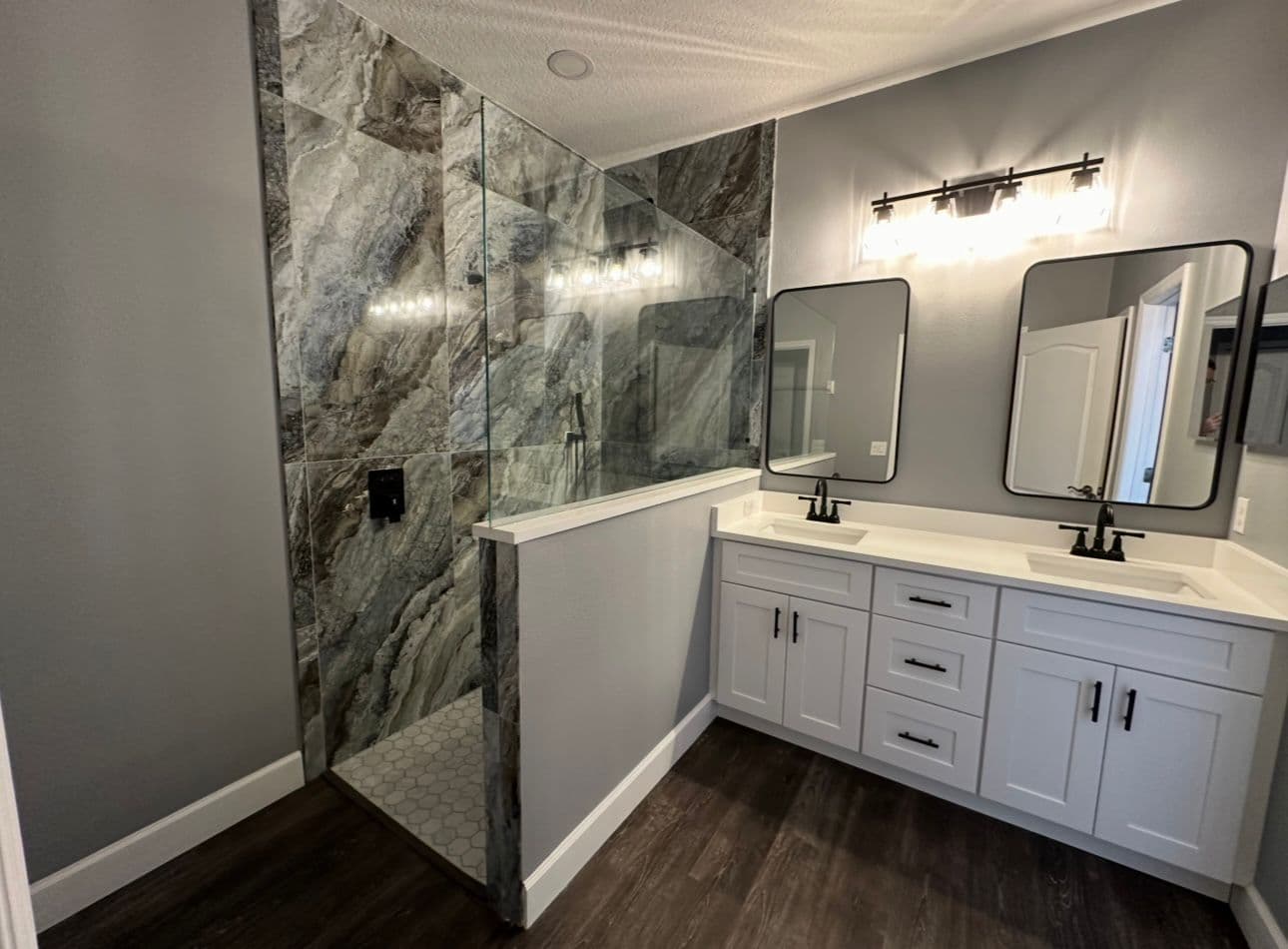
One-day bathroom remodels can be worth it when the room is structurally sound, the new layout stays close to the existing one, and the selected products are designed for fast installation. They are usually less suitable when a bathroom has water damage, an aging subfloor, plumbing that must be relocated, major electrical work, or a fully custom design. The useful question is not simply whether a contractor can finish quickly. It is whether the promised scope can be completed carefully without hiding necessary repairs or limiting the result in ways you will regret.
For Southwest Florida homeowners, a short project can reduce disruption and return an essential bathroom to service sooner. Speed has real value, especially in a one-bath home or for a household that needs an accessible shower. Still, the schedule should come from a clearly defined scope, products that are already available, and thorough preparation before demolition begins.
What a one-day bathroom remodel usually includes
The phrase “one-day bathroom remodel” can describe several different projects. In many cases, it means replacing a tub or shower area with a prefabricated wall system, new base, fixtures, and accessories. Some companies use the phrase for a tub-to-shower conversion. Others mean a focused refresh that leaves the toilet, vanity, flooring, lighting, and room layout in place.
A true full-room remodel generally involves more trades and more time. Demolition, plumbing changes, waterproofing, tile setting, electrical work, drywall repair, painting, cabinetry, countertops, inspections, and finish work do not all compress neatly into one working day. When a proposal says “one day,” ask exactly which surfaces and components are included.
A focused one-day project may include:
- removing an existing tub or shower enclosure;
- checking the exposed area for obvious damage;
- installing a compatible shower base or tub;
- fitting wall panels over a prepared substrate;
- connecting a new valve, showerhead, and drain;
- adding shelves, grab bars, a seat, or a door; and
- cleaning the work area and explaining cure-time restrictions.
The work may be completed in one installation day, but planning, measuring, ordering, permitting when applicable, and product fabrication happen earlier. Cure time may also delay use of the shower after the crew leaves. A homeowner should treat “one day” as the installation window, not necessarily the entire period from contract to first use.
When the faster approach can be worth it
One-day remodeling is most convincing when it solves a clear problem with a controlled scope. A damaged or difficult-to-clean shower surround may not require a total room redesign. Replacing that wet area can improve daily use while leaving serviceable flooring and cabinetry alone.
The approach can also make sense when minimizing downtime matters. A household with one usable bathroom may prefer a prepared system that shortens demolition and finish work. Someone planning for safer bathing may value a lower-threshold shower, properly placed grab bars, and a seat more than custom tile patterns.
It is more likely to be worth considering when:
- the existing plumbing locations will remain substantially the same;
- measurements can be confirmed before materials are ordered;
- the walls and floor around the wet area appear stable;
- the homeowner likes the available colors, textures, doors, and accessories;
- every major component is on site before demolition;
- the contract explains what happens if hidden damage is found; and
- the installer allows enough time for sealants and adhesives to cure.
Value is not limited to the lowest price. A shorter construction period can mean fewer days of dust, noise, scheduling changes, and limited bathroom access. Those benefits should be weighed against the design choices and repair limits of the system.
When one day is probably the wrong target
A deadline becomes a problem when it controls the work instead of reflecting the work. Once demolition exposes a wet wall, deteriorated framing, an uneven subfloor, a leaking valve, or previous unprofessional repairs, the right response may be to pause and correct the condition. Covering it simply to preserve a one-day claim can create a larger problem later.
A longer remodel is usually a better fit when you want to move fixtures, enlarge the shower, change walls, replace the vanity and floor, add circuits, improve ventilation, or build a custom waterproofed tile assembly. These tasks depend on sequencing. Some require inspections, drying time, or coordination among different trades.
Warning signs that deserve more investigation include soft flooring near the tub or toilet, stains on the ceiling below, a persistent musty odor, loose tile, recurring cracked grout, visible corrosion, poor drainage, or a shower valve that is difficult to operate. These signs do not prove extensive damage, but they make an inflexible schedule risky.
Older homes can introduce other unknowns. Opening a wall may reveal nonstandard framing, obsolete plumbing, or an enclosure that is out of square. The installer should explain how these discoveries are priced and how they affect the schedule before work starts.
Compare scope and materials, not just the promised timeline
Two proposals carrying the same one-day label may deliver very different results. One may remove the old surround to the studs, inspect the cavity, prepare the wall, and install a complete system. Another may place new panels over an existing surface. Either method needs to be compatible with the product instructions and the condition of the bathroom, but the proposals are not equivalent.
Ask what the wall panels, shower base, tub, trim, door, valve, and accessories are made from. Find out how seams and penetrations are sealed, what substrate is required, and how the base is supported. Ask whether the drain and supply connections are included. Product warranties are useful only when you understand what is covered, who handles a claim, and which maintenance practices are required.
Important comparison points include:
- Demolition method. What will be removed, and what will remain behind the new finish?
- Water management. How does the assembly direct water to the drain and protect surrounding surfaces?
- Plumbing scope. Are the valve, drain, supply piping, and code-related updates included or excluded?
- Wall and floor repair. What allowance, if any, covers damage discovered after demolition?
- Accessories. Are grab bars attached to suitable backing, and are doors or seats compatible with the system?
- Cure time. When can the shower safely be used after installation?
- Cleanup. Who removes debris and protects the route through the home?
Homeowners considering a focused project can discuss these details with remodeling contractors Sarasota FL and request a written explanation of the proposed assembly. The goal is to understand what will be installed, not to choose based on a headline alone.
How hidden conditions affect a one-day schedule
The best protection against surprises is preparation. A pre-installation visit should include careful measurements, photographs, fixture review, access planning, and questions about previous leaks. The team should confirm product dimensions and delivery before removing anything.
Even good preparation cannot reveal everything behind a finished wall. That is why the contract should define a discovery process. If damage is found, the installer should document it, explain the recommended repair, provide any change in cost, and revise the schedule before proceeding. A reasonable delay is preferable to sealing a preventable defect inside the new enclosure.
Waterproofing details matter because a shower is an assembly, not a decorative skin. Corners, valve openings, door fasteners, shelves, and the joint between the wall and base all need the treatment required by the selected system. Faster materials can be effective when installed as a complete, compatible system. Mixing parts or skipping preparation to save hours increases risk.
Ventilation should also be reviewed. A new surround will not correct a weak exhaust fan or a fan that vents into the attic. Southwest Florida humidity can make moisture management especially important. After bathing, the room needs a practical way to exhaust damp air.
Cost and value questions to ask before signing
There is no single price that determines whether a one-day remodel is worthwhile. Cost changes with the enclosure size, product line, door style, plumbing work, accessories, site access, permits, and repair needs. A low starting price may exclude items that appear later, while a higher proposal may include removal, plumbing, protection, and cleanup.
Request an itemized written scope. It should identify the exact products or product allowance, surfaces being removed, work being performed, exclusions, payment schedule, change-order process, and expected start and completion conditions. If a permit is required for the planned work, determine who obtains it and how inspections affect timing.
Think about how long you expect to remain in the home and how the bathroom is used. A durable, easy-to-clean shower with safer access may provide daily value even if it is not the least expensive option. On the other hand, paying a premium for extreme speed may not make sense if the household has another bathroom and prefers custom tile or a new layout.
It helps to compare the one-day proposal with at least one conventional alternative using the same priorities. Our North Port bathroom remodeling cost and timeline guide explains why scope, selections, and existing conditions influence both budget and duration. Compare total scope, not merely the number of days listed in an advertisement.
A practical decision checklist
Before choosing a one-day remodel, walk through the decision in order.
Define the result you actually need
Write down the main reason for the project. Is the tub difficult to enter? Is the surround damaged? Is cleaning the biggest frustration? Do you want an entirely different style and layout? A focused problem often supports a focused solution, while several room-wide goals point toward a conventional remodel.
Inspect for reasons the scope may grow
Look for soft areas, stains, movement, odors, poor drainage, and evidence of past repairs. Share everything you know with the estimator. Ask how the company handles conditions that cannot be confirmed until demolition.
Review real product samples
Colors and textures can look different on a screen. Examine samples in the bathroom’s lighting when possible. Check the feel of the base underfoot, the location of shelves and controls, the door opening, and the ease of cleaning seams and hardware.
Confirm every responsibility in writing
The agreement should match the conversation. Confirm demolition, disposal, plumbing connections, wall preparation, accessories, protection, cleanup, permits, cure time, and warranty procedures. Vague language creates more risk than a realistic schedule.
Keep a quality-first contingency
Decide in advance that necessary repairs can extend the project. The schedule should have permission to change when the condition of the home requires it. That is not a failed one-day remodel; it is responsible construction.
Frequently Asked Questions
Does a one-day bathroom remodel mean the whole bathroom is replaced?
Usually not. The phrase commonly refers to a tub, shower, or wet-area replacement. A vanity, flooring, lighting, ventilation, painting, and layout changes may be separate. Read the written scope to see exactly what is included.
Can a tub-to-shower conversion be completed in one day?
Some conversions can be installed in one working day after measurements and products are prepared. Existing damage, plumbing changes, permit requirements, unusual dimensions, or cure time can extend the project. The installer should explain the assumptions behind the schedule.
Are wall-panel systems lower quality than tile?
They are different systems with different advantages. Quality depends on the material, substrate preparation, installation details, compatibility of components, and maintenance. Panels can reduce grout joints and speed installation, while tile offers broad customization and follows a different installation process.
What happens if workers find water damage?
Work should pause long enough to document and evaluate the condition. The contractor should explain the repair, cost, and schedule change before covering the area. The contract should describe this process in advance.
How soon can the new shower be used?
That depends on the adhesives, sealants, and manufacturer instructions. Completion of installation does not always mean immediate use. Ask for the required cure time and follow it to protect the new assembly.
Is a one-day remodel always cheaper than a traditional remodel?
Not necessarily. A focused scope may cost less than a full-room renovation, but product choices, plumbing, accessories, repairs, access, and service packages all affect the total. Compare written scopes and long-term usefulness rather than assuming speed guarantees savings.
The bottom line
One-day bathroom remodels are worth considering when the project is narrow, the existing room is in suitable condition, the chosen system meets your needs, and preparation is completed before installation day. They are less compelling when the bathroom requires structural repair, major plumbing or electrical changes, a new layout, or extensive customization.
The strongest proposal will be transparent about both speed and limits. It will define what “one day” means, identify the materials, explain hidden-condition procedures, state cure time, and allow necessary repairs to take priority over the advertised deadline. When those details align with your goals, a short installation can be a practical remodeling option rather than just a marketing promise.