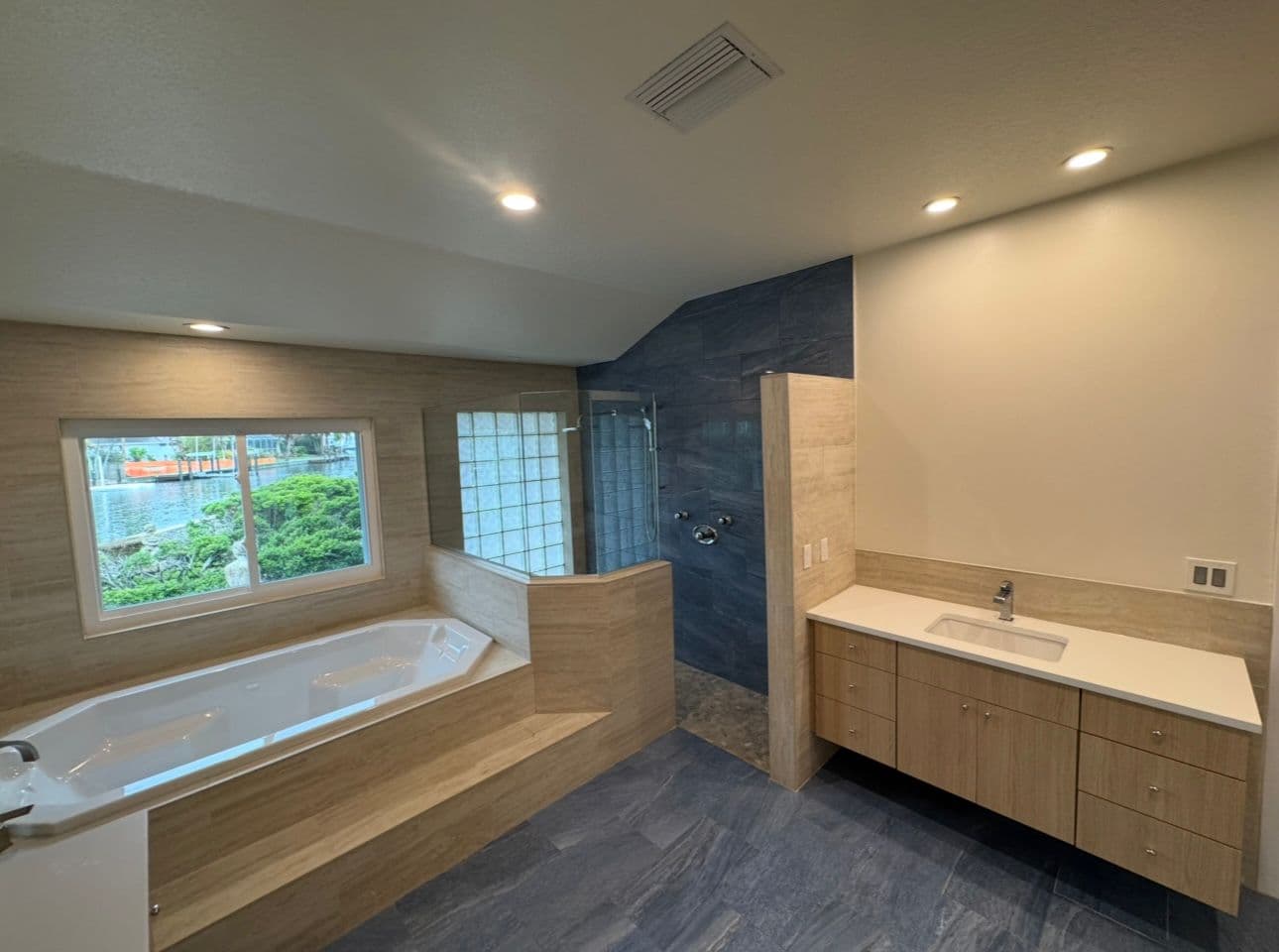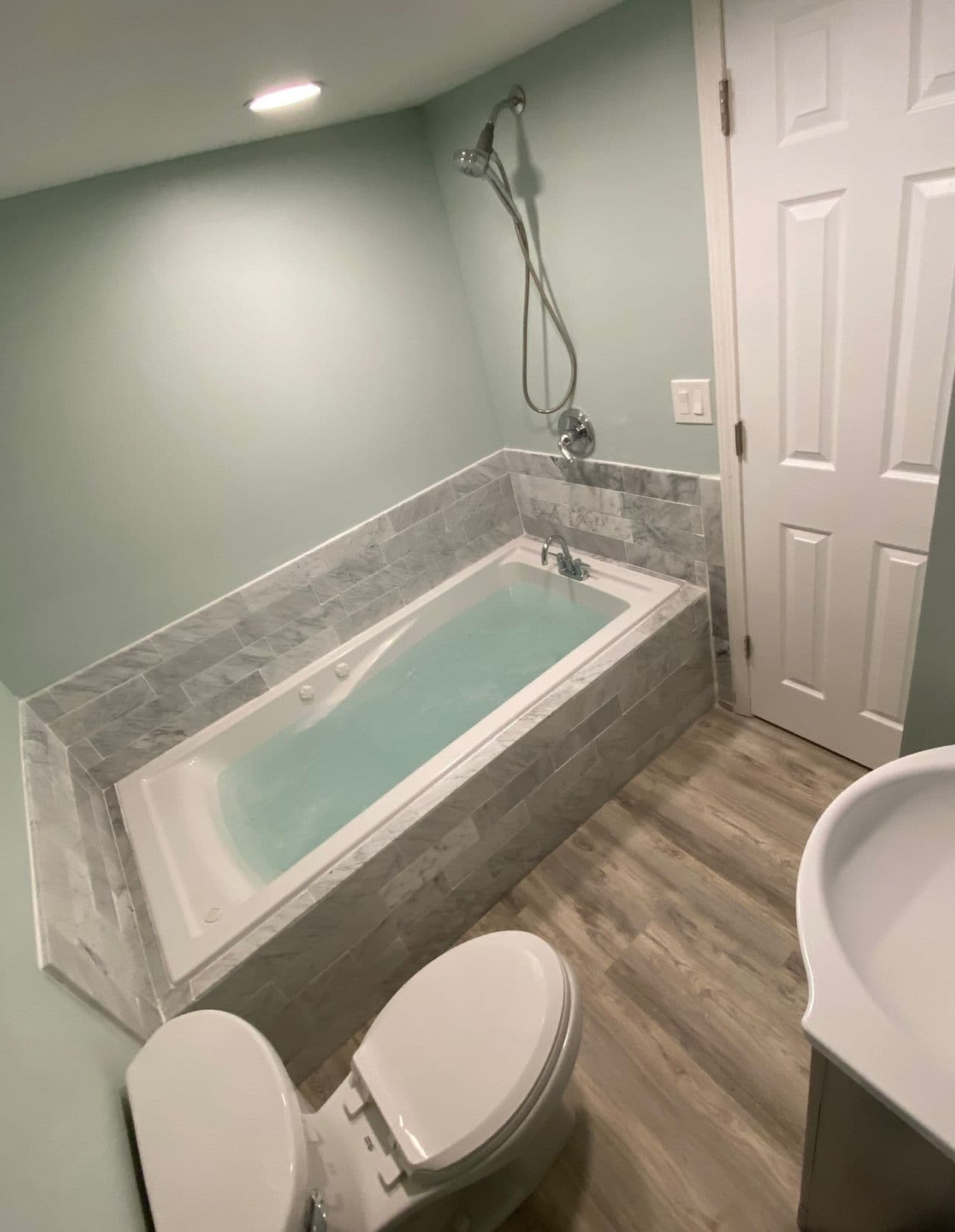
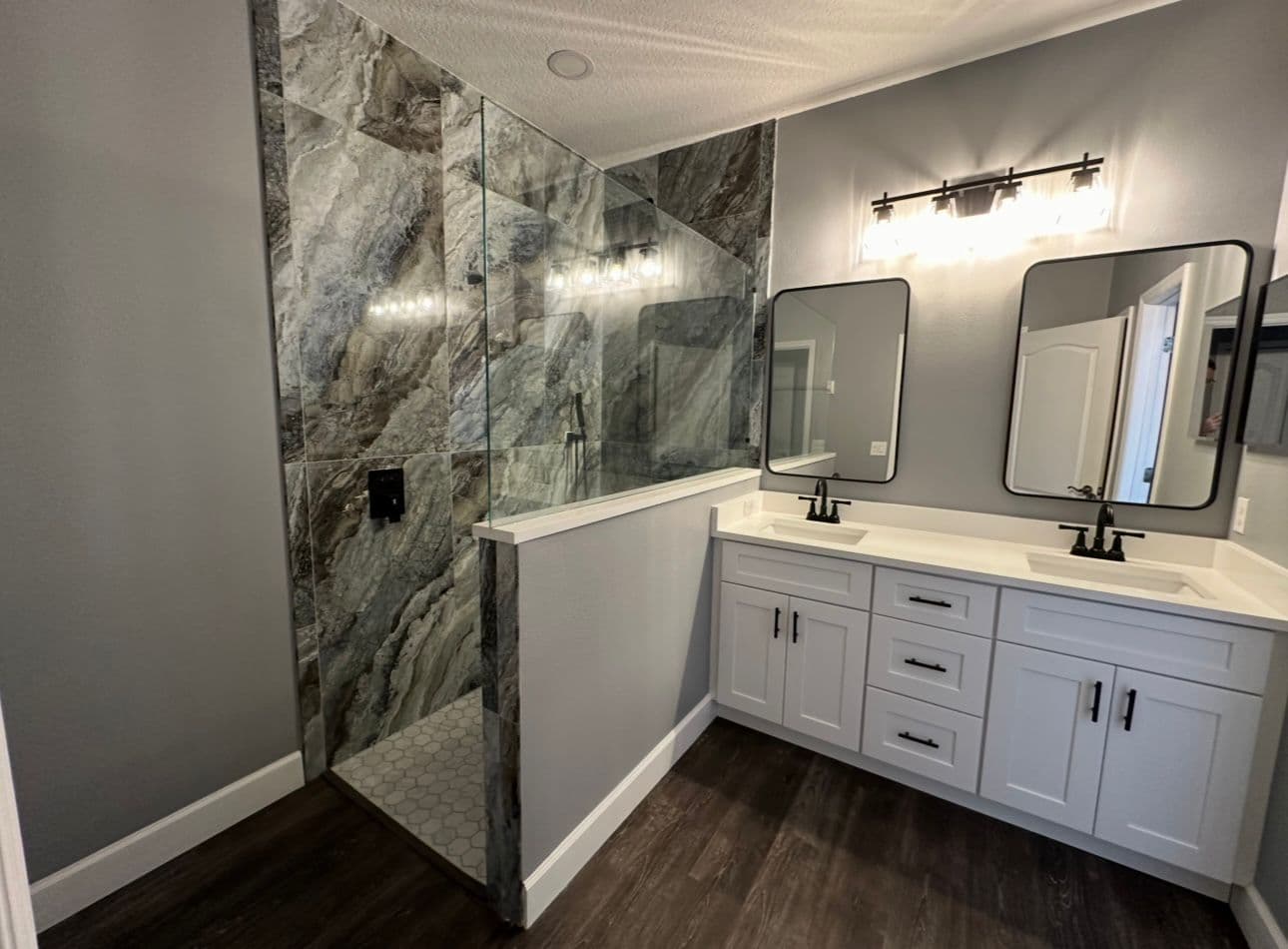
The best gloss for bathroom paint is usually satin or semi-gloss, and in most Southwest Florida bathrooms, semi-gloss is the safer choice because it stands up better to humidity, splashes, and frequent cleaning. If you have a small powder room or a bathroom with very light use, satin can work well. But for full baths, kids’ baths, and primary bathrooms with regular showers, semi-gloss is generally the more practical option.
Why bathroom paint sheen matters
Paint sheen is not just about appearance. In a bathroom, the finish affects how well walls handle moisture, how easy they are to clean, and how forgiving they are if soap splashes or condensation build up over time.
Bathrooms are tougher on paint than most other rooms because they deal with:
- Steam from showers and baths
- Humidity that lingers after the water is off
- Frequent wiping and cleaning
- Possible mildew growth if ventilation is weak
- Water splashes around sinks, tubs, and toilets
In Southwest Florida, humidity can make all of those issues more noticeable. That does not mean every bathroom needs a shiny finish, but it does mean the paint choice should lean toward durability rather than just hiding wall imperfections.
The basic rule of thumb
- Flat or matte: Usually best avoided in bathrooms
- Eggshell: Sometimes acceptable in very low-moisture spaces, but not ideal for most baths
- Satin: A good middle ground for many bathrooms
- Semi-gloss: Best for moisture resistance and cleanability in active bathrooms
Satin vs. semi-gloss: which is better?
The choice between satin and semi-gloss usually comes down to how hard the bathroom works.
Satin
Satin has a soft, low-luster look. It reflects a little light, but not so much that it feels shiny. Many homeowners like satin because it looks smoother and less reflective than semi-gloss.
Satin can be a good fit for:
- Powder rooms
- Guest bathrooms with limited use
- Bathrooms with strong ventilation
- Walls where a softer look matters more than extra scrub resistance
Semi-gloss
Semi-gloss has more sheen and a more moisture-tolerant feel. It is easier to wipe down and generally handles bathroom conditions better than lower-sheen finishes.
Semi-gloss is often the better fit for:
- Full bathrooms
- Primary bathrooms with daily showers
- Children’s bathrooms
- Bathrooms with poor or inconsistent ventilation
- Areas near sinks, tubs, and toilets that need frequent cleaning
Which one should most homeowners pick?
If you want the simplest answer, choose semi-gloss for the walls in a bathroom that gets regular use. Choose satin only if the bathroom is low-traffic, well-ventilated, and you want a softer finish.
How Southwest Florida humidity changes the decision
Bathroom paint in Southwest Florida has to work harder than it might in a drier climate. Even with a good exhaust fan, indoor humidity can stay elevated for longer periods, especially during warm months.
That matters because moisture can:
- Make walls feel damp longer after showers
- Increase the chances of mildew in corners and trim lines
- Put more stress on lower-quality paint
- Show up faster on finishes that are harder to clean
For many local homes, the practical choice is not the prettiest-looking finish on a sample card. It is the finish that keeps the walls looking good after repeated exposure to steam and cleaning products.
In humid homes, sheen and paint type should work together
A good sheen helps, but the paint itself matters too. Bathroom-specific or moisture-resistant coatings are often better suited to humid conditions than standard interior paint. Better ventilation also plays a big role in how long the finish lasts and how clean the walls stay.
If you are also thinking about a larger bath update, it can help to review the room as a whole, not just the wall color. A project like remodeling contractors Venice FL can involve ventilation, trim, and wall finishes together, which often leads to a better long-term result than repainting alone.
When satin makes sense in a bathroom
Satin is not wrong for bathrooms. It just works best in the right setting.
Good situations for satin
- The room is used lightly
- There is a strong exhaust fan
- The shower is used infrequently
- The bathroom is small and functions more like a powder room
- You want a softer, less reflective wall finish
Why some homeowners still choose satin
Satin can make a bathroom feel calmer and more finished without the brighter reflection of semi-gloss. It also tends to hide small wall flaws a little better than semi-gloss. That can matter in older homes, where patched drywall or textured walls are more visible under stronger light.
The tradeoff
The softer look comes with a small performance tradeoff. Satin is still washable, but it is usually not as easy to scrub as semi-gloss. In bathrooms that see lots of moisture, that difference can become noticeable over time.
When semi-gloss is the smarter default
Semi-gloss tends to be the most practical choice for bathrooms that are used every day.
Why semi-gloss performs well
- It resists moisture better than lower-sheen finishes
- It wipes down more easily after splashes or buildup
- It is generally better at standing up to frequent cleaning
- It is a safer choice when ventilation is not perfect
Best rooms for semi-gloss
- Primary bathrooms with daily showers
- Family bathrooms with busy morning routines
- Kids’ bathrooms where walls get touched often
- Guest baths that still double as shower spaces
- Bathrooms in homes where humidity is a constant issue
What semi-gloss can reveal
The main downside is that it can highlight wall flaws more than satin. Dents, patches, and uneven drywall work may show more clearly. That is one reason surface prep matters so much before painting. A smoother wall usually looks better with semi-gloss than a wall with rough repairs.
Why flat and matte are usually poor bathroom choices
Flat and matte finishes can look beautiful in some rooms, but bathrooms are not their best environment.
The problem with lower-sheen paints
Lower-sheen finishes often:
- Absorb more moisture
- Are harder to clean without leaving marks
- Show wear sooner in high-use areas
- Can be more prone to mildew issues if the room stays damp
Where they might still work
In a very lightly used half bath with excellent ventilation, some homeowners may prefer a lower sheen for aesthetic reasons. Even then, moisture-resistant products are still important.
For most bathrooms, though, the safer choice is satin or semi-gloss because those finishes are simply easier to maintain.
A simple way to choose the right finish
If you are not sure what to pick, use the bathroom’s moisture level and use pattern to guide the decision.
Choose satin if:
- The bathroom is a powder room or guest bath
- It does not see daily showers
- The space has good ventilation
- You want a softer, more understated look
Choose semi-gloss if:
- The bathroom gets daily or frequent shower use
- Moisture lingers after bathing
- The room is used by kids or multiple family members
- Cleaning the walls is likely to be routine
- The bathroom has had mildew or moisture issues before
If you are still unsure
When in doubt, semi-gloss is usually the more conservative choice for a bathroom in Southwest Florida. It is not the only acceptable option, but it gives you more protection where humidity and cleaning are part of everyday life.
Paint sheen is only part of the bathroom equation
A good finish helps, but it cannot fix a bathroom that traps moisture.
Ventilation matters
A strong exhaust fan, used consistently, can make a major difference in how bathroom paint performs. If steam stays in the room for long periods, even a good paint sheen can wear faster.
Surface prep matters
Before painting, walls should be clean, dry, and free of mildew. If mildew is already present, it needs proper treatment before the new paint goes on. Painting over a damp or contaminated surface usually leads to faster failure.
Quality of the coating matters
Bathroom-specific and mildew-resistant paints are often better suited to humid spaces than standard interior wall paint. The finish sheen helps, but the product itself needs to be appropriate for the room.
What about bathroom ceilings, trim, and doors?
Wall sheen is only one part of the room. Bathrooms often need different sheens on different surfaces.
Ceilings
Ceilings are often painted with a lower-sheen finish than walls, but in a bathroom, the product still needs to tolerate moisture. The right choice depends on the room, the ceiling surface, and the amount of steam the space sees.
Trim and doors
Trim and doors are often painted in a higher-sheen finish because they get touched more often and need to be wiped clean. Semi-gloss is common here for that reason.
Matching the whole room
A full bathroom refresh often works best when wall paint, trim paint, ventilation, and moisture control are considered together. That is especially true in remodels where the room has already had moisture-related wear. Homeowners comparing local project options often start by looking at practical updates and planning, not just color choices, and resources like bathroom remodeling ideas North Port home value can help frame those decisions.
How to get better results from any bathroom paint finish
No matter which sheen you choose, a few habits can help the finish last longer.
Before painting
- Clean the walls thoroughly
- Remove any mildew or soap residue
- Repair damaged drywall or caulk gaps
- Make sure the room is dry before painting
After painting
- Run the exhaust fan during and after showers
- Wipe up splashes when they happen
- Keep the room ventilated when possible
- Repaint problem areas before moisture damage spreads
If the bathroom has recurring mold or peeling paint
Recurring issues usually mean the room needs more than a new coat of paint. Ventilation, leaks, and surface prep should all be checked. If those problems are not addressed, even the best sheen may fail sooner than expected.
FAQ
Is satin or semi-gloss better for bathroom walls?
For most bathrooms, semi-gloss is better because it resists moisture more effectively and is easier to clean. Satin is a good choice for lower-use bathrooms.
Can I use matte paint in a bathroom?
It is usually not the best choice. Matte and flat finishes are less washable and generally less moisture-tolerant than satin or semi-gloss.
What is the best sheen for a small powder room?
Satin is often enough for a powder room, especially if it is well ventilated and does not have a shower or bath.
Does the paint brand matter as much as the sheen?
Yes. Sheen matters, but the paint formulation matters too. A moisture-resistant or bathroom-specific product is usually a better fit than standard interior paint.
Why does bathroom paint peel or mildew so fast in Florida?
High humidity, poor ventilation, and leftover moisture can all shorten paint life. If the room does not dry out well after use, the finish can fail more quickly.
Should trim be the same sheen as the walls?
Not always. Many bathrooms use a different sheen on trim and doors, often semi-gloss, because those surfaces get touched and cleaned more often.
Bottom line for Southwest Florida homeowners
If you want the shortest, most practical answer: use semi-gloss in most bathrooms and satin in low-moisture powder rooms or lightly used guest baths. In Southwest Florida, where humidity is part of daily life, semi-gloss is usually the safer default for bathrooms that see regular showers. The right choice should also account for ventilation, wall condition, and whether the room has a history of mildew or peeling.
If you are planning a larger bath update, paint sheen should be one piece of the plan, not the only one. Moisture control, prep, and the right materials all matter if you want the room to hold up well over time.